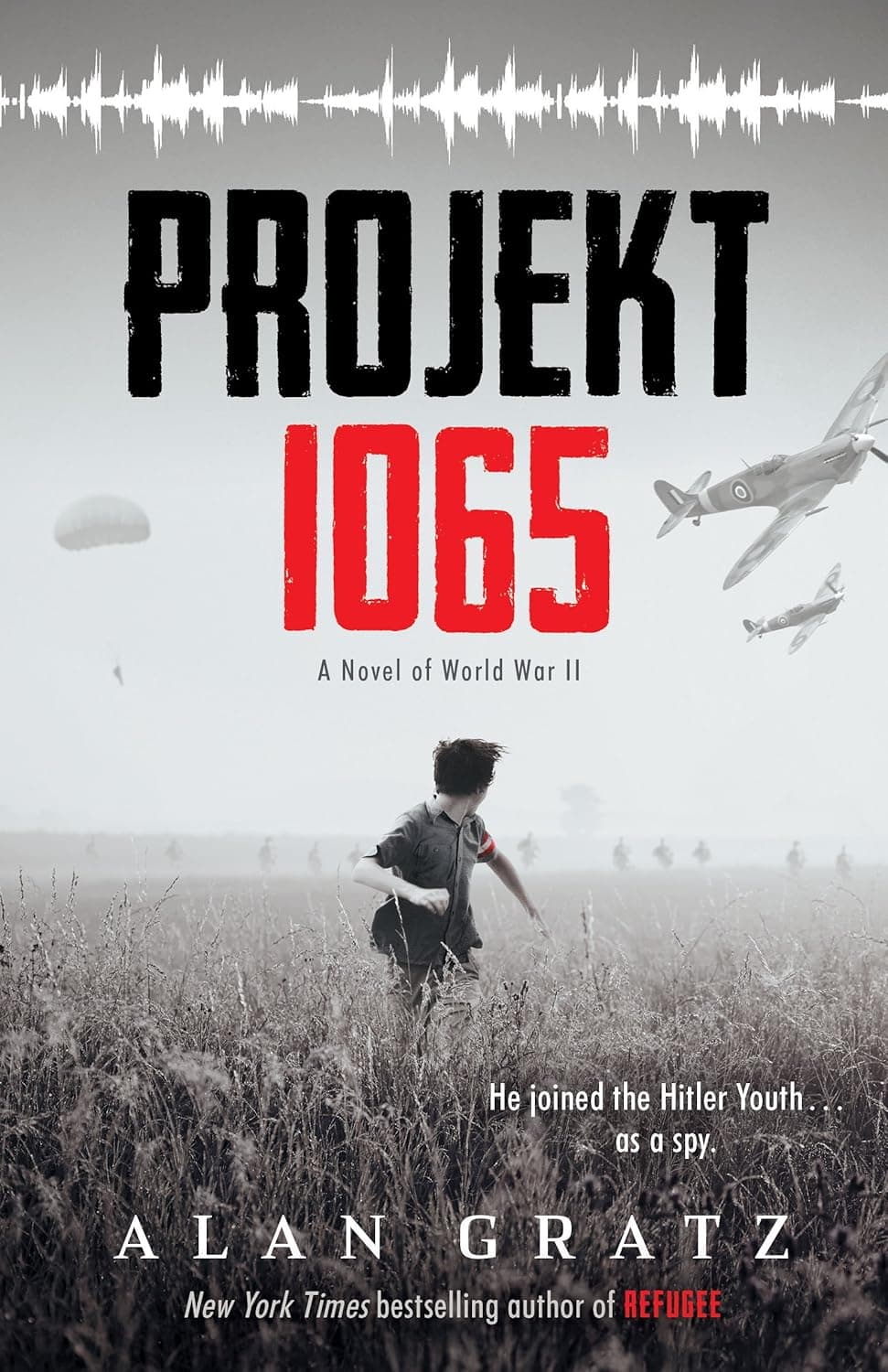
Fritz Brendler
Quick Facts
- Role: Bookish, undersized new recruit who becomes Michael’s friend, rival, and ideological antagonist; later a rising member of the SRD
- First Appearance: Joins the Jungvolk troop as the smallest, most timid boy in the unit
- Key Relationships: The troop’s new boy (friend-turned-foil), SS-Obersturmführer Trumbauer (idol/mentor), Horst (bully-turned-subordinate), his father (Projekt 1065 engineer)
Who They Are
A study in how belief can refashion a person, Fritz Brendler begins as a bullied, book-loving outsider and refits himself into a model Nazi youth. His father’s role on the top-secret jet project makes Fritz vital to Michael O'Shaunessey, but it’s Fritz’s inner transformation that powers the story: insecurity hardens into ideology, and tenderness is traded for obedience. He embodies the seduction and cost of The Corrupting Influence of Ideology—a boy who wants to belong so badly that he burns the very parts of himself that made belonging difficult.
Small, thin, and mockingly called Dreikäsehoch, Fritz never looks like the Nazi ideal. That gap between his body and the regime’s myth of strength becomes the engine of his self-reinvention. The too-big uniform, the stick-like limbs, the broken nose after the boxing test—these details aren’t just description; they chart his willingness to suffer to prove he deserves the uniform he’s swimming in.
Personality & Traits
Fritz is defined by a combustible mix of longing and doctrine. He wants to be brave, respected, and seen—and the Hitler Youth gives him a script for how to get there. As he’s rewarded, he grows more ruthless, choosing ideology over intimacy.
- Insecure, therefore ambitious: His small stature and bullying fuel an almost frantic drive to prove himself. He insists on a real fight in the boxing test and takes beatings as “training” for the tougher boy he wants to become.
- Impressionable and approval-seeking: Praise from Trumbauer—especially the “Quex” nickname—acts like lighter fluid on his beliefs; once recognized, he doubles down on the party line.
- Secretly sensitive: His hidden stash of British and American detective novels opens the door to friendship and shows the self he’s trying to erase.
- Ascendant ruthlessness: With status comes cruelty. He leads a vicious attack on Herr Professor Doktor Major Melcher and later burns his own books, severing his last, private refuge.
- Loyal to a fault: Fritz’s fidelity shifts from people to principles. Even friendship becomes subordinate to mission; he embraces pain, betrayal, and death if they advance the cause.
Character Journey
Fritz’s arc moves from vulnerable outcast to zealous enforcer. At first, he and Michael bond over contraband mysteries and shared training: Michael teaches him to fight; Fritz, in a startling act of tough love, pushes Michael off a high dive to cure his fear. Once Trumbauer takes notice and dubs him “Quex,” Fritz recasts compassion as weakness. He begins to speak in slogans, tests his friends’ loyalties, and performs brutality to secure belonging. The attack on their teacher and the later book burning mark the point of no return: Fritz doesn’t merely obey; he converts himself, destroying the tokens of his gentler identity. By the cable car climax, he recognizes Michael’s opposing convictions with a grim respect—but still primes a bomb and accepts martyrdom. His death reads not as a sudden leap but the final step in a staircase of self-abandonments.
Key Relationships
Michael O'Shaunessey (friendship, rivalry, and Friendship and Betrayal): Their bond is forged in secrecy (the hidden books) and pain (the tests), with each boy pushing the other past limits. But because Michael’s friendship is also espionage, their loyalty runs on different tracks: Fritz pursues belonging through ideology; Michael pursues it through conscience. In the end, Fritz admires Michael’s conviction even as he fights to annihilate it.
SS-Obersturmführer Trumbauer: Trumbauer’s approval gives Fritz a new identity—“Quex,” the martyr’s mantle. That recognition transforms Fritz’s insecurity into mission, sanctioning his hardness as heroism and speeding his radicalization.
Horst: Initially Fritz’s tormentor, Horst becomes wary once Fritz gains SRD status. The reversal is instructive: the bullied boy adopts the bully’s methods, proving his transformation not just through words but by making others fear him.
His Father: A shadowy yet decisive presence. As an engineer on Projekt 1065, he inadvertently makes Fritz valuable to the regime and to Michael’s mission. Fritz’s fanatical loyalty can be read as both filial pride and the regime’s capture of that pride for its own ends.
Defining Moments
Each turn in Fritz’s story shows him choosing belonging over self—until there’s no self left to save.
- The book-burning rally (hesitation and beating): He balks at burning a Sherlock Holmes novel and is beaten by Horst’s boys; Michael defends him. Why it matters: Hesitation reveals the real Fritz; the beating and rescue cement the friendship—and teach Fritz that tenderness has a cost in this world.
- The boxing test (insisting on a real fight): Pitted against Michael, Fritz refuses to fake it—“We can’t show weakness.” Why it matters: He publicly prioritizes image and ideology over friendship, accepting pain to purchase status.
- The courage test (the push off the high dive): Whispering an apology, he shoves Michael to force him past fear. Why it matters: He reframes cruelty as care, adopting the regime’s logic that harm can be virtue if it serves the mission.
- Assault on Herr Professor Doktor Major Melcher: Fritz leads a brutal attack on their teacher. Why it matters: It’s a performance of loyalty that trades personal morality for collective violence—proof he’s now shaping reality to fit the party’s story.
- Burning his own books: He torches the detective novels and declares a new self. Why it matters: Symbolic self-immolation—Fritz kills his last private attachment to become the person the regime praises.
- Final cable car confrontation: Discovering Michael’s betrayal, he starts the bomb timer and embraces death. Why it matters: The arc completes: belonging becomes martyrdom; friendship becomes a worthy enemy; ideology outlives the boy who believed it.
Essential Quotes
“I already know how to take a beating... What I need to learn to do is fight back, like you. Especially if I’m going to join the SRD and be in the SS one day.” This line fuses insecurity with aspiration. He reframes victimhood as preparation and ties personal growth to institutional violence; advancement requires becoming the person who once hurt him.
“No, I mean, I’m really, really sorry,” Fritz whispered, and he pushed me off the platform. The apology precedes harm, revealing Fritz’s moral split: he feels the wrongness but acts anyway. It’s a thesis statement for his journey—remorse subordinated to mission.
“You’re the reason I got in too,” Fritz told me. “How do you figure that?” “Because,” said Fritz, “you helped me show them that I’m not afraid to die for Germany.” Fritz translates friendship into spectacle. Michael’s support becomes evidence for the audience that matters: authorities who reward displays of fearlessness over genuine connection.
“You’ve never taken any of this seriously, Michael. You’ve always treated this like a game. Maybe it’s because you’re not German. But this isn’t a game. It’s real.” Here Fritz asserts a moral high ground grounded in national identity and sacrifice. He mistakes Michael’s moral flexibility for triviality, revealing how ideology narrows his sense of what “serious” courage looks like.
“All life is struggle, Michael. He who wants to live should fight for himself. He who doesn’t fight doesn’t deserve to live.” A pure distillation of the creed he’s absorbed. By elevating struggle to a universal law, Fritz rationalizes cruelty and erases empathy—justifying every harm as nature’s verdict.