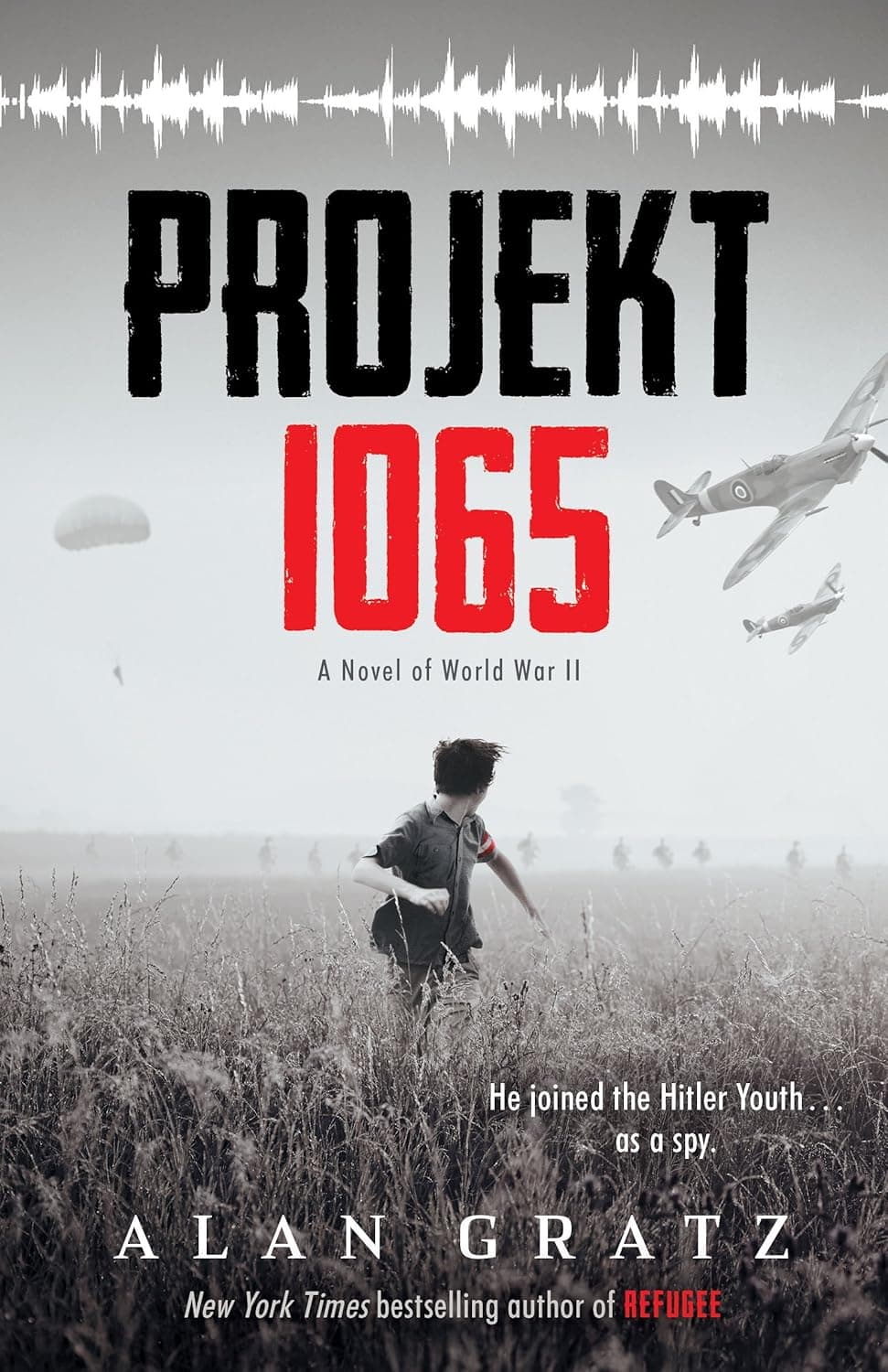
What This Theme Explores
Friendship and Betrayal in Projekt 1065 probes the moral vertigo of wartime Germany, where allegiance is policed and intimacy can be fatal. The novel asks how far loyalty can stretch when survival and mission secrecy demand deception, and whether betrayal is always a sin—or sometimes a sacrifice. For Michael O'Shaunessey, friendship begins as a liability that threatens his work as a spy; yet bonds with Fritz Brendler and Lieutenant Simon Cohen complicate that calculus. The book ultimately exposes how ideology corrupts private loyalty and how, in a society built on surveillance and fear, even love can be weaponized.
How It Develops
At first, Michael treats friendship as a threat to his cover. He keeps classmates at arm’s length and dismisses Fritz as another indoctrinated Hitler Youth, reminding himself that any attachment could jeopardize his family’s mission. His emotional self-discipline is a survival tool: prioritize the mission, and trust no one.
In the middle of the novel, proximity and shared danger breed real connection. Michael saves Fritz during the book burning (Chapter 11-15 Summary), and Fritz returns the favor after Michael’s near fall from the barn (Chapter 16-20 Summary). Their uneasy bond tightens through Hitler Youth trials—the initiation boxing match (Chapter 41-45 Summary) and the courage test from the high dive (Chapter 46-50 Summary)—that demand acts that feel like betrayals yet function as proofs of loyalty within a twisted system. Meanwhile, Simon mentors Michael in spycraft and moral triage, pushing him to see how wartime duty can invert ordinary ethics.
By the end, the web of loyalty snaps under pressure. To infiltrate the science team, Michael conspires to “turn in” Simon—and even implicates his parents—to look like a model Nazi (Chapter 81-85 Summary). Fritz, torn between private affection and public fanaticism, destroys his stash of banned detective novels (Chapter 86-90 Summary), symbolically burning the last refuge of their friendship. When he discovers Michael’s deception, ideology wins: the final cable car confrontation ends their bond in violence, sealing betrayal as both personal tragedy and political inevitability (Chapter 96-100 Summary).
Key Examples
-
The Boxing Match: During initiation, Fritz urges Michael to hit him for real so neither will appear weak. Michael’s brutal blows become an act of care that masquerades as cruelty, revealing how the regime forces friends to harm each other to survive within it. The moment collapses the usual meanings of help and hurt.
-
The Courage Test: Fritz pushes Michael from the high platform so he can pass, apologizing even as he acts. What looks like treachery is, in context, a necessary shove that keeps Michael embedded in the Hitler Youth. The scene shows how friendship adapts to a moral landscape where “saving” someone may require violating their trust.
-
Fritz’s Secret: Fritz shares his hidden detective novels, exposing a self not wholly consumed by propaganda and inviting Michael into a private world. Later, he burns the books, choosing ideological purity over personal connection. The arc charts the erosion of friendship under authoritarian pressure—from trust to renunciation.
-
The Engineered Betrayal: Simon devises a plan in which Michael must betray him to secure access to Nazi secrets. The calculated sacrifice reframes betrayal as strategic loyalty to a higher cause, while also confronting Michael with the emotional cost of doing right by doing wrong. The scene crystallizes the theme’s moral paradox.
Character Connections
Michael O'Shaunessey begins as a self-protective spy who treats warmth as a weakness; espionage demands compartmentalization, and he excels at it. Yet the story forces him to use affection as a tool, turning friendship into an access point—and then to break it for the mission. His evolution captures the novel’s central question: when every kindness can be a liability and every lie can save lives, how do you keep your moral center?
Fritz Brendler is the tragedy of ideological capture made personal. He craves belonging and responds to Michael’s kindness with genuine loyalty, repeatedly risking himself for a friend. But the more the regime validates him, the more he equates worth with fanaticism; his final choices show how totalizing ideologies can overwrite personal bonds until betrayal feels like duty.
Lieutenant Simon Cohen mentors Michael not by insulating him from hard choices, but by clarifying them. He understands that in war, the hierarchy of loyalties shifts: the friend you hand to the enemy today may be the life you save tomorrow. His willingness to be sacrificed models a form of friendship defined by strategic selflessness and moral clarity under duress.
Symbolic Elements
The Hitler Youth Dagger, etched with “Blut und Ehre,” distills the regime’s demand: blood ties and personal honor must be redefined as loyalty to the state. It becomes the literal edge between comradeship and violence, an emblem of how friendship is cut to fit ideological lines.
The Forbidden Detective Novels are a fragile sanctuary—a shared language of curiosity and independent thought. When Fritz incinerates them, he doesn’t just destroy contraband; he erases the imaginative space where friendship could exist apart from propaganda, signaling his surrender to the collective.
The SRD Uniform (junior Gestapo) clothes betrayal as responsibility. Wearing it encourages surveillance and cruelty as markers of excellence, pushing Fritz toward sanctioned bullying and forcing Michael deeper into duplicity. The uniform turns private conscience into public performance.
Contemporary Relevance
The novel’s portrait of friendship under ideological strain echoes modern realities: polarized communities, online radicalization, and social rewards for public denunciation. It asks what we owe to friends when institutions incentivize suspicion and when belonging is conditioned on proving zeal. Michael and Fritz’s diverging paths reflect how young people can be recruited—sometimes by need for identity more than hate—and how resisting that pull requires moral courage, empathy, and critical thought. The story ultimately urges vigilance against systems that turn relationships into tests of purity.
Essential Quote
“So speaking English has nothing to do with it,” Simon said.
“No. They love Hitler so much they would do anything for him. Kill for him. Die for him. To get on that team, all I have to do is prove to them I’m a super-Nazi. I just don’t know how.”
Simon nodded. “I know how,” he said. “You have to turn me in.”
This exchange distills the theme’s paradox: the “right” choice requires an apparent betrayal. Simon reframes denunciation as an act of higher loyalty, teaching Michael that war’s moral arithmetic is brutal but not arbitrary. The moment marks the point where friendship becomes a deliberate sacrifice, not a casualty of convenience.