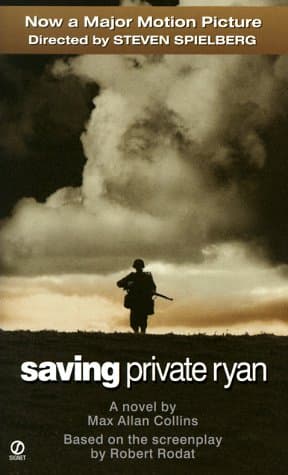
The Value of a Single Life vs. The Greater Good
What This Theme Explores
This theme probes the war-time collision between compassionate individualism and ruthless utilitarian calculus: can one life be worth risking many, and who gets to decide? It tests whether moral gestures—like rescuing Private James Francis Ryan—can survive the grind of military necessity that orders Captain John H. Miller and his men toward an objective that defies wartime logic. The story asks whether “the greater good” is measured only in strategic gains or also in the preservation of a soldier’s humanity. Ultimately, it reframes the question from battlefield math to moral legacy: if others die so one may live, what future can repay that debt?
How It Develops
The conflict begins far from the front lines, where generals treat lives as symbols as much as assets. Moved by the Bixby letter and the prospect of a mother losing all her sons, high command authorizes Ryan’s rescue as a humane gesture—compassion that doubles as national morale. At this distance, the costs are abstract and the “greater good” seems compatible with mercy.
Once the order reaches the squad, abstraction turns abrasive. Miller receives his mission as a fait accompli; his men hear it as a “public relations mission” that insults battlefield logic, with Private Robert Reiben voicing the hard arithmetic that eight lives for one is indefensible (Chapter 6-10 Summary). Skepticism is first theoretical, a debate about orders and sense.
Loss makes the debate visceral. Private Anthony Caparzo dies attempting a private act of mercy—saving a child—that Miller forbids in service of the mission, exposing a cruel paradox: rescuing one designated life may require denying compassion to others. Then Corporal Edward Wade bleeds out after Miller diverts to eliminate a machine-gun nest for the sake of troops who will follow. “Greater good” reasoning here exacts an immediate, unbearable cost, pushing the squad toward mutiny and forcing Miller to wrestle with whether abstract duty can justify concrete death.
At Ramelle, the theme inverts. Ryan, the “single life,” refuses evacuation, insisting his duty lies with the “only brothers I had left”—the paratroopers holding a bridge that actually matters to the war effort. Miller chooses to stay and fight, aligning the personal rescue with a strategic defense: the mission to save a man becomes a mission that gives all their sacrifices recognizable purpose. In the aftermath, Miller’s “Earn this” shifts the theme’s center of gravity from strategy to stewardship, assigning Ryan—not the generals—the lifelong burden of making meaning out of others’ loss.
Key Examples
-
The Mission’s Inception: General Marshall invokes Lincoln’s Bixby letter to justify rescuing a single son as a national act of compassion.
"I pray that our Heavenly Father may assuage the anguish of your bereavement ... to have laid so costly a sacrifice upon the altar of freedom." (p. 87)
The rhetoric elevates one life into a symbol, revealing how leaders frame mercy as part of the war’s moral economy—even as the true cost will be paid by unknown soldiers on the ground. -
The Squad’s Debate: Reiben bluntly reduces the order to “arithmetic,” questioning risking many for one.
"What's the sense ... in risking eight lives to save one? ... The guy's a fuckin' private, sir." (p. 129)
His logic haunts every mile, growing heavier with each casualty and forcing the squad to confront whether obedience without sense is moral cowardice or necessary discipline (Chapter 6-10 Summary). -
The Machine-Gun Nest: Miller attacks an off-mission emplacement to spare future units.
"So we should just leave this machine-gun nest for the next company that stumbles along?" (pp. 214–215)
The choice embodies the “greater good” writ small and immediate—yet Wade’s death demonstrates how even well-intended utilitarian decisions can become ethical traps when the cost is a comrade’s life. -
Ryan’s Refusal: When found, Ryan rejects the premise that his life is worth more.
"For Christ's sake, my life isn't worth the lives of two others." (p. 259)
By defending the bridge with his unit, he insists that duty and honor are not reserved for the rescuers; he transforms from object of rescue into a moral agent, exposing the mission’s shaky assumptions. -
The Final Reconciliation: Sergeant Michael Horvath reframes their ordeal as the one “decent thing” amid horror.
"Savin' Private Ryan was the one decent thing we were able to pull out of this goddamn shithole of a war." (p. 262)
His view offers the squad a way to claim meaning not through body counts or bridges, but through a single act of fidelity—rescue as a spiritual counterweight to the war’s dehumanization.
Character Connections
Captain John H. Miller embodies the theme’s fulcrum. A professional soldier and a schoolteacher, he navigates the rift between mission and mercy, making choices that alternately privilege abstract duty (the machine-gun nest) and human meaning (staying at Ramelle). His arc shows that leadership in war is not about perfect calculus but about finding a purpose that can bear the weight of loss.
Private Robert Reiben is the narrative’s realist conscience. His resistance—culminating in near-mutiny—forces the unit to articulate why the mission matters beyond orders. When he ultimately recommits, it is not because the math has changed, but because the meaning has: defending the bridge and each other reframes risk as loyalty rather than waste.
Private James Francis Ryan complicates the theme by refusing special status. He insists his life is inseparable from his comrades’ and later accepts Miller’s charge to “earn” the sacrifices made for him. Ryan turns the argument from whether one life is “worth” many to how one life can responsibly carry the weight of many.
Corporal Timothy Upham represents the idealist crushed by moral complexity. He begins believing in rules and humane exceptions; witnessing betrayal, mercy, and slaughter in rapid succession leaves him paralyzed when action is most needed. Upham’s trajectory exposes a painful truth: in war, morality is often situational, and failing to act can be as damning as acting wrongly.
Symbolic Elements
The Bixby Letter symbolizes home-front compassion translated into wartime policy. Noble in intent yet distant from consequences, it dramatizes how governments sanctify individual loss even as they orchestrate strategies that will multiply it.
The Dog Tags scene—men sifting through the identifiers of the dead like poker chips—embodies dehumanization (Chapter 11-15 Summary). Wade’s rebuke—"Every one of those dog tags is a dead man, you dumb fucks" (p. 199)—yanks the squad (and reader) back to the theme’s core: every “number” is a person, and the language of totals obscures moral reality.
The Bridge at Ramelle is the physical emblem of the greater good. As a strategic chokepoint, it legitimizes the squad’s final stand in military terms, allowing Miller to fuse personal rescue with collective defense. By dying for a clear objective, the men reclaim agency over the meaning of their sacrifice.
Contemporary Relevance
The dilemma of one life versus many resonates across modern conflicts: special operations that risk teams to retrieve a single captive, rules of engagement that balance civilian protection with force protection, and public debates over “acceptable losses.” Beyond the battlefield, the theme surfaces in disaster triage, pandemic policy, and humanitarian interventions—any sphere where leaders weigh individual dignity against collective outcomes. Saving Private Ryan remains a touchstone because it refuses an easy answer: it insists that even necessary utilitarian choices demand ongoing moral accountability from survivors and institutions alike.
Essential Quote
"Earn this." (p. 311)
Miller’s dying words relocate the calculus from command decisions to personal ethics. Rather than justifying deaths through strategy, the novel makes meaning contingent on how Ryan lives—a lifelong obligation that honors individual sacrifice without pretending it can ever be fully repaid. The greater good, the story concludes, is not a number but a sustained commitment to live in a way that dignifies the dead.