What This Theme Explores
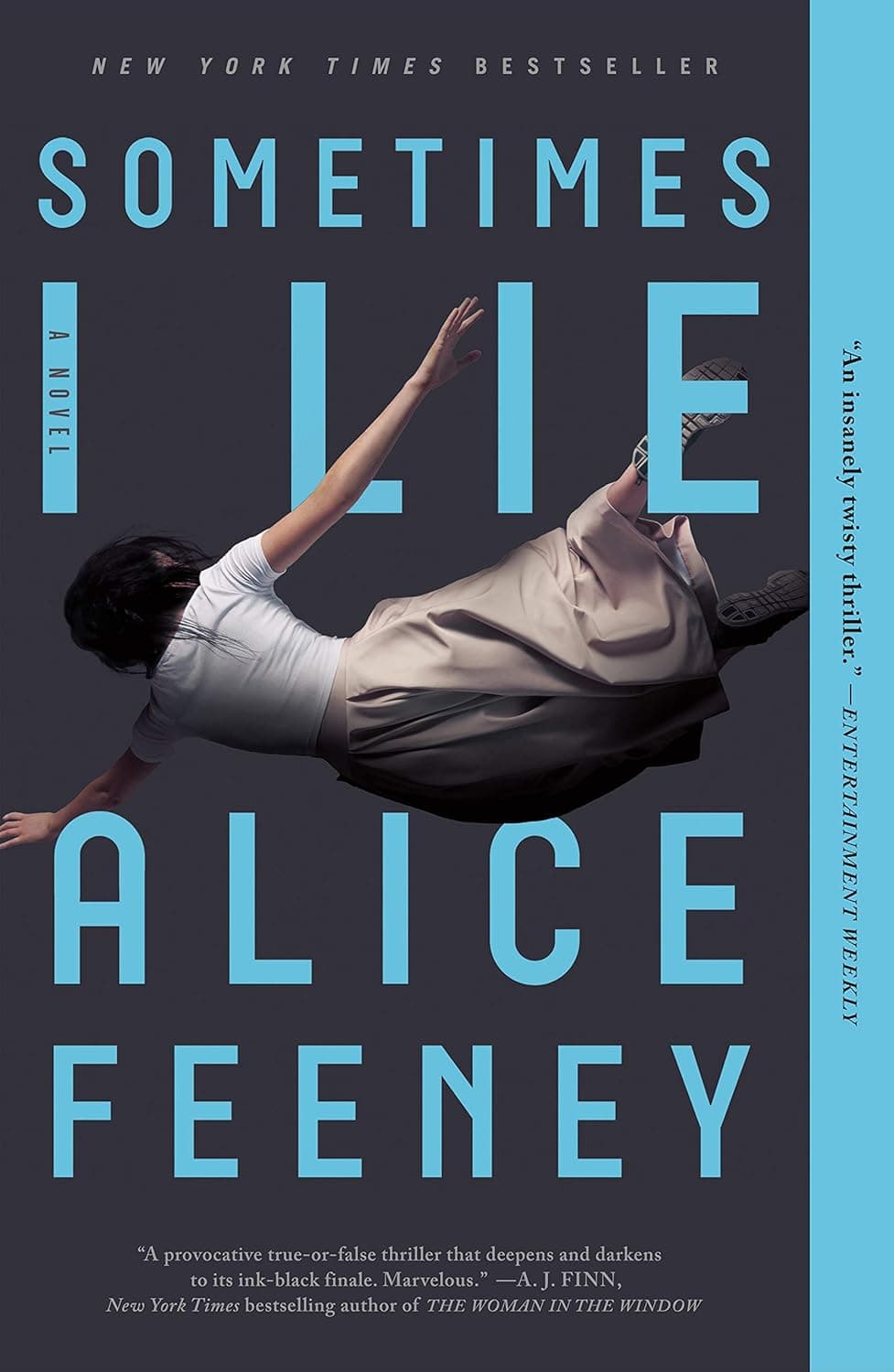
Deception and unreliable narration in Alice Feeney’s Sometimes I Lie interrogate where truth ends and self-protective fiction begins. From the first page, the story asks whether identity can be built from lies—and what happens when those lies become more coherent than memory. The narrative probes how trauma distorts perception, how stories beget more stories, and how readers collude with narrators because we want the world to make sense. Most unsettlingly, the book suggests that we are least trustworthy when we are most certain.
How It Develops
Feeney structures deception into the book’s architecture, weaving three timelines—“Now” in the hospital, “Then” in the week before the accident, and “Before” in childhood diaries—to make each apparent disclosure create a deeper uncertainty. The “Now” sections trap the reader inside the mind of Amber Reynolds, whose coma-bound perceptions feel like truth precisely because they are all we have. Her fear, jealousy, and suspicion color everything; we learn to doubt with her and, more dangerously, to believe with her.
In the middle stretch, paranoia grows as Amber’s fragmentary memories interact with real-world secrets. The “Then” chapters intensify mistrust by revealing half-truths and omissions: her husband Paul Reynolds hides a career opportunity, and a colleague’s loyalty blurs lines between support and manipulation. The “Before” diary voice seems like a stable anchor—a child’s supposed candor—offering readers a refuge of “authentic” backstory, even as the present narrative grows more hallucinatory.
The supposed stability collapses when the diaries’ authorship is inverted: they belong to Claire, not Amber. This reversal reframes every tender memory as a borrowed narrative, exposing identity as a performance built on stolen text. In the final revelations—charted in the Full Book Summary)—the narrator who calls herself Amber is, in fact, Claire, and the woman the book has called Claire is the real Amber (born Amber Taylor). What seemed like a mystery to be solved reveals itself as a confession masquerading as memory: the novel’s truth was always a narrative skillfully told by someone who benefits from your belief.
Key Examples
-
The narrator’s opening confession:
My name is Amber Reynolds. There are three things you should know about me:
- I'm in a coma.
- My husband doesn't love me anymore.
- Sometimes I lie. Introduced on page 1, this list blends certainty with destabilization. The third claim splashes doubt across the first two, teaching readers to treat every future “fact” as contingent.
-
The imaginary friend, Jo: Amber’s intimate exchanges with Jo feel like lifelines, but the revelation that Jo is invented retroactively transforms counsel into self-soothing and alibi. The existence of a fabricated confidante shows how easily the narrator builds realities, and how warmly readers accept them when they meet an emotional need.
-
The diary deception: The “Before” sections appear to guarantee childhood truthfulness until the disclosure that the diaries are Claire’s. This twist doesn’t just misdirect; it reassigns pain, recasting the narrator as an identity-thief whose authority rests on appropriated trauma.
-
The final identity turn: The climactic reveal that the narrator posing as Amber is actually Claire, and that “Claire” is the real Amber (Amber Taylor), converts plot into meta-commentary. It demonstrates that the novel’s central perspective—our most trusted instrument—has been calibrated to mislead, forcing readers to re-interpret every relationship and motive.
Character Connections
The narrator (Claire posing as Amber) weaponizes storytelling. By presenting Claire’s diaries as her own and inventing a friend who validates her, she performs a curated self that solicits sympathy while controlling information. Her unreliability is not random; it’s strategic, hiding culpability behind the softer light of victimhood and the haze of trauma.
Amber (the real Amber, misnamed as Claire) becomes both the object and casualty of narrative theft. Her history is expropriated, and her identity is rewritten in real time, illustrating how power accrues to the one who controls the story—on the page and in life. Yet Amber also lies to shield her sister and manage others’ perceptions, suggesting deception propagates inside families as a warped form of loyalty.
Paul Reynolds’s secrecy (especially around his book deal) shows how everyday concealments can be reinterpreted as sinister when filtered through distrust. His omissions supply oxygen to the narrator’s paranoid logic; in a world built on half-truths, even benign surprises mutate into evidence.
Edward Clarke embodies predatory deception, adopting false professional identities to access the vulnerable. His masquerades literalize the danger of trusting surfaces, amplifying the novel’s warning that institutions and uniforms can be costumes.
Madeline Frost turns public benevolence into branding, hiding selfishness behind philanthropic gloss. Her abandonment and financial exploitation reveal deception not as a momentary lapse but as a sustained public performance with private victims.
Symbolic Elements
-
The coma: The hospital-bound “Now” sections externalize unreliable perception: consciousness flickers, time warps, and sensory data are suspect. The body’s paralysis mirrors the reader’s helplessness, trapped inside a perspective we cannot independently verify.
-
Diaries: A diary typically promises intimacy and truth; here it becomes a counterfeit certificate of authenticity. By swapping authorship, the novel converts the emblem of private honesty into the engine of public deceit.
-
Mirrors and reflections: The narrator’s alienation from her own reflection symbolizes a self composed of borrowed parts. The mirror becomes a lie-check the narrator fails, reflecting the persona she has chosen rather than the identity she has suppressed.
Contemporary Relevance
Sometimes I Lie resonates in a culture saturated with curated feeds and competing narratives. The book shows how easily stories gain authority when they meet an emotional need, echoing our susceptibility to persuasive threads, charismatic posts, and neatly packaged victimhood. It cautions that “authenticity” can be staged, that memory is editable, and that the most convincing liars are those who first persuade themselves. In an everyday landscape of filters and “post-truth” spin, the novel’s disorientation feels less like a thriller device than a recognizable way of seeing.
Essential Quote
My name is Amber Reynolds. There are three things you should know about me:
- I'm in a coma.
- My husband doesn't love me anymore.
- Sometimes I lie.
As a thesis statement, this confession on page 1 reprograms the reader’s contract with the text: every certainty is already contaminated. By pairing apparent facts with an admission of deceit, Feeney instructs us to scrutinize both content and storyteller—anticipating the novel’s ultimate revelation that the most dramatic lie is the “I” who speaks.