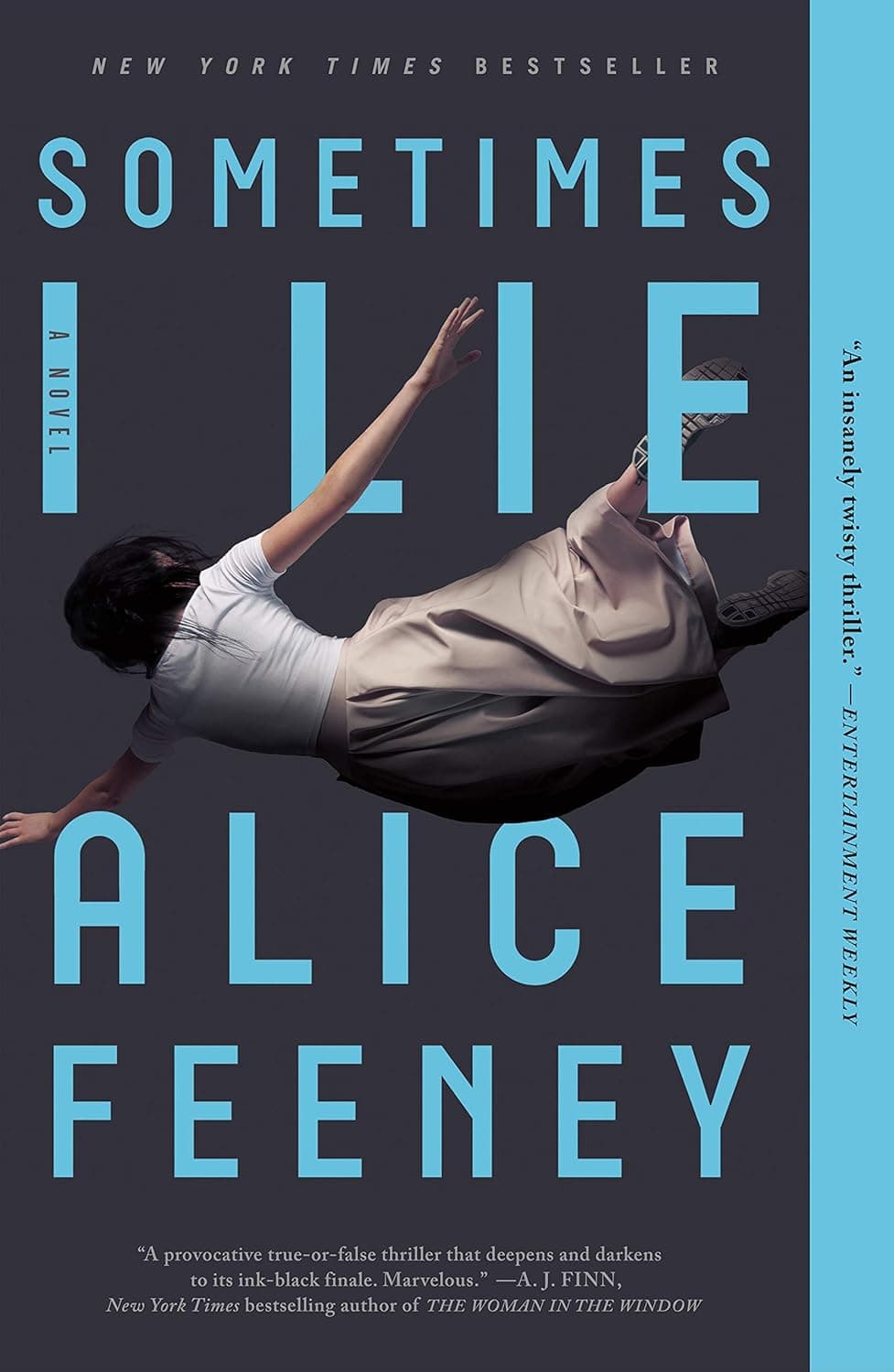
What This Theme Explores
Identity and self‑perception in Sometimes I Lie interrogates how a person becomes who she is—through memory, performance, and the stories she tells herself to survive. The novel asks whether the “real” self can ever be separated from the masks demanded by love, work, and trauma, especially when narration itself is unreliable. It probes how the body, memory, and public gaze can override private self‑knowledge, and whether reclaiming identity means choosing which lies to keep. For a concise scholarly definition of this theme, see Identity and Self‑Perception.
How It Develops
The novel opens with sensory deprivation and cognitive disarray: the protagonist wakes in a hospital, unable to move or speak, and clings to a triad—“I’m in a coma. My husband doesn’t love me. I’m lying.”—as if a name tag for a self that keeps slipping away. In the early coma chapters, the sterile, watchful world of the ward becomes a crucible for identity formation; the narrator tries to make a coherent “I” out of fragments and fears, a desperate anchoring that immediately casts doubt on what can be trusted in her own voice. This insistence on the three facts sets the paradox that drives the theme in the Chapter 1‑5 Summary.
As routine sets in, identity is filtered through the institutional gaze. The nurses function like mirrors, reflecting a version of her defined by tubes and charts; meanwhile, she counts objects and rituals to feel real, building a private identity to counter the public label “patient.” This split between the visible, medicalized body and the invisible narrating self intensifies the dissonance between how she is seen and who she believes herself to be, a tension sharpened in the Chapter 6‑10 Summary.
Outside the ward, the workplace exposes identity as performance. On Coffee Morning, the presenter persona is scripted, trusted, and monetized, yet remains precarious—especially when Madeline Frost calls her “a liar” and she replies that she’s also “the voice people trust.” Midway through, flashbacks and diary pages complicate the narrative: childhood entries resurface with a voice that once decided she was “not very interesting,” and the act of burning pages dramatizes a will to revise the past by excising former selves. Identity here is not discovered but edited, cut, and rewritten.
By the time the story reaches its climactic confrontations—with her sister, Edward, and Paul Reynolds—the protagonist must decide which identity she will inhabit to survive. The mirror in the final scene, reflecting what looks like a new face, signals both the danger and possibility of reinvention: the self can be rebuilt, but never without cost. The theme closes not with a stable answer, but with the unsettling knowledge that recognition—by self or others—is always provisional.
Key Examples
-
The “Three Things” mantra
“I’m in a coma. My husband doesn’t love me. I’m lying.”
Repeating this triad is a survival strategy and a confession; it seeks to stabilize identity even as the final clause poisons certainty. The mantra teaches readers to doubt the narrator’s self‑definition while revealing how much she needs a script to exist. -
Mirror moments
“I look at the mirror and brush my hair over the bruise with my fingers.” – Full Book Summary
The mirror shows damage the narrator tries to conceal, capturing the gap between outward presentation and inward truth. Her gesture—covering the bruise—embodies the novel’s core tension: identity as something patched, curated, and never fully owned. -
Diary as a second skin
“I pull out the diary, the pages trembling like a heartbeat, and read the line ‘I’m Amber, I’m a liar.’” – Character: Amber Reynolds
The diary records an earlier self that both accuses and defines her; claiming “liar” becomes a perverse form of self‑knowledge. When she later burns pages, she is not erasing truth so much as molting—testing whether shedding one version of the self permits another to grow. -
The “pears in a pod” metaphor
“We’re like two peas in a pod.” – Character: Claire
This childhood refrain becomes sinister in adulthood, hinting at identities that have fused past the point of choice. The metaphor exposes how intimacy can blur boundaries until imitation, envy, and control are indistinguishable from love. -
The red robin
“I pick up the robin’s tiny body, its red breast a flash of life in the darkness.” – Chapter 21‑25 Summary
The robin’s abrupt stillness mirrors the narrator’s suspended life in the coma and the fragility of any self that relies on breath, memory, and witness. Its brief flare of color in the dark suggests identity as a fleeting signal: vivid, then gone.
Character Connections
Amber Reynolds embodies the theme’s instability: as radio presenter, wife, and patient, she toggles between selves others demand and the voice she claims for herself. Her talent for performance gives her power on‑air, but it also estranges her from her own desires—she knows how to sound trustworthy better than she knows how to trust her feelings. The diary’s “I’m a liar” becomes both a warning label and a tool; by naming her duplicity, she gains the agency to choose when to deploy it.
Claire functions as the most intimate mirror and the most invasive mask. What begins as sisterly protection curdles into control, showing how a shared history can fix a person in a role she’s outgrown. Through Claire, the novel argues that identity can be imprisoned by someone else’s story about you—especially when that story began in childhood and was mistaken for love.
Paul Reynolds represents the legitimizing power of an external gaze: his praise of professional success feeds the presenter persona while his emotional distance at home undermines the wife‑self. He reveals how validation and neglect can sculpt identity in opposing directions, leaving the protagonist divided. Madeline Frost embodies the public ideal—polished, consistent, consumable—and her judgment forces the narrator to recognize the cost of becoming a brand. Edward Clarke complicates the line between truth and performance; his manipulations make the narrator’s lies feel like defense, not offense, blurring culpability with survival.
Symbolic Elements
Mirrors: Every glance becomes a confrontation with a version of the self that may be staged or damaged. The mirror insists that identity is both seen and self‑seen—and never exactly the same in both frames.
Diaries: As “skins” the narrator can wear or shed, diaries preserve memory while trapping it in a single, possibly false, draft. Their destruction is a bid for rebirth, revealing identity as revision rather than discovery.
The red robin: A bright pulse against darkness, the robin symbolizes how quickly a coherent self can vanish when life support—literal or social—fails. It condenses the novel’s precarious oscillation between animation and oblivion.
“Two peas in a pod”: What sounds like harmony becomes a warning about codependency. The phrase signals the danger of identities merged so tightly that competition and mimicry replace individuality.
Hospital equipment (ventilator, IV drip): These machines impose the role of “patient,” flattening the person into a chart. They suggest how systems and labels can overwrite agency, reducing selfhood to a set of readings.
Contemporary Relevance
The novel’s preoccupation with masks resonates in an era of curated selves and algorithmic approval: the on‑air persona maps neatly onto social‑media performance, where trust is a product and identity a feed. Its depiction of dissociation, ritualized counting, and trauma‑tinged memory anticipates contemporary conversations about mental health, showing how people build temporary selves to survive overwhelming stress. Finally, the pressure to be a “perfect” partner, professional, and public figure speaks to gendered expectations that demand women perform contradictions—nurturing yet ruthless, authentic yet marketable—until the performance threatens to become the person.
Essential Quote
“I’m the daughter they always had. I’m the daughter they always wanted. I’m the daughter they never wanted.” – Amber Reynolds
This triadic self‑portrait compresses the book’s central paradox: identity is formed by others’ desires and refusals as much as by one’s own will. The repetition pivots from certainty to erasure, charting how a single role can splinter into mutually exclusive versions that cannot all be true—and yet all feel true to the person forced to perform them.