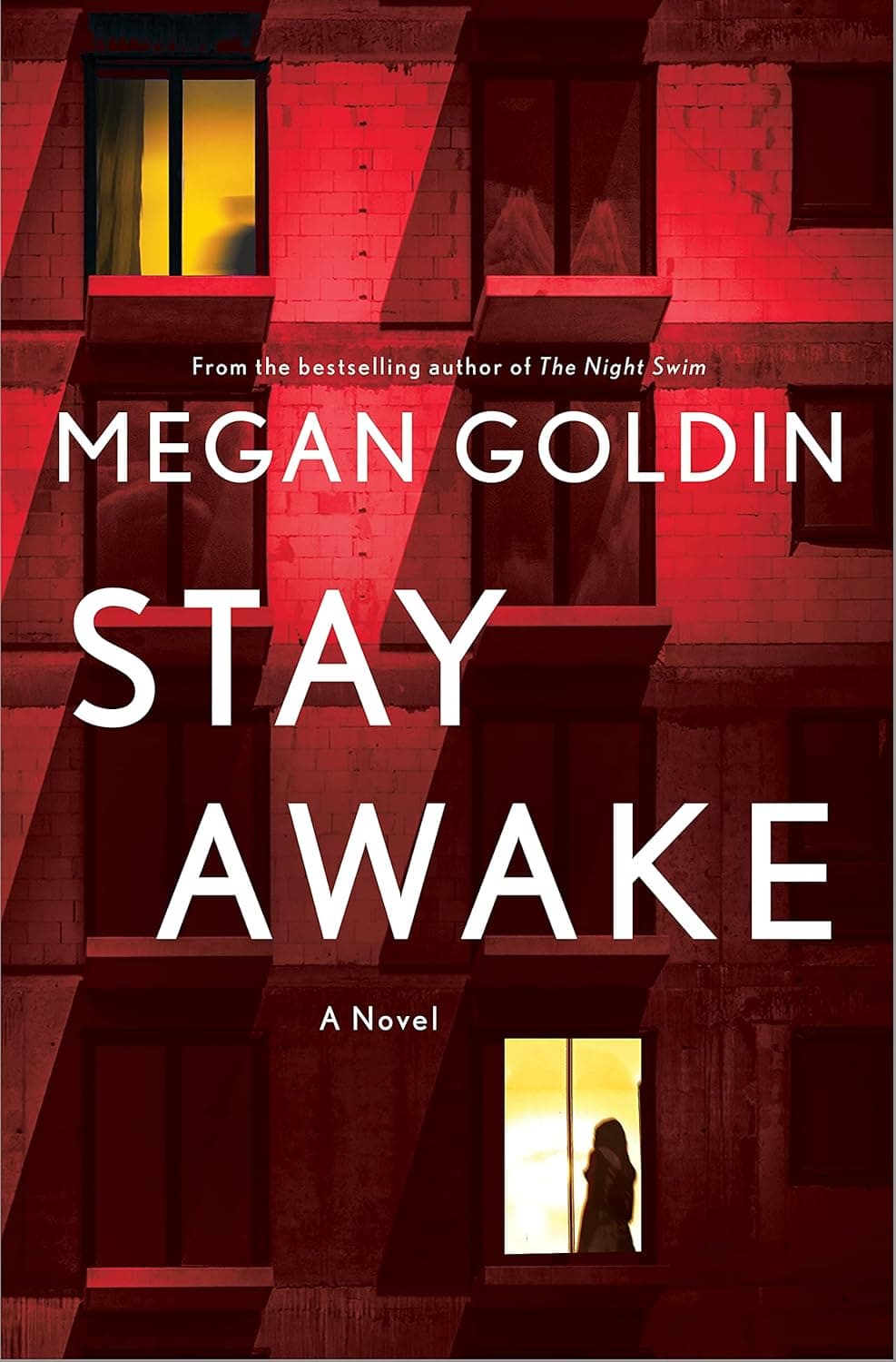
Opening
A night of experimental art two years ago collides with a present-day homicide investigation, pulling Liv Reese into the crosshairs of two crimes and her own fractured mind. As detectives close in, revelations about Liv’s past—and the true nature of her memory loss—raise the stakes from mystery to survival.
What Happens
Chapter 21: The Guerrilla Art Show
Two years earlier, Liv—then a reporter for Cultura—is pushed by her editor to cover a secret performance by an elusive artist known as Q, despite her plans to celebrate her best friend Amy Decker’s birthday with her boyfriend Marco Reggio. At a crumbling warehouse, attendants confiscate her phone and belongings. She steps through darkness into a space that sounds like a crowded gallery—until Liv realizes the party is just a recording.
In a pitch-black room, a spotlight isolates a woman bound to a chair with a hessian hood. Velvet ropes cordon her off. A placard reads WOMAN ON CHAIR. A whisper swells: “Kill. Kill. Kill.” Footage flickers on the walls—grainy, voyeuristic scenes of women watched, pursued, harmed. A man’s voice—Q—speaks from the shadows about free will, challenging Liv’s choice not to cross the ropes and intervene. He invites her to leave a card if she wants an interview. Liv bolts, convinced the exhibit targets and terrorizes her specifically.
Chapter 22: The Fingerprint Match
In the present, detectives break for lunch. Detective Darcy Halliday shares her Afghanistan service and path to the NYPD; Detective Jack Lavelle describes growing up in a homicide family. Forensics interrupts: a fingerprint from the victim’s wine bottle is a 14-point match to Liv Reese, whose prints sit in the FBI system from a previous case.
They call Jerry Krause, the detective on that old file. Gruff and dismissive, Krause corrects their assumption: Liv wasn’t a victim—she was the prime suspect in an unsolved murder. The DA declined charges for lack of evidence. Krause’s parting line reframes their search: if Liv isn’t the killer, then she is the sole witness to a brutal, cold-blooded murder.
Chapter 23: The Panic Attack
Liv meets Dean—her former friend Emily’s ex—hoping to fill the vast blank of the last two years. She insists on a noisy deli instead of a cab, keeping crowds between herself and danger. Dean proves self-absorbed, pitching his vegan oatmeal latte startup and joking about his ex while eyeing the warnings scrawled on Liv’s hands. When he asks, “Tell me about your life since we last saw each other,” she can’t answer. Panic surges.
In the restroom, she splashes water on her face and studies the scar on her torso. Back at the table, Dean’s obsessive tidiness unsettles her further. Then an old-fashioned phone rings—shattering, metallic. Her body locks. She blurts that she has to go and flees to the subway, shaken, unmoored, and still completely alone.
Chapter 24: The Birthday Dinner
The timeline returns to the night of Amy’s birthday—right after the Q exhibit. Liv arrives late to find Amy and Marco unexpectedly civil. Amy, a magnetic young doctor, is in her first serious relationship with cardiothoracic surgeon Brett Graham, who shows up even later bearing extravagant aquamarine-and-diamond earrings Liv helped him choose.
Liv recounts the disturbing art show in shorthand, trying not to derail the celebration. A man at the bar watches their table without blinking. When Brett gets called back to the hospital, the party thins. Marco reveals he has a dawn flight to Houston and can’t stay over. Liv suggests he drop Amy at Brett’s on the way—maybe a peace offering between the two people who dislike each other most. Alone on a dark street, still rattled by the exhibit and a recent break-in at her apartment, Liv hears heavy breathing behind her. Footsteps match her pace. Fear detonates.
Chapter 25: The Sitting Duck
Back in the present, a technical wall blocks the case: the basement exit cameras at the victim’s building were “coincidentally” offline, leaving a perfect blind spot for the killer’s escape. While waiting for Lavelle, Halliday digs deeper and finds an Interpol Yellow Notice: Liv has been missing, last seen in London a month ago.
Halliday calls the Scotland Yard detective who filed it. He explains that Liv suffers from a rare, severe anterograde amnesia. Every time she sleeps, her memory resets to the night of a traumatic attack two years and three months earlier—the night she was nearly murdered. The attacker was never caught. “She’s a sitting duck,” he says: if he finds her, she won’t remember the danger. Halliday finally understands the terrified, disoriented woman they’re chasing—someone living inside the past, every single day.
Character Development
These chapters split Liv in two: a savvy past self connected to friends and work, and a present self navigating terror in three-hour increments. Around her, the detectives sharpen into foils—one methodical and empathetic, one seasoned and skeptical—while Liv’s inner circle from two years ago snaps into focus.
- Liv Reese: Past Liv is ambitious, observant, and socially rooted; present Liv is hypervigilant, triggered by sensory cues (the ringing phone), and driven by survival instincts even when memory fails.
- Detective Darcy Halliday: A mission-first investigator whose military past guides her persistence and empathy; she identifies the Interpol lead and reframes Liv as vulnerable rather than evasive.
- Detective Jack Lavelle: A legacy cop with pragmatic cynicism who works the angles and recognizes bureaucratic friction, notably in the exchange with Krause.
- Amy Decker: Charismatic and affectionate, but in the cross-current of conflicting loyalties—best friend to Liv, in love with Brett, perpetually at odds with Marco.
- Marco Reggio: Loving, protective, and territorial—his absence on the crucial night and decision to escort Amy add friction to already volatile dynamics.
- Brett Graham: Charming and polished, generous with grand gestures and quick exits; his sudden departure sets an uneasy tone that echoes beyond dinner.
Themes & Symbols
The novel’s engine revs around The Past's Influence on the Present. The homicide in the now spirals back to the unsolved case then. Evidence—fingerprints, missing footage, a Yellow Notice—tethers the two timelines to the same night: Amy’s birthday and Liv’s attack. Liv’s daily reset traps her in that past, even as new dangers circle.
Vulnerability and Manipulation saturate both timelines. Q’s exhibit corrals Liv into isolation, erodes her agency, and dares her to act—an art-world rehearsal for the predation she faces in real life. In the present, Liv’s amnesia makes her an ideal target: she can’t verify facts, track threats, or rely on allies for long.
At the center stands Memory and Identity. Liv’s self is fragmented by sleep; she wakes as an older version of the woman from two years ago, with none of the updates, and her body—scar, panic, startle reflex—holds truths her mind cannot. The result is a haunting split-screen: who she was versus who she can remember.
Finally, the novel toys with The Unreliability of Perception. Q’s party sounds are counterfeit. Security cameras promise vision but deliver static. Liv’s impressions of friends and strangers feel suspect. Seeing is rarely believing here—and misperception has lethal stakes.
Symbol: The ringing phone is a trauma trigger that collapses time. It carries the echo of the attack night and transforms mundane sound into a siren—summoning danger Liv can feel but not name.
Key Quotes
“Kill. Kill. Kill.”
The exhibit’s whisper weaponizes the crowd’s imagined voice. It pressures Liv to either intervene or accept complicity, compressing choice into a moral panic that mirrors the coercion stalking her real life.
“Tell me about your life since we last saw each other.”
Dean’s question seems harmless but detonates Liv’s panic. It exposes the void where continuity should be—and shows how identity falters when narrative memory is gone.
WOMAN ON CHAIR
The title frames a living person as an object, reducing her to a spectacle. It literalizes the book’s concern with women displayed, controlled, and silenced.
“If she wasn’t the killer, then she is the sole witness to a brutal, cold-blooded murder.”
Krause’s line pins Liv between two perilous roles and invites institutional suspicion. It also signals how easily systems can misread vulnerability as guilt.
“She’s a sitting duck.”
The Scotland Yard detective names Liv’s condition in plain terms. It recasts her odd behavior as survival under impossible constraints—and signals urgent danger from an attacker who may still be watching.
Why This Matters and Section Significance
These chapters fuse the novel’s dual tracks: the pressure-cooker night of Amy’s birthday and the present-tense manhunt. The forensic match, the offline cameras, and the Interpol notice tighten the net around Liv while the medical clarity of her amnesia transforms a puzzle into a countdown. With Liv either suspect, witness, or intended victim, every missed minute of memory becomes a liability—and every new clue pulls the story back to the same night, asking who followed her into the dark and why they still might be there.