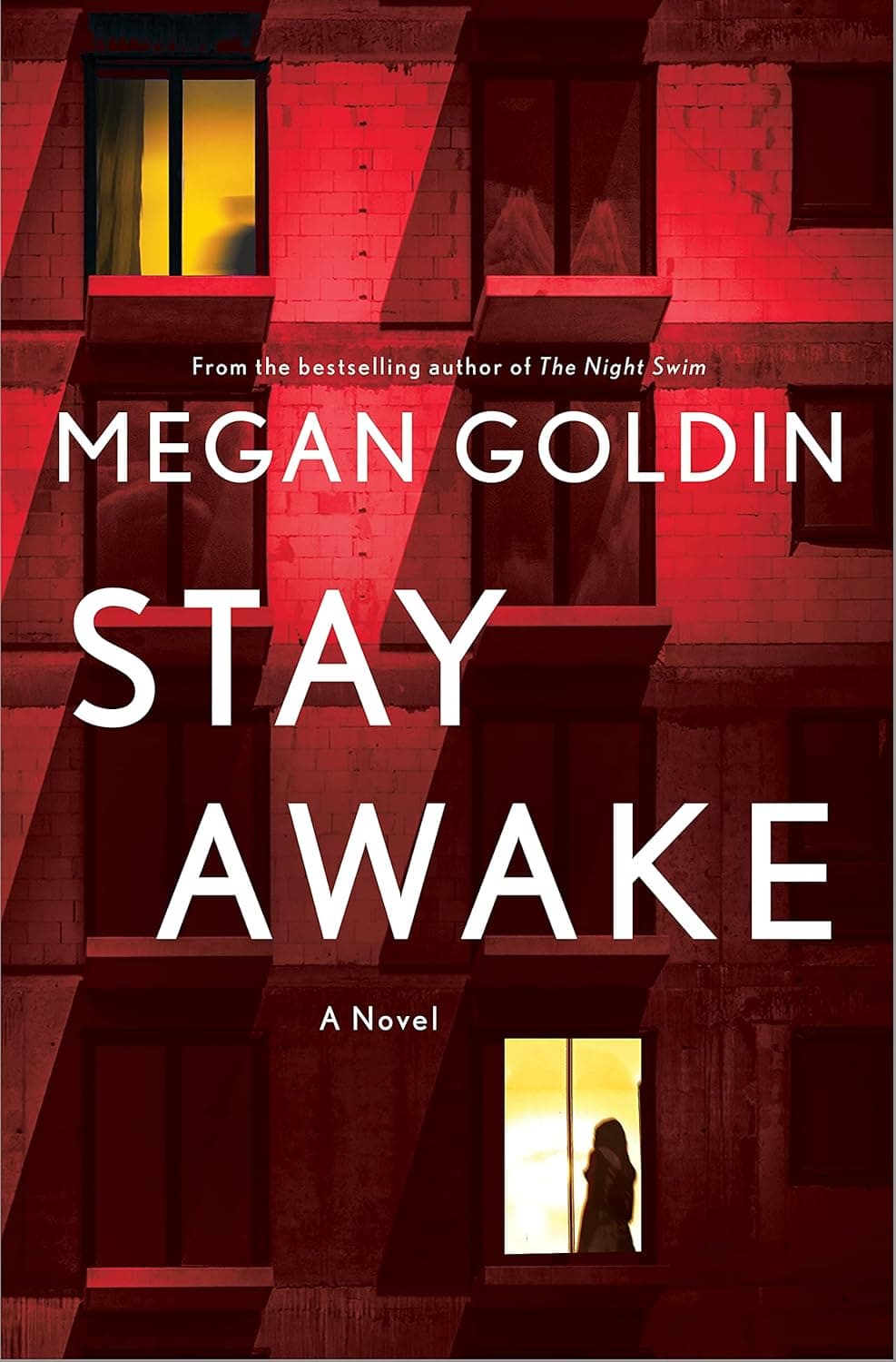
Opening
A woman wakes in a city she knows and a life she doesn’t. Across five chapters, Liv Reese stumbles through a present she can’t remember and flashbacks that reveal what she’s lost—love, stability, and control over her own story. As a bloody message on the news mirrors the notes scrawled on her skin, a private crisis collides with a public crime.
What Happens
Chapter 6: A Stranger in the Mirror
Waking on a park bench in Washington Square Park, Liv’s last clear memory is a warm summer day at her office—but the air is late-autumn cold. The jarring mismatch between memory and the world around her foregrounds The Unreliability of Perception. She looks down: ink crawls across her hands—“S-T-A-Y A-W-A-K-E” across her knuckles, and a double-underlined command by her wrist: “DON’T SLEEP! I FORGET EVERYTHING WHEN I FALL ASLEEP.” In an instant, her body becomes a message board from a self she doesn’t know, anchoring the core crisis of Memory and Identity. Panic surges; she bolts from the park.
Searching for something familiar, Liv drifts toward her office only to find her usual café shuttered. At her salon, she asks for comfort in routine and learns even routine has moved on—her stylist Stevie left for Miami. The mirror offers a shock: Liv is thinner, with darker, grown-out hair—she barely recognizes herself. She cuts it back to the style she remembers and pays with a thick roll of cash she finds in her pocket—another detail that doesn’t fit.
Outside, she nearly collides with a man who looks like her ex, Marco Reggio. The mistaken encounter breaks something open—sadness, longing, and a flare of dread—showing how The Past's Influence on the Present keeps tugging at her even as the present refuses to make sense.
Chapter 7: The Promotion Party
Flashback, two years earlier: Marco wakes a blissful, sleepy Liv in his apartment the morning after she celebrates her promotion to senior staff writer at Cultura Magazine. Their intimacy feels effortless; her future looks bright. Marco nudges her to join a lunch with a potential investor, hinting she could leverage her job to promote the investor’s wife’s handbag line—a small fissure that hints at Trust and Betrayal.
Liv maps out an ordinary Saturday: a kickboxing class with her best friend, Amy Decker, and a possible double date with Amy and her boyfriend, Brett Graham. Marco bristles, calling Brett “Dr. God Complex” and claiming he and Amy are “oil and water.” The scene subtly exposes a fault line: Liv’s worlds—work, love, friendship—run in parallel, and keeping them separate may be the only way they work.
Chapter 8: A Ghost in the Office
Back in the present, Liv steps into Cultura and finds a different magazine entirely. The receptionist is new. The décor is unfamiliar. Her old desk belongs to a chic, confident woman named Josie. Yet as Liv introduces herself, the strangers light up: they know her name and greet her like a returning star. Questions fly about her time in London—time Liv doesn’t remember at all—and the dissonance spirals.
Josie explains the shakeup: a European company bought the magazine, most of the old staff were let go, and a man named Ted Cole now runs the commercial side. Liv lies—she says Ted asked her to come in—and waits for a loaner laptop. A TV nearby flashes breaking news: a murder scene where the killer scrawled WAKE UP! in blood on a window. The words match the ones on Liv’s arm. Fear hardens into terror as her private warnings echo in a public crime.
Chapter 9: Two Lost Years
Holed up in a small meeting room, Liv tries to rebuild her life with phone calls and Post-it logic. A dismissive exchange with a police officer about her missing handbag ends with her writing a fresh warning on her hand: “DON’T TALK TO THE COPS EVER!!” She calls her bank to freeze her cards and discovers her Chase account was closed—by her—over two years ago. The revelation strips away another layer of security, underscoring her Vulnerability and Manipulation. All she has is the cash in her pocket.
One Google search detonates the truth: it’s November 2. Her last intact memories stop at July 31—two years earlier. The notes on her skin become a lifeline across a shattered timeline, proof that some version of Liv understood the stakes, even if the present-tense Liv can barely keep her footing.
Chapter 10: The Investor’s Lunch
Flashback, two years earlier: lunch with investor Dean Walker and his young wife, Emily, sours immediately. Dean is smug, sexist, and transactional, pushing Liv to guarantee free publicity in Cultura for Emily’s handbag line. Marco stays quiet, unwilling to risk the money he wants. The discomfort curdles into a moral test when Dean bullies their waiter, Kevin, then leaves a paltry tip.
Ashamed by Dean’s cruelty and by Marco’s silence, Liv slips back into the restaurant to make Kevin whole. Kevin recognizes her from her columns—an unnerving reminder of her public persona—and Liv’s choice reveals the compass she follows even when the people around her prefer expedience. The fissures in her relationship with Marco widen.
Character Development
Liv’s split timelines chart a fall from confident, principled success to terrified, resourceful survival. The past shows what she stands for; the present shows what it costs her to keep standing.
- Liv Reese: In the present, she improvises, lies when cornered, and relies on body-borne notes to navigate a hostile reality. In the past, she enjoys professional pride and moral clarity, intervening when others won’t.
- Marco Reggio: Loving and charismatic, but his ambition bends him toward passivity when power is on the line. He’s willing to leverage Liv’s job and tolerate ugly behavior to secure an investment.
- Dean Walker: A sharp-edged foil whose cruelty and entitlement illuminate Liv’s ethics and expose Marco’s compromises.
- Amy Decker and Brett Graham: Anchors of Liv’s social life who trigger Marco’s disdain, hinting at a long-standing rift in Liv’s support system.
- Ted Cole: A marker of institutional change at Cultura, representing a new corporate order that has erased Liv’s old world.
Themes & Symbols
Identity fractures where memory fails. Liv’s body becomes an external hard drive—inked commands bridging the gaps she can’t cross alone. The present-tense confusion throws her sense of self into crisis, while the flashbacks preserve a clean narrative that the present can’t hold. That tension embodies Memory and Identity: the story of who you are when your past won’t stay with you.
The world gaslights Liv’s senses—summer becomes late autumn, friends become strangers, compliments about London conjure a life she can’t access—pressing The Unreliability of Perception into every scene. The alternating timelines let the past cast its long shadow on the present, showing The Past’s Influence on the Present as both comfort and trap. And in Marco’s lunch with Dean, Trust and Betrayal shifts from abstract idea to lived experience: love buckles when ambition asks for silence.
The writing on Liv’s hands is the book’s central symbol. “STAY AWAKE” and “WAKE UP!” are both instructions and pleas—survival rules, self-to-self messages, and a chilling bridge to the murder that makes her private nightmare a public danger.
Key Quotes
“S-T-A-Y A-W-A-K-E”
- The command is literal—sleep resets Liv’s memory—and existential, a fight to keep herself intact from moment to moment. The hyphenation slows the eye, mimicking the way she must labor to stay present.
“DON’T SLEEP! I FORGET EVERYTHING WHEN I FALL ASLEEP.”
- A manifesto written on skin, it turns Liv’s body into policy and proof. The double emphasis exposes how many times she’s learned—and re-learned—this rule the hard way.
“WAKE UP!”
- Seen in blood at a crime scene and on Liv’s arm, the phrase collapses the distance between her private crisis and a public act of violence. It raises the possibility that her lost time is knotted to the murder.
“Dr. God Complex.”
- Marco’s jab at Brett telegraphs insecurity and contempt, hinting at fractures in Liv’s closest relationships. It marks a pattern: Marco frames conflicts as personality problems rather than confronting his own compromises.
“DON’T TALK TO THE COPS EVER!!”
- Fear turns procedural advice into a survival edict. The escalation from practical caution to absolute prohibition shows how unsafe Liv feels—and how alone she is in choosing whom to trust.
Why This Matters and Section Significance
These chapters lay the mystery’s architecture: a two-year void, a body-as-notebook, and a message that links Liv’s amnesia to a murder. The dual timeline builds dramatic irony—the reader knows what Liv had, so every loss in the present lands harder. The social web (Marco, Amy, Brett) and institutional upheaval at Cultura map the terrain she must navigate to recover the truth.
Most importantly, the section fuses psychological thriller with crime story. Liv’s fight to hold on to herself becomes inseparable from the hunt for what happened in those missing years. Every note on her skin doubles as clue and confession, turning each new day into both a beginning and a reckoning.