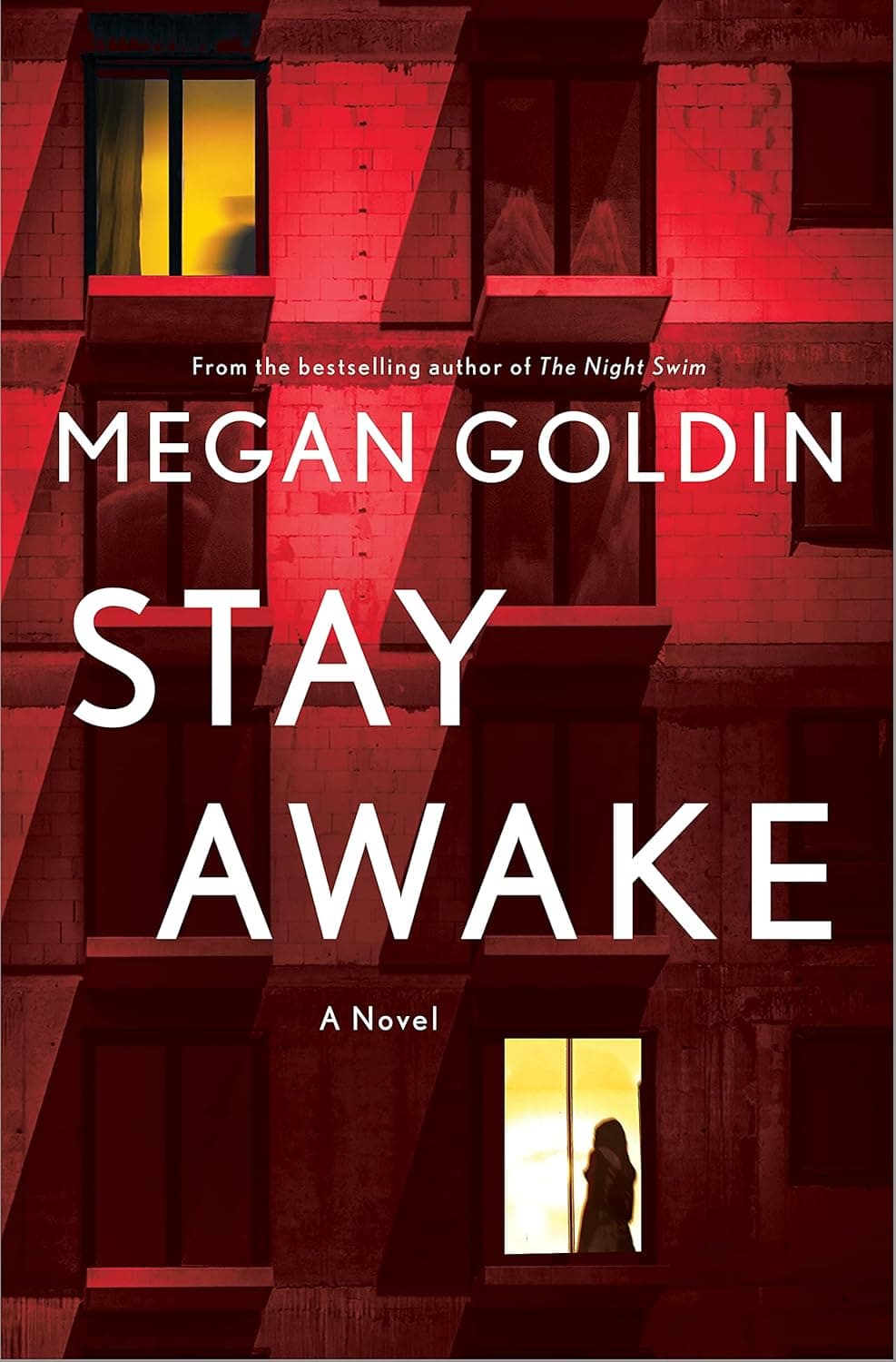
Opening
A bloody message—“WAKE UP!”—turns a clean, single-stab homicide into a taunt directed at the entire city. Detectives Darcy Halliday and Jack Lavelle chase faint leads while Liv Reese, cut off from her own past, stumbles onto clues that suggest she’s entangled in the crime. A flashback reveals the life Liv once owns, sharpening the terror of what she’s become.
What Happens
Chapter 11: Wednesday 10:20 A.M.
Halliday and Lavelle head to the city morgue, trading early impressions of a case with one big problem: an unidentified victim. The scene, though, overflows with forensics—hundreds of fingerprints that will take days to sort. Dr. Cutter, the chief pathologist, greets them with dark humor and fast-tracks dental impressions to speed identification.
Halliday drops a critical exhibit—the wine bottle from beside the bed—at the lab, hoping it carries prints or DNA. Back in the car, Lavelle confirms officers are combing the mountain of CCTV while he and Halliday stay in the field. Their only immediate message is literal: “WAKE UP!” scrawled in blood on the bedroom window. Halliday flags its brevity and placement as deliberate, not psychotic rambling. Witness statements start to align: a door slam around 2 a.m.; a man “like Ryan Reynolds” with a woman with very long, dark hair entering the elevator the previous morning. Halliday connects those details to long, dark hairs on the pillow and in the bathroom, building a working theory that the killer may be a woman who drugged the victim.
As they pull into the precinct, Lavelle comments on Halliday’s relentless training. She reveals she’s preparing for a fifty-mile ultramarathon to honor Tony Lopez, a military friend who lost a leg in an IED blast and later died by suicide—a grief that keeps her moving.
Chapter 12: Wednesday 10:35 A.M.
At Cultura’s meeting room, Liv pores over headlines on a loaner laptop, trying to fill a two-year void. She finds a story about a midtown murder and that same window message—“WAKE UP!” The victim remains unidentified. When she tries her email and social accounts, she’s locked out for “unusual activity,” and recovery codes route to a phone she no longer has. Her digital self vanishes in real time.
The room phone rings. A muffled man asks, “Liv?” He demands to know where she put “the damn knife,” claiming she took it while he was in the bathroom. Then: “Don’t tell me you fell asleep and forgot everything again?” He knows about her memory gaps. Josie bursts in to pull Liv to a planning meeting, and when Liv returns, the caller is gone, leaving dread in his wake and the sense that she’s already crossed a line she can’t remember.
Chapter 13: Two Years Earlier
Two years before, Liv’s life hums with deadlines and sharp opinions. In a pitch meeting, her editor Frank assigns her the year-end arts feature, infuriating Naomi, Cultura’s arts writer, who already resents Liv for reporting a photographer Naomi dated for harassment. Liv hesitates—her raw review of Milo Zee last time caused a scandal—but Frank insists her acid honesty is exactly what he wants.
Afterward, Liv asks Sonya, the style editor, to assess her roommate Emily’s handbag designs. Sonya doesn’t mince words—“cheap and nasty knockoffs”—and suggests Emily find a new hobby. Privately relieved, Liv plans to tell Marco Reggio she tried. Back at her desk, she finds a Post-it: Kevin, the waiter from a recent dinner with Marco, Dean, and Emily, has called again—for the third time. Persistence tips into menace. She crumples the note, uneasy.
Chapter 14: Wednesday 11:02 A.M.
At the precinct, Halliday tapes a printout of the blood message to a window and realizes it’s written backward so it reads from outside—an audience in mind. Detectives Rosco and Tran from Central Robbery join the task force. Halliday loops in Owen Jeffries, a CIA friend from her military days, who agrees the writing suggests planning and offers to run it through a new algorithm to profile the writer’s gender, handedness, and approximate age.
They brief Captain Ken Clarke. Rosco pitches a mob hit, pointing to the single, efficient stab wound. Halliday pushes back: a professional doesn’t “get sidetracked with art projects.” She refuses to lock into a counter-theory, guarding against confirmation bias. After the meeting, Clarke privately asks Lavelle to keep an eye on Halliday. Her military records are sealed, he says, and he’s under pressure to make her transfer permanent. Before he signs off, he wants to know whether she’s an asset—or a liability he’s hiring to hit a quota.
Chapter 15: Wednesday 12:01 P.M.
At lunch, whispers ripple around Liv: she seems “lost and confused.” The office TV blares the top story—the “WAKE UP!” murder—while the anchor coins the killer’s nickname: “The Sleepless Killer.” A police source claims evidence at the scene could identify the killer within hours. Liv instinctively glances at her wrist, where she has written the same words in pen.
A colleague spills coffee on her, and the stylist, Claudine, brings Liv to the fashion closet. Inside the changing booth, Liv catches herself in the mirror. Her forearms are covered in frantic, overlapping ink—messages like “DON’T TRUST ANYONE.” Then she notices what looks like a lipstick smear in the reflection. It’s not on the glass. It’s on her: a puckered red scar just below her ribcage, a wound she doesn’t remember surviving.
Character Development
The investigation tightens while inner lives crack open, pairing a methodical hunt with a personal unravelling.
- Liv Reese: Isolation hardens into terror when the anonymous caller references a missing knife and her memory gaps. The writing on her arms turns her body into a desperate breadcrumb trail, and the unfamiliar scar hints at violence she can’t name. Each discovery pushes her from passive victim to possible actor in a crime she can’t recall.
- Detective Darcy Halliday: Calm, incisive, and resourceful, Halliday spots the reversed message and leverages covert contacts to accelerate the profile. Her ultramarathon training and Tony Lopez’s death reveal a private engine of grief and duty. Professionally, she walks a tightrope—brilliant under pressure yet scrutinized for a past locked behind sealed files.
- Detective Jack Lavelle: Steady and fair-minded, Lavelle respects Halliday’s instincts and defends her judgment. Clarke’s request to evaluate his partner tests his integrity, positioning him between office politics and the evidence-driven partnership forming in real time.
Themes & Symbols
The chapters deepen Memory and Identity as Liv’s past slips further out of reach. Locked-out accounts erase her digital footprint, while her arms and scar become living archives of trauma and instruction. The body becomes a narrative device, inscribing survival notes for a self that resets with sleep.
Competing interpretations underscore The Unreliability of Perception. Rosco sees a clinical hit; Halliday sees an emotional statement—and the backward lettering proves an outside audience mattered. The message “WAKE UP!” doubles as a public provocation and Liv’s private lifeline.
The story also traces The Past’s Influence on the Present: Halliday’s service opens doors (CIA support) and suspicion (sealed records), while Liv’s flashback to Cultura—work wins, jealous rivals, a creeping suitor—plants seeds that bloom into current danger. And in a climate of Trust and Betrayal, Liv’s own handwriting warns her off everyone, even as a man who knows her vulnerabilities demands a weapon she can’t recall taking; Clarke, meanwhile, betrays his new detective’s trust by tasking her partner to watch her.
Key Quotes
“WAKE UP!”
As crime-scene graffiti, the phrase is a taunt crafted for visibility—reversed to read from outside. For Liv, it’s a survival script she writes on her skin, collapsing the case’s public spectacle into her private crisis.
“Don’t tell me you fell asleep and forgot everything again?”
The caller’s line confirms knowledge of Liv’s condition and implies a pattern. It reframes her amnesia from random misfortune to a vulnerability someone actively exploits.
“DON’T TRUST ANYONE.”
Scrawled on Liv’s forearm, this directive functions as both warning and symptom: a clue that previous versions of Liv have been deceived, and evidence of the paranoia such betrayal breeds.
“A contract killer wouldn’t get sidetracked with art projects.”
Halliday punctures the mob-hit theory with pragmatism, separating efficient murder from expressive messaging. The quip articulates her investigative ethos: follow behavior, not clichés.
Why This Matters and Section Significance
These chapters fuse the case and the character study. Liv is no longer a bystander to her own life—she’s tethered to a knife, a message, and a scar that point straight into the homicide investigation. The media’s “Sleepless Killer” label brings the hunt into public view, shrinking Liv’s room to hide.
For the detectives, the partnership takes shape under pressure, with Halliday’s insight and unconventional reach sharpening their pursuit. Internal scrutiny from Clarke adds friction that will either fracture the team or forge it. Structurally, the parallel narratives tighten: while Halliday and Lavelle assemble a profile from traces, the reader watches Liv piece together a self from wounds, ink, and fear—two investigations converging on the same name.