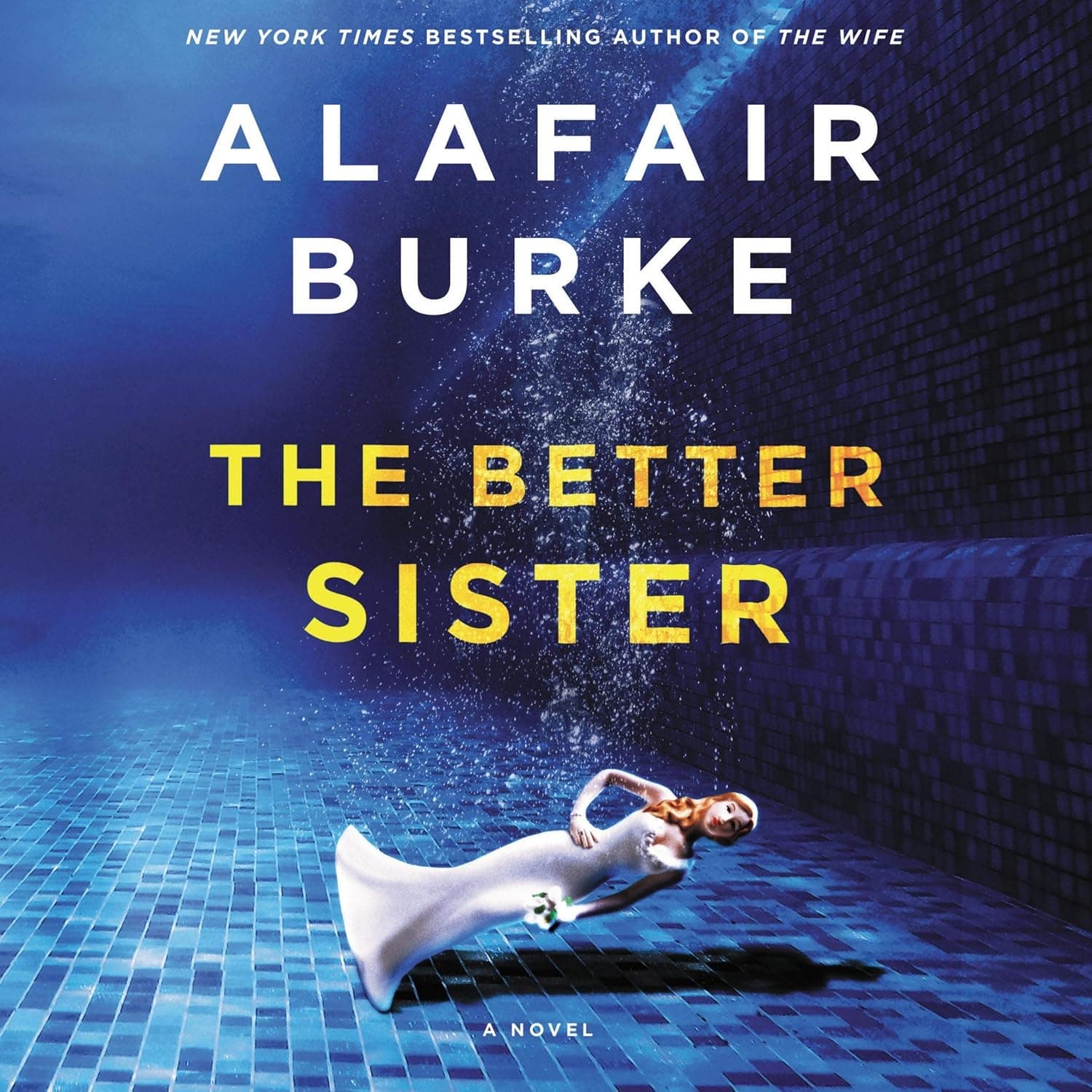
Most Important Quotes
These quotes are essential to understanding the novel's core conflicts, character motivations, and major revelations.
The Betrayal that Begins Everything
"I betrayed my sister while standing on the main stairs of the Metropolitan Museum of Art in a beaded Versace gown (borrowed) and five-inch stiletto heels (never worn again)."
Speaker: Chloe Taylor | Context: Opening line of the Prologue, when Chloe recalls the Met Gala night and Adam’s emergency call about Nicky.
Analysis: The sentence fuses spectacle with sin, inaugurating the central tensions of Sisterhood and Rivalry and Betrayal and Loyalty. Its glamor-guilt juxtaposition crystallizes Public Image vs. Private Reality, as couture becomes a costume masking a moral collapse. As a confessional prologue, the line positions Chloe as both narrator and unreliable witness, her self-indicting tone signaling that her success rests on contested ground. The specificity of “borrowed” and “never worn again” works as synecdoche for the night’s irreversible consequences, foreshadowing the unraveling of a life built on a single, fateful choice.
The Resentment Beneath the Surface
"But it’s what you’ve always dreamed of, isn’t it? And now you have it."
Speaker: Adam Macintosh | Context: Chapter 1; in bed after a flattering interview, Adam’s praise needles Chloe rather than comforting her.
Analysis: The sweetness of the wording curdles into a veiled rebuke, revealing hairline fractures in the marriage that will later split wide open. The line exemplifies the novel’s fixation on Public Image vs. Private Reality: Adam performs support even as he resents Chloe’s ascendance. Burke uses tonal irony—compliment as accusation—to hint at power imbalance and control that will culminate in coercion and violence. This small, stinging moment is a crucial breadcrumb, priming readers to question Adam’s persona and anticipate the darker truths to come.
The Son's Secret Motivation
"He was beating the shit out of her, okay? And she let him do it, and that’s why I recorded him."
Speaker: Ethan Macintosh | Context: Chapter 31; during cross-examination, Ethan erupts when pressed about his clandestine video.
Analysis: Ethan’s sudden candor detonates the courtroom drama and the novel’s narrative equilibrium, shifting suspicion from the teenager to the patriarch. The outburst punctures Chloe’s carefully managed public persona, exposing the hidden cycle of Domestic Abuse and Its Legacy that shaped the family. Its raw diction strips away euphemism, functioning as both evidence and indictment—of Adam’s brutality and of the silence that enabled it. The revelation reframes Ethan as protector rather than delinquent, compelling Chloe to abandon secrecy and finally speak the truth.
The Sister's Confession
"It was because Adam was starting to hurt you, and I could see how it was destroying Ethan. He was breaking that sweet little boy... I wasn’t going to let him break our son."
Speaker: Nicky Macintosh | Context: Chapter 39; after Ethan’s acquittal, Nicky admits she killed Adam and explains why.
Analysis: Nicky’s motive recasts the novel’s mystery as a story of protection rather than vengeance, deepening Sisterhood and Rivalry into sacrificial love. The ellipsis conveys a struggle to articulate trauma while “our son” binds the sisters into an unconventional, shared parenthood. Burke overturns the “bad sister” stereotype, revealing a woman who acts decisively where Chloe could not, complicating the very notion of who is “better.” The confession is the moral hinge of the book, transforming Nicky into a tragic guardian and forcing Chloe—and the reader—to recalibrate judgment.
Thematic Quotes
Sisterhood and Rivalry
The Weight of a Sibling
"It was possible something was wrong with Mom or Dad, but in my gut, I knew it was probably something with Nicky. It was always Nicky."
Speaker: Chloe Taylor | Context: Prologue; as calls interrupt the Met Gala, Chloe anticipates another Nicky crisis.
Analysis: “It was always Nicky” distills decades of grievance into a refrain, casting Chloe as the long-suffering fixer and Nicky as perennial catalyst. The line functions as motif and bias, preconditioning Chloe’s later “betrayal” as the climax of a familiar pattern. Burke uses interior monologue to reveal a sibling script that has ossified into identity, driving choices that echo through the plot. The sentiment anchors the rivalry theme, showing how family roles can become fatal narratives.
A Shared Experience
"You’re just like every other woman who didn’t leave. Mom. Me. You. Same."
Speaker: Nicky Macintosh | Context: Chapter 32; after Chloe discloses the abuse, Nicky collapses distinctions between them and their mother.
Analysis: Nicky’s staccato cadence—“Mom. Me. You. Same.”—acts as both accusation and solidarity, mapping the generational loop of Domestic Abuse and Its Legacy. The line punctures Chloe’s self-concept as the “better” sister, creating thematic symmetry with the novel’s title. Burke deploys parallelism to expose how shame and survival tactics replicate across women, regardless of status. In reframing sameness as shared vulnerability, the moment nudges the sisters from rivalry toward recognition.
Domestic Abuse and Its Legacy
The Hidden Violence
"He’d do these little slaps on my face... telling me that I wasn’t listening to him."
Speaker: Nicky Macintosh | Context: Chapter 29; Nicky finally names Adam’s pattern of control and physical intimidation.
Analysis: The minimizer “little” captures the insidiousness of coercive control, where micro-assaults enforce obedience while evading outside scrutiny. The ellipsis embodies the unspeakable, the way victims pause around their pain. By contrasting the private degradation with Adam’s polished exterior, Burke sharpens the theme of Public Image vs. Private Reality. The detail supplies crucial backstory, proving the abuse was systemic—not a single blow-up—and reconfiguring readers’ understanding of every relationship tethered to Adam.
The Justification for Staying
"I just kept moving the goalposts. I wanted to leave, but I couldn’t... I felt so ashamed, but I told myself I was somehow retaining my dignity by... well, you know."
Speaker: Chloe Taylor | Context: Chapter 32; Chloe explains to Nicky and Olivia Randall why she remained with Adam, alluding to her affair.
Analysis: “Moving the goalposts” is a brutally lucid metaphor for survival under siege, showing how boundaries erode in slow motion. The halting syntax and self-interruption enact Chloe’s shame, while gesturing to the dissonance between her public feminism and private capitulation. In the logic of Truth, Deception, and Perception, the affair becomes a misguided bid for agency rather than simple infidelity. The confession humanizes Chloe’s contradictions, revealing how image, fear, and longing for control can trap even the strongest voices.
Public Image vs. Private Reality
The Anonymous Truth
"She’s a hypocrite. Full of tough talk about the world needing to change the way it treats women, but she’s a coward in her own life. Cares more about her picture-perfect image than actual reality."
Speaker: KurtLoMein (Ethan Macintosh) | Context: Chapter 2, on Poppit Post; Chloe doomscrolls and finds a barb from an “insider.”
Analysis: The post’s irony bites twice: a feminist icon cannot save herself, and her own son becomes the truth-teller under a mask. Its blunt diction mirrors adolescent anger while articulating the novel’s core paradox—advocacy undone by secrecy. The anonymity motif underscores how digital spaces become pressure valves for silenced households. As foreshadowing, the comment anticipates Ethan’s later testimony and spotlights the collateral damage of Chloe’s curated life.
The Highly Edited Narrative
"I hated that question, but had the usual highly edited response ready to roll. ‘We knew each other back in Cleveland where we grew up, but reconnected when he moved to New York for work.’"
Speaker: Chloe Taylor | Context: Chapter 1; during a profile, Chloe smooths the messy origins of her marriage.
Analysis: “Highly edited” doubles as media jargon and moral diagnosis, placing Chloe’s entire life under the rubric of Truth, Deception, and Perception. By excising the sister triangle from her origin story, she weaponizes omission, a subtler form of lying. The polished anecdote becomes a parable of self-branding, where narrative control is both profession and pathology. Burke uses metanarrative irony—journalist as unreliable subject—to hint that Chloe’s voice, however incisive, cannot be trusted without scrutiny.
Character-Defining Moments
Chloe Taylor
"I retaliated by having an affair."
Speaker: Chloe Taylor | Context: Chapter 33; on the stand, Chloe reframes infidelity as counterforce to abuse.
Analysis: The verb “retaliated” recasts the affair as a strategy of resistance rather than mere betrayal, illuminating Chloe’s complicated ethics under duress. Burke refuses neat victim/perpetrator binaries, showing a woman clawing back agency in flawed, private ways. The stark brevity of the line carries courtroom clarity, collapsing years of rationalization into a single admission. It’s a defining moment that exposes Chloe’s pragmatism, pride, and the costs of survival in a narrative obsessed with control.
Adam Macintosh
"You’re a loser, a druggie zombie. Don’t you even see that you’re losing your mind, just like your mother? Is that what you want? To be a dysfunctional invalid?"
Speaker: Adam Macintosh | Context: Chapter 29; captured in Ethan’s secret video, Adam verbally assaults his son.
Analysis: Adam’s tirade wields stigma as a cudgel, fusing insult and diagnosis to terrorize through shame. By invoking Nicky, he weaponizes family history to isolate Ethan, a signature move of abusers seeking total control. The monologue unmasks the charismatic facade, corroborating the pattern of emotional and psychological violence that preceded physical harm. As evidence, it is devastating; as characterization, it reveals a man animated by contempt rather than care.
Nicky Macintosh
"Laughing at screwed up shit is how I’ve managed to stay alive after everything I’ve been through."
Speaker: Nicky Macintosh | Context: Chapter 20; Nicky explains her gallows humor when Chloe misreads it as flippancy.
Analysis: Humor here is not levity but armor, a trauma response that reframes Nicky as resilient rather than reckless. The line retrofits prior scenes—her jokes, volatility—with the logic of survival, demanding a more generous read of her character. Burke uses voice to collapse defense mechanism and identity, making laughter a lifeline in a world that keeps taking. It’s a key that unlocks Nicky’s complexity and foreshadows the grim resolve behind her ultimate act.
Ethan Macintosh
"I thought you did it."
Speaker: Ethan Macintosh | Context: Chapter 37; post-acquittal, Ethan tells Chloe he assumed she killed Adam and tried to protect her.
Analysis: In five words, Ethan reveals a private calculus of loyalty, fear, and premature adulthood born of living with abuse. The confession reinterprets his chaotic behavior as forensic misdirection motivated by love. It also testifies to Chloe’s visible suffering—he believed self-defense was plausible—underscoring how the family’s secret was never invisible to him. The line solidifies Ethan not as a suspect archetype but as a perceptive, protective son shaped by violence.
Bill Braddock
"I have absolutely no plans to go to prison."
Speaker: Bill Braddock | Context: Chapter 40; confronted about the federal investigation, Bill projects unflappable control.
Analysis: The sentence’s cool certainty is chilling because it reads less as optimism than as intent, telegraphing the drastic step he will take to avoid consequences. Burke uses understatement as foreshadowing, fitting a novel preoccupied with the gap between what is said and what is done. The line defines Bill’s ethos: power preserved at any cost, even self-erasure. It casts his final act as a calculated escape rather than a capitulation, aligning him with the book’s portrait of male impunity.
Opening and Closing Lines
Opening Line
"I betrayed my sister while standing on the main stairs of the Metropolitan Museum of Art in a beaded Versace gown (borrowed) and five-inch stiletto heels (never worn again)."
Speaker: Chloe Taylor | Context: Prologue
Analysis: As a thesis sentence, the opener stages the novel’s moral drama and its obsession with spectacle versus truth. Couture and confession collide, announcing Public Image vs. Private Reality as the book’s governing lens. It seeds doubt about Chloe’s reliability while charting the causal chain from a single act to family reconfiguration, concealed abuse, and homicide. Every subsequent revelation reads as an echo of this moment, binding plot to culpability.
Closing Line
"And we were both continuing to change, but now we would be doing it together."
Speaker: Chloe Taylor | Context: Chapter 41; final reflection on her and Nicky’s renewed bond.
Analysis: The ending reframes the sisters’ arc from competition to coalition, turning survival into shared evolution. The present-progressive “continuing” resists neat closure, acknowledging that healing is iterative, not instantaneous. By emphasizing “together,” Burke answers the title’s provocation—there is no “better” sister, only a better, collective future. It’s a quiet coda that converts secrecy and estrangement into solidarity, completing the novel’s emotional geometry.