What This Theme Explores
Sisterhood and Rivalry in Alafair Burke’s The Better Sister interrogates how families craft labels—“better” and “worse”—and how those judgments harden into identity. It asks what love looks like when loyalty clashes with pride, when a shared past is both glue and solvent. The novel examines how rivalry can be shaped by external forces, especially a man at its center, as Chloe Taylor, Nicky Macintosh, and Adam Macintosh orbit the same troubled history. Ultimately, it explores whether a crisis can force two women to dismantle old narratives and choose a sister over a story.
How It Develops
The rivalry begins in betrayal and optics. In the Prologue, Chloe chooses Adam over Nicky at a pivotal public moment, a decision that calcifies into a 14-year estrangement. That choice sets their archetypes: Chloe as the disciplined achiever who escaped, Nicky as the messy remnant of a past Chloe repudiates.
Adam’s murder collapses the distance. Early chapters—captured in the Chapter 1-5 Summary—thrum with mutual contempt: Chloe’s polished judgment versus Nicky’s wounded defensiveness. But when Ethan Macintosh becomes vulnerable in the investigation, protection begins to outweigh pride. In a key scene from the Chapter 16-20 Summary, Nicky asserts maternal authority—“Chloe isn’t his mother. I am.”—reorienting power dynamics and reframing her not as a liability, but as a force.
As the stakes escalate, the sisters’ rivalry is exposed as a structure built, in part, by Adam’s manipulation. The Chapter 26-30 Summary reveals his abuse, detonating Chloe’s assumptions about Nicky’s “failures” and exposing how secrecy and shame fueled their division. By the Chapter 36-40 Summary, confession and cover-up transform estrangement into solidarity: Chloe’s final choice—to shield Nicky—undoes her first betrayal and recasts “better” not as status, but as sacrifice.
Key Examples
-
The Initial Betrayal (Prologue): At a glittering event, Chloe publicly aligns with Adam, sidelining Nicky in her most vulnerable moment. This decision becomes the story’s moral baseline: Chloe’s ambition and need for order trump sisterly loyalty, forging the rift the novel must bridge.
-
The Forced Reunion (Chs. 1–5): Nicky’s arrival after Adam’s murder floods Chloe’s carefully curated life with past chaos. Their barbed exchanges expose how judgment and resentment have become habits—defense mechanisms that feel safer than intimacy.
-
A Shift in Power (Police Interrogation): When detectives push Ethan, Nicky shuts the questioning down, asserting her role with clarity and force. Chloe glimpses a version of her sister she has refused to see: competent, protective, and decisive—qualities that complicate the “worse sister” label.
-
The Unveiling of Truth (Trial Phase): Nicky’s disclosure of Adam’s abuse punctures Chloe’s narrative about personal responsibility and merit. The revelation reframes their rivalry as part of Adam’s control—an environment where belittlement and secrecy pitted them against each other.
-
The Final Alliance (Climactic Cover-Up): Nicky’s confession and Chloe’s choice to plant the weapon mark a moral inversion of the opening betrayal. By risking her career and relationship, Chloe finally prioritizes sisterhood over image, proving that the “better” sister is the one who refuses to abandon family.
Character Connections
Chloe begins as the self-anointed moral center—successful, composed, and convinced that discipline is virtue. Her arc exposes the blind spots of that certainty: she misreads Nicky’s vulnerabilities as defects and ignores the costs of her own choices. The crisis forces Chloe to redefine “better” as an ethic of care, not a résumé.
Nicky is introduced through others’ labels—impulsive, unreliable, broken—and spends much of the novel surviving the shame those labels impose. When threatened, however, she proves unflinchingly protective and clear-eyed, revealing that her supposed chaos is partly trauma’s residue. Her courage in naming Adam’s abuse and accepting culpability catalyzes the sisters’ shift from judgment to empathy.
Adam is the gravitational center of the rivalry, a man who formalizes competition by moving from one sister to the other. His private cruelty contrasts with his public respectability, illustrating how abusers thrive on secrecy and division. By keeping the sisters isolated within their own narratives, he sustains the rivalry that serves his power.
Ethan embodies both fracture and repair: he is proof of past betrayals and the catalyst for present reconciliation. Because both women love him—one by birth, one by bond—he becomes the moral test that reveals their priorities. Protecting him teaches them a new grammar of family, one rooted in shared responsibility rather than scorekeeping.
Symbolic Elements
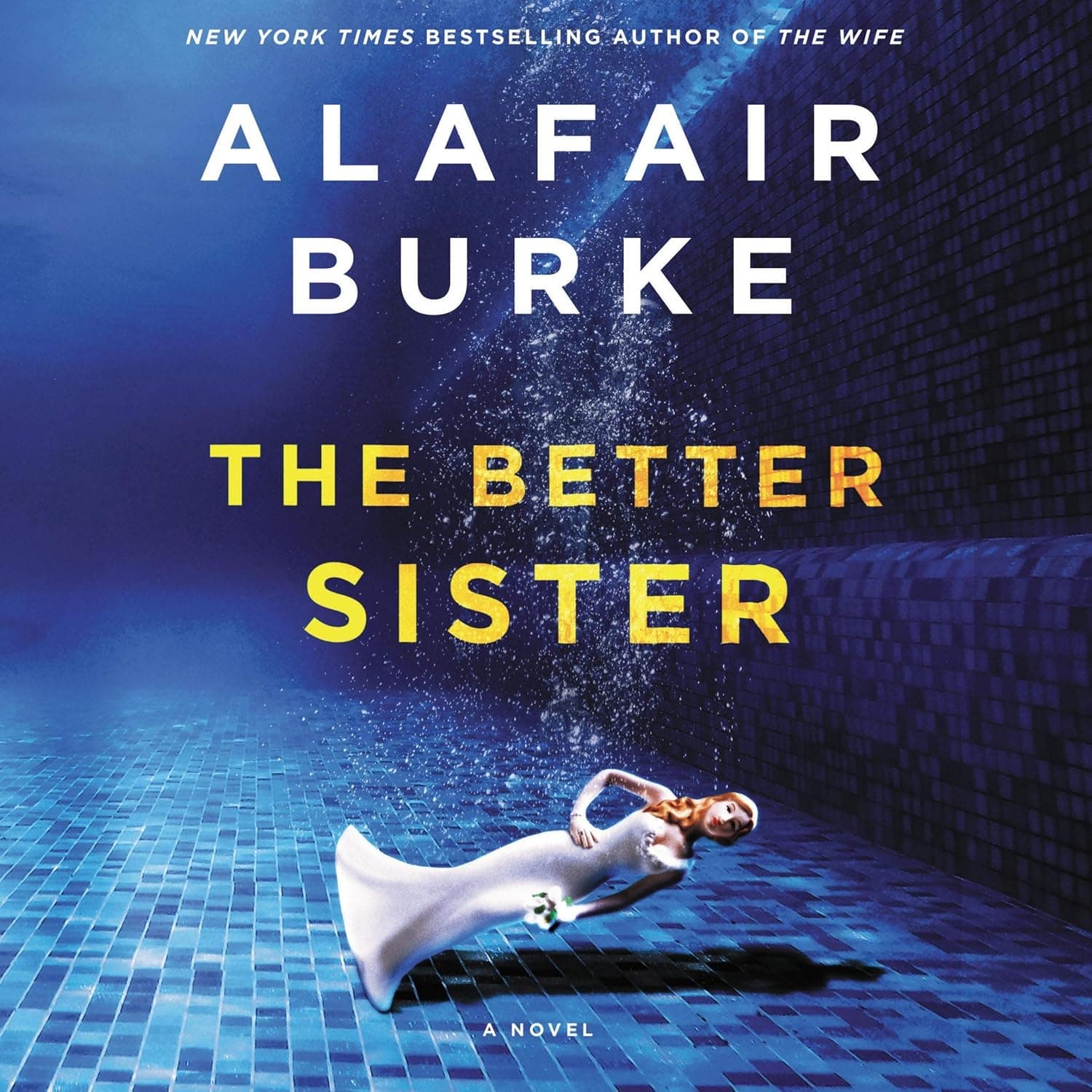
The Title (“The Better Sister”): The book’s title functions as a provocation, inviting readers to adjudicate—and then dismantle—the premise that one woman’s goodness requires another’s failure. By the end, “better” shifts from judgment to mutual betterment: neither is better alone; together, they become braver, truer, and kinder.
Nicky’s Necklace: The jigsaw-metal piece—industrial, welded, and seemingly fragile—mirrors the sisters’ bond. It looks breakable because the seams show, but the weld is the point: strength forged under heat, a beauty that honors fracture without pretending it never happened.
The Cleveland House: Their childhood home anchors the origin of pain and the divergence of coping strategies—Chloe flees; Nicky stays. Its later renovation symbolizes a refusal to live inside inherited damage, suggesting that repair is both structural and emotional.
Contemporary Relevance
The novel speaks to how women are often positioned as competitors—by families, institutions, or manipulative men—and how that competition obscures the systems doing the damage. In an era shaped by #MeToo, Chloe and Nicky’s movement from suspicion to solidarity models a politics of belief and care: listening to the truth, protecting the vulnerable, and refusing to let abusers script the story. Their alliance reframes “success” as the capacity to repair relationships and reject narratives designed to keep women apart.
Essential Quote
“Our story—independent of Nicky—would develop later, but you could say that night marked the story’s beginning. It was the moment I chose Ethan over the rest of my family, which meant I was choosing Adam.”
This confession distills the theme’s paradox: a choice made in the name of love becomes an act of betrayal that fractures sisterhood. It also foreshadows the novel’s ethical reversal—by the end, Chloe learns that choosing family means resisting the very dynamics that once demanded abandonment.