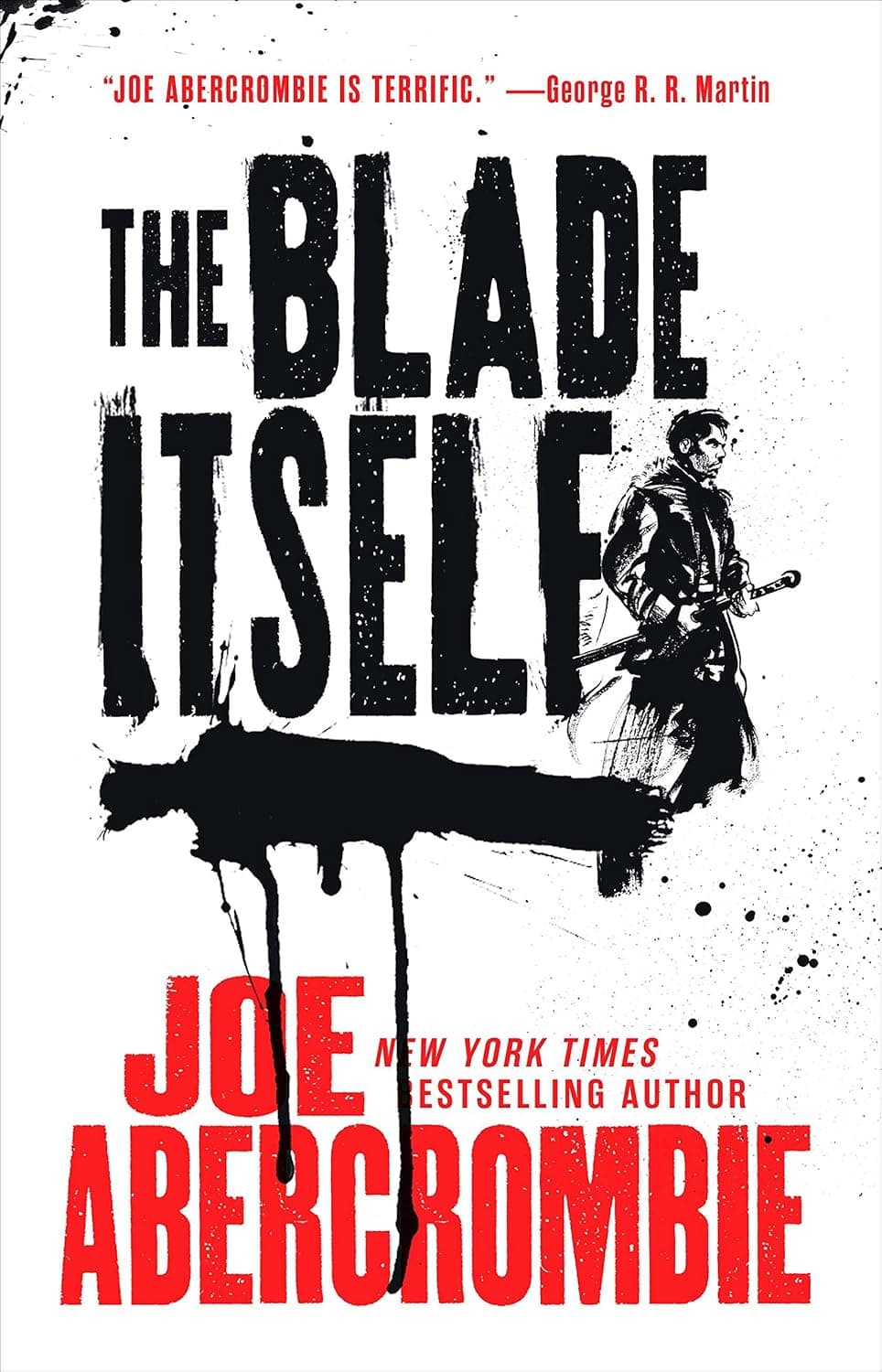
Logen Ninefingers
Quick Facts
- Role: Northman warrior; infamous berserker known as “the Bloody-Nine”; point-of-view character
- First appearance: The Blade Itself, opening chapter (the cliff and river escape)
- Affiliations: Bayaz’s traveling company; former leader among Northmen
- Key relationships: Bayaz, Malacus Quai, Ferro Maljinn, Jezal dan Luthar, and his old crew (Dogman, Threetrees, and others)
- Core conflict: A weary survivor trying to live decently while tethered to a violent alter-ego he cannot fully control
Who They Are
Logen Ninefingers is a man split between two selves: the pragmatic survivor who wants to stop leaving bodies behind, and the Bloody-Nine, a remorseless force of killing that takes the reins when push becomes shove. He’s fluent in violence yet deeply skeptical of its value, a Northman dragged south into a world that calls itself civilized but often demands the same blood he’s trying to leave in the snow. If Logen has a creed, it’s bleak and honest—“You have to be realistic”—a survival philosophy that keeps him alive while quietly strangling his hopes for redemption.
Appearance
Abercrombie draws Logen’s history on his body. He’s big, scar-heavy, and unmistakably Northern—his missing left middle finger is more than a nickname; it’s a brand burnt into every first impression.
- “Lumpy face badly scarred,” a bent nose, and a notched ear make his face read like a ledger of past fights.
- When Jezal dan Luthar first sees him, he’s a “hulking primitive,” his face “like a whipped back, criss-crossed with ragged scars”—a vision of Northern brutality through Southern eyes.
- His clothes are hard-used and practical: “His coat was there too, wedged under the log, battered and scarred from ten years of weather and war, torn and stitched back together, missing half a sleeve.”
- In the South, his presence jars: Malacus Quai says he sticks out “like a huge, scarred, dirty gatepost.”
Personality & Traits
Logen’s mind is steady, stoic, and ruthlessly honest with itself. He counts costs, hates illusions, and measures morality in choices made under pressure. What complicates him—and makes him compelling—is that his competence at killing keeps dragging him back to the very life he despises.
- Pragmatic survivor: The mantra “You have to be realistic” underwrites his decisions from the first chapter. The book’s refrain—“Say one thing for Logen Ninefingers, say he’s a survivor”—becomes a thesis for how he navigates disaster after disaster.
- World-weary cynic: He sees through the glamor of war to its waste. The South calls itself civilized; Logen notices it bleeds just as easily.
- Haunted by the past: Memories of his dead family and the men he’s “left behind” gnaw at him, tying him closely to the theme of The Burden of the Past and Memory. His guilt doesn’t paralyze him—but it shapes every choice.
- Unexpectedly compassionate: He carries the fevered Malacus Quai forty miles, gives up precious gear (his cookpot), and resists the easy out of walking away. His decency is quiet, costly, and unsentimental.
- The Bloody-Nine: When wounded or cornered, Logen yields to a berserker persona with its own stripped-down voice—no fear, no pain, no mercy. It’s not just rage; it’s a colder, simpler logic, a persona that embodies the nature of violence in its purest form.
Character Journey
Logen’s arc in The Blade Itself is the story of a man trying to become someone else—and failing honestly. He falls off a cliff into a river and claws back to life alone; survival is the only aim left. Helping Malacus Quai nudges him toward something more than self-preservation, and meeting Bayaz drags him south into Adua, where his scars, blunt manners, and silence read as barbarism. The Union’s polish offers no refuge: the quest Bayaz sets demands blood, and Logen keeps being “useful” in exactly the way he hopes to stop being. The novel tilts toward one crushing realization in the fight with Goyle’s Practicals—when the Bloody-Nine resurfaces, the slim progress toward restraint collapses. Logen learns that his worst self isn’t just a rumor; it’s a part of him that still answers when called.
Key Relationships
-
Bayaz: The Magus treats Logen like a tool that thinks. He mentors, flatters, and maneuvers, nudging Logen into problems that can only be solved with force—exactly the situations that awaken the Bloody-Nine. The relationship sits on a quiet manipulation: Bayaz values results more than the man producing them.
-
Malacus Quai: Quai is Logen’s first tether back to other people after the loss of his crew. Their bond is built on hard miles and hard choices—Logen’s decision to carry him is a moral pivot that proves he can choose care over convenience, even when it hurts.
-
Ferro Maljinn: Ferro mirrors Logen’s scars and rage, but without his urge to step back from the brink. Their wary alliance shows two paths through trauma: one trying to unlearn violence, the other sharpening it into vengeance. Together, they’re effective—and dangerous to themselves.
-
Jezal dan Luthar: Jezal sees a “savage”; Logen sees a pampered “pink.” Forced into company, each exposes the other’s blind spots—Jezal’s vanity and Logen’s roughness—while the journey south rubs away their caricatures. Their friction measures the gap between appearance and capability, civility and courage.
-
His old crew: Though Logen believes Dogman, Threetrees, and the rest dead, they haunt his thoughts like a better version of himself he can’t get back to. Their loss isolates him and deepens his guilt, feeding the loneliness that makes Bayaz’s company feel less like a choice and more like drift.
Defining Moments
Logen’s milestones are tests where his instincts, ideals, and alter-ego collide. Each either affirms the man he wants to be—or proves the man he still is.
-
Surviving the fall: Thrown from a cliff into a river in the opening chapter, he endures by grit alone. Why it matters: It brands him as a survivor first, everything else second—his identity distilled to stubborn life.
-
Carrying Quai: He hauls a feverish apprentice forty miles, sacrificing food, strength, and his cookpot. Why it matters: It’s the clearest early sign of a moral compass that points toward care, not convenience.
-
The bandit fight and the fire spirit: Logen uses an old fire spirit to ignite a bandit, then finishes the encounter with brutal efficiency. Why it matters: It fuses the novel’s pragmatism with its older, stranger magic—and reminds us that even his cleverness burns.
-
The Bloody-Nine unleashed: Cornered and wounded against Goyle’s Practicals, the narrative voice itself shifts as the Bloody-Nine takes over—simpler diction, colder joy, total control.
The Bloody-Nine’s grip was strong as the roots of mountains, relentless as the tide. “They send such as you to fight me?” He flung the man back against the wall and squeezed, crushing his hands around the grip of his weapon, turning the short blade until it was pointing at his chest. “A fucking insult!” he roared, spitting him on his own sword.
Why it matters: The tonal switch is textual proof that the Bloody-Nine isn’t a metaphor but a persona, and that Logen’s “better self” can be erased in a heartbeat.
Symbolism
Logen embodies the cyclical, self-reinforcing logic of violence. He craves change yet remains prized for the very thing he despises—his talent for killing—especially by powerful men like Bayaz. The missing finger is both a name and a reminder: every survival leaves a mark, and those marks add up to a person you can’t fully outrun.
Essential Quotes
Say one thing for Logen Ninefingers, say he’s a survivor.
This refrain frames the character and the narrative voice around endurance. It’s admiration and indictment at once—surviving is triumph, but it’s also all he seems allowed to do.
Once you’ve got a task to do, it’s better to do it than to live with the fear of it. That’s what Logen’s father would have said.
Anchoring Logen’s pragmatism in his father’s wisdom gives his stoicism a lineage. The line explains his bias for action and his contempt for pretense—fear is wasted time; doing is the cure.
You have to be realistic. Have to be, however much it hurts.
His credo distills the tension between hope and hard truth. “Realistic” in Logen’s mouth means accepting costs up front—an ethic that enables courage but can choke off the possibility of change.
"I’ve fought in three campaigns. In seven pitched battles. In countless raids and skirmishes and desperate defences, and bloody actions of every kind... There are few men with more blood on their hands than me. None, that I know of. The Bloody-Nine they call me, my enemies, and there’s a lot of ’em. Always more enemies, and fewer friends. Blood gets you nothing but more blood. It follows me now, always, like my shadow, and like my shadow I can never be free of it. I should never be free of it. I’ve earned it. I’ve deserved it. I’ve sought it out. Such is my punishment."
A rare moment of confession where bravado collapses into accountability. Logen names his past without excuse, recognizing that guilt isn’t a burden to set down but a consequence to carry.
"Kill me?" The Bloody-Nine laughed louder than ever. "I do the killing, fool!"
The alter-ego’s voice is stripped of doubt and empathy, energized by dominance. It’s chilling because it’s true in the moment—and because it speaks from inside the man who wants so badly to disagree.