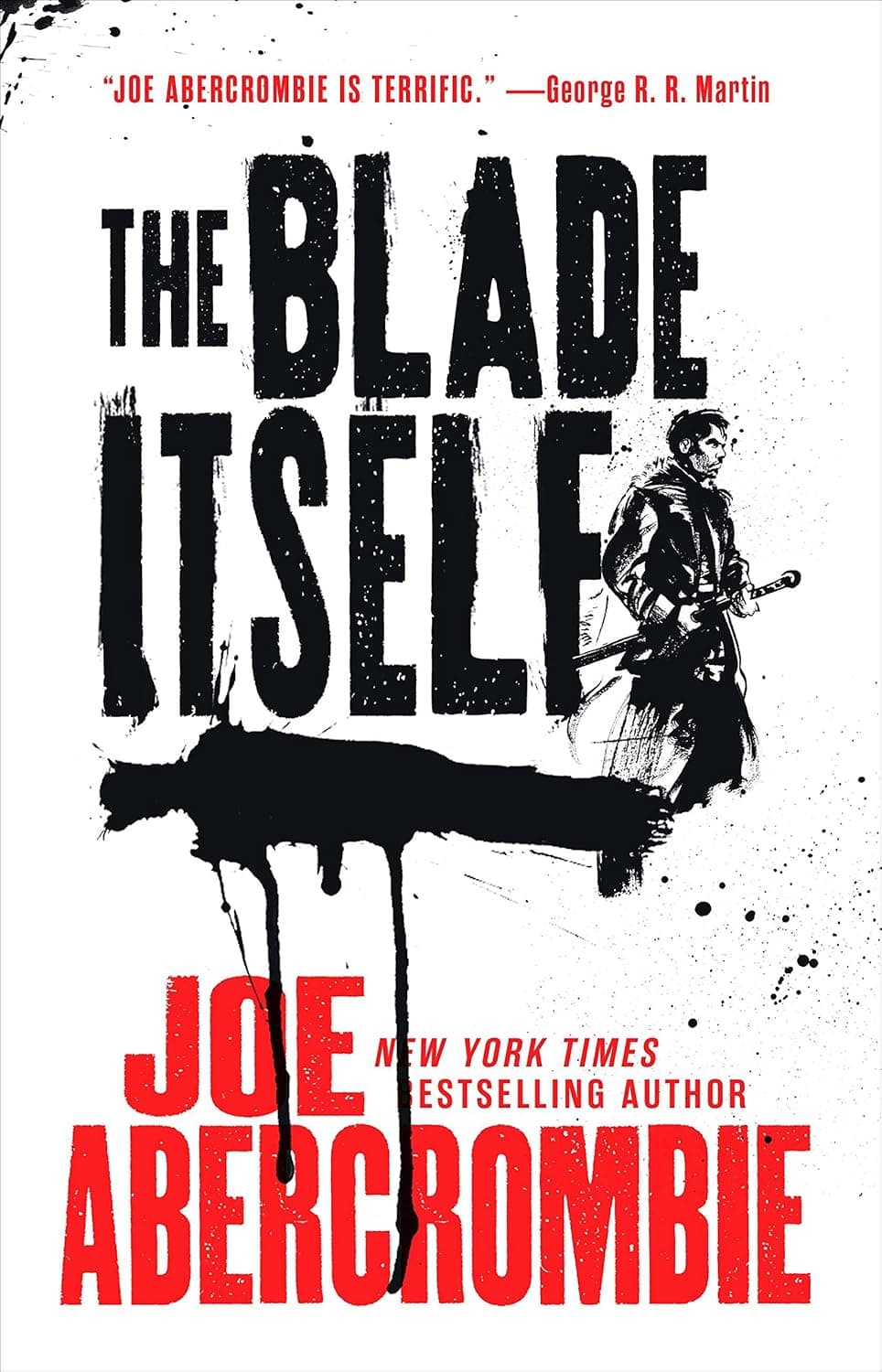
The Blade Itself — Summary & Analysis
At a Glance
- Genre: Grimdark fantasy, character-driven epic
- Setting: The Union (Adua), the North, and the looming shadow of Gurkhul
- Perspective: Close third-person, multiple POVs (principally Logen, Glokta, and Jezal)
Opening Hook
War creeps toward the Union as old empires stir and older magics wake. Heroes never arrive—only survivors: a broken inquisitor, a vain swordsman, a barbarian too tired to keep killing, and a Magus whose smile hides knives. Their ambitions clash in back rooms and blood-slick alleys; their fates tighten like a noose. When power changes hands in Adua, it is not triumph that follows, but obligation—and a journey to the world’s edge for a prize that should never be found.
Plot Overview
Act I: Scars and Introductions In the North, the survivor’s legend Logen Ninefingers slips from a cliff in a skirmish with the Shanka and lives to grumble about it—a pattern for a man too good at surviving his own worst days. Shaken by the past he can’t outrun, Logen heads south and is discovered by Malacus Quai, apprentice to the prickly Magus Bayaz. In Adua, the Union’s gleaming capital, Inquisitor Sand dan Glokta—once a golden hero, now a ruined instrument of the state—hunts “treason” for Arch Lector Sult, and stumbles into rot far deeper than unpaid taxes. Elsewhere in the city, Captain Jezal dan Luthar, a charming waste of privilege, trains for the fencing Contest while losing hours to cards and mirrors—until the sardonic Ardee West, sister to his steady friend Collem West, slices through his vanity with every conversation. The novel’s opening movements set tone and stakes rather than quests; it widens the map through character, not prophecy, as seen in the Chapter 1-5 Summary.
Act II: Convergences Bayaz hauls Logen toward Adua, collecting strays and debts as they go. They’re joined by Ferro Maljinn, an escaped Gurkish slave whose fury burns hotter than any oath—useful to a Magus with designs of his own. North of the Union, Bethod, self-forged King of the Northmen, presses southward, and Logen’s name returns to court gossip like a storm warning. In Adua, Glokta’s inquiry into the Merchants Guild turns into a guided tour of institutional rot; the closer he cuts, the more he realizes who’s holding the knife above his back.
Act III: Masks Off Bayaz strides into the heart of power and claims his abandoned seat on the Closed Council—then proves it by opening the sealed House of the Maker, a feat equal parts spectacle and threat. Jezal, buoyed by training, luck, and a whiff of something like magic, wins the Contest over the terrifying Bremer dan Gorst and becomes the darling of the hour, a crown of laurel pressed onto a hollow skull. The wizard is no fairy godfather, the hero no hero, the city no sanctuary; appearances buckle under pressure, and the political weather shifts accordingly.
Finale: Departures Resolution never arrives—only marching orders. Bayaz announces a voyage to the Edge of the World to retrieve the Seed, a relic whose promise is power and whose history tastes like ash. His chosen company: Logen, Ferro, Quai, and a stunned Jezal, drafted by fate and Magus alike. Glokta, having served Sult’s purposes too well, is “promoted” to Superior and shipped to besieged Dagoska to hold the line against the Gurkish—a suicide mandate dressed as honor. The Union prepares to meet Bethod in the North. As the Full Book Summary makes clear, the first volume ends with doors opening, not closing; every path forward is dangerous.
Central Characters
For deeper profiles of the cast, see the Character Overview.
Logen Ninefingers A weary pragmatist with a past that has learned to walk on its own, Logen’s humor and caution barely restrain the Bloody-Nine, the berserker that surfaces when the world turns red.
- Key traits: fatalistic, adaptable, unexpectedly thoughtful
- Arc here: dragged back into the orbit of power by Bayaz; glimpses of change crash against the violence that made his name
- Why he matters: he reframes the “savage barbarian” as the novel’s most self-aware philosopher of survival
Sand dan Glokta Once the Union’s golden swordsman, now the most honest man in Adua precisely because he expects the worst. His body is wreckage; his mind is a scalpel.
- Key traits: caustic wit, insight sharpened by pain, reluctant loyalty
- Arc here: from functionary to pivotal player, entangled in the very corruption he exposes
- Why he matters: his interior monologue powers the book’s moral X-ray
Jezal dan Luthar A handsome mask in search of a face. Jezal is bred and trained to win applause, not wars—or hearts.
- Key traits: vain, impressionable, capable of shame (and therefore growth)
- Arc here: Contest victory without true triumph; Ardee punctures his illusions
- Why he matters: he tests the cost of privilege when the world stops applauding
Bayaz The First of the Magi, and the last person you should trust to tell you what that means. He wears the wizard’s robe like a judge’s, and he does not mind passing sentence.
- Key traits: commanding, manipulative, opaque
- Arc here: asserts authority over the Union’s council and assembles an unlikely company
- Why he matters: he is the series’ great destabilizer, subverting the “wise mentor” into a power broker
Ferro Maljinn Vengeance in motion. Ferro’s fury is both weapon and shield, her distrust a survival skill born in chains.
- Key traits: relentless, suspicious, fiercely independent
- Arc here: recruited by the promise of retribution; brief flickers of connection with Logen and Yulwei
- Why she matters: she embodies the cost of empire and the allure of payback
Collem West A merit-made officer in a world that worships birthright. Competent, dutiful, and not nearly as gentle as he hopes.
- Key traits: disciplined, protective, volatile under pressure
- Arc here: reunion with Glokta reopens old debts; his protectiveness toward Ardee reveals darker edges
- Why he matters: he complicates the “good man” ideal with anger and shame
Ardee West Sharp as broken glass and twice as cutting. Ardee refuses the roles Adua assigns her and sees through pretension like smoke.
- Key traits: incisive, sardonic, resilient
- Arc here: forces Jezal to confront his own emptiness; refuses to be a prize
- Why she matters: she is the series’ conscience against class and gender hypocrisy
Arch Lector Sult The smiling knife at the Inquisition’s throat. Sult doesn’t merely wield the law; he bends it until it screams.
- Key traits: urbane, ruthless, patient
- Arc here: turns Glokta into both instrument and liability
- Why he matters: he personifies institutional power as predation
Bethod A king who crowned himself by winning, not by waiting. To the Union, he is a problem; to Logen, a past returning.
- Key traits: pragmatic, ambitious, charismatic
- Arc here: gathers force in the North, threatening open war
- Why he matters: he brings the personal and political into collision
Major Themes
For an expanded discussion, see the Theme Overview.
The Nature of Violence Violence is not cleansing here; it’s corrosive. Logen’s Bloody-Nine rages like a drug he can’t quit, while Glokta’s “professional” cruelty shows how institutions normalize brutality until it feels like procedure.
Power and Corruption From Sult’s legal strangulations to Bayaz’s theatrical displays, power’s first instinct is self-preservation. The Union’s councils, guilds, and courts reveal how corruption thrives when rules become tools, not boundaries.
The Disparity Between Appearance and Reality Adua glitters, then gutters: beauty draped over squalor. The dashing champion is hollow, the crippled torturer is clearest-eyed, and the kindly wizard is a strategist who counts costs other men would flinch to tally.
Cynicism and Moral Ambiguity There are no righteous banners here—only competing necessities. Characters act from fear, pride, or pain, and the novel refuses to translate that into clean lines of good and evil.
The Burden of the Past and Memory History sticks like blood. Glokta’s body remembers every room in Gurkhul; Logen’s name won’t let him become someone else; West and Jezal discover that guilt and shame are heavier than armor.
Literary Significance
The Blade Itself is a cornerstone of modern grimdark—less a quest than a character study with swords. Abercrombie’s close third-person voice, especially Glokta’s razor-wire interiority, reorients epic fantasy around psychology and politics, not prophecy. By inverting stock roles—the wise mentor as power broker, the barbarian as moral thinker, the champion as coward—he interrogates heroism and the institutions that manufacture it. Published amid a turn toward bleaker, more political fantasy, the novel helped cement a style that privileges consequence over catharsis and influence that echoes through a generation of writers who trade tidy morality for hard-earned truth.