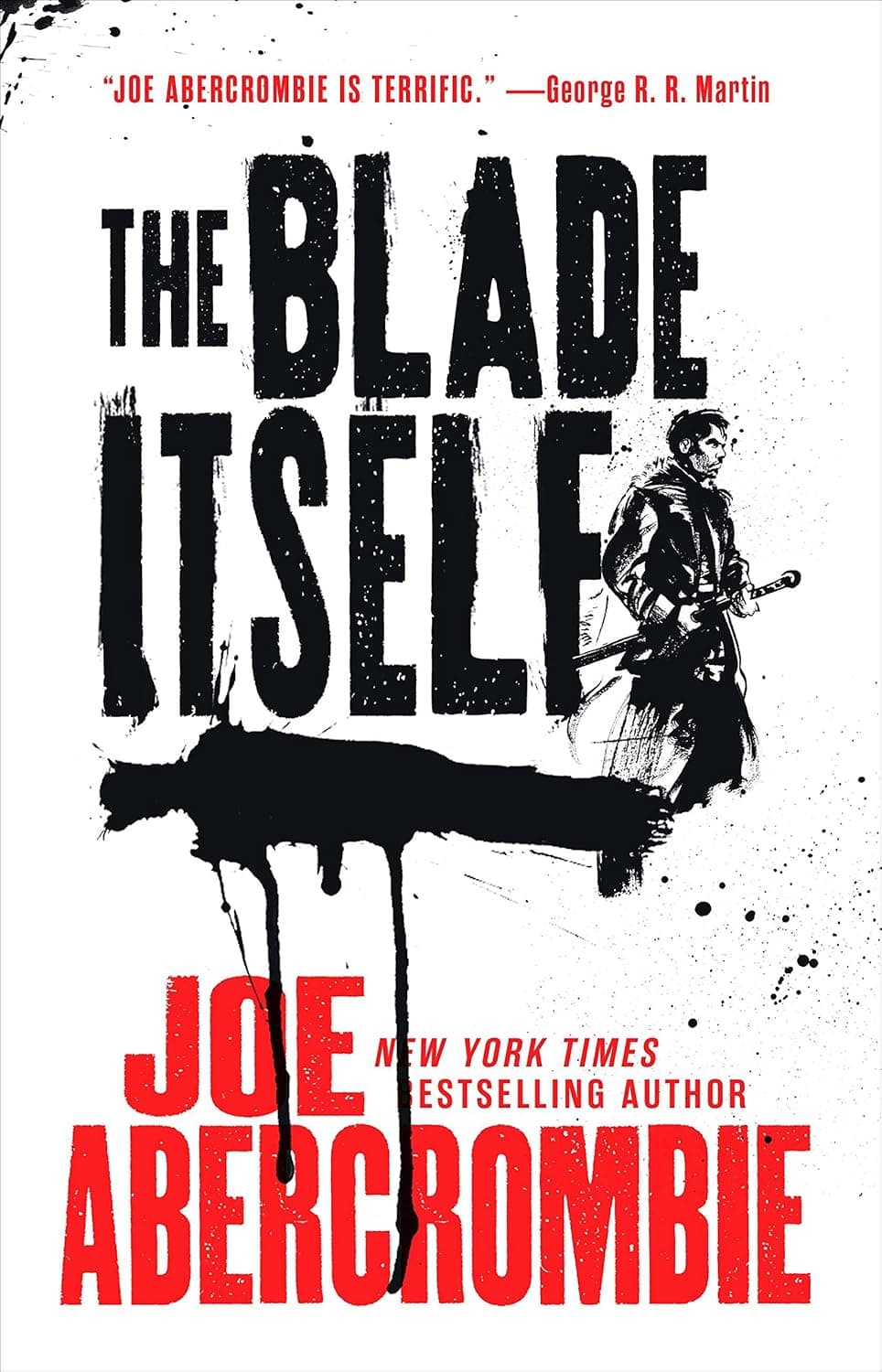
Sand dan Glokta
Quick Facts
- Role: Union nobleman turned Inquisitor (torturer) in His Majesty’s Inquisition
- First appearance: The Blade Itself, opening chapter “Questions”
- Status: Former champion fencer and war hero; now a crippled veteran haunted by torture
- Affiliations: The Inquisition; later elevated to Inquisitor Exempt
- Key relationships: Arch Lector Sult, Practicals Frost and Severard, Collem West, Ardee West
Who They Are
Sand dan Glokta is the novel’s most sardonic conscience and its most unsettling mirror. Once a golden boy—handsome officer, dueling champion, hero—he returns from the Gurkish Emperor’s prisons remade into a man of pain: limping, toothless, and sleepless, with a body that records every cruelty done to it. He channels that suffering into a trade he loathes yet masters: extracting confessions for the Inquisition. The sharpest irony of Glokta is the contrast between the wreck of his body and the razor of his mind. He sees a rotting system clearly, mocks it relentlessly, and still feeds it—because to stop is to die.
Personality & Traits
Glokta’s voice—acid, witty, and painfully clear-eyed—turns every scene into a dissection. He does not believe in goodness so much as pressure, leverage, and the small comforts that keep a broken man going. His cynicism is armor; his competence, a weapon; his self-loathing, the price of survival.
- Cynical misanthrope with precision aim: His inner monologue skewers hypocrisy in nobles, merchants, and colleagues alike, and often himself first. The result is dark comedy that doubles as political x-ray.
- Pragmatic survivor: Years of torture have trained him in Survival and Pragmatism. He confesses when it keeps him alive; he makes others confess when it keeps him employed—never mistaking morality for protection.
- Brilliantly perceptive: Glokta’s interrogations succeed before the knives come out. He reads fear, vanity, and guilt, often cornering targets (like Salem Rews) with inference and tone alone.
- Self-loathing without paralysis: He asks, “Why do I do this?”—then does it anyway. The question isn’t an escape hatch; it’s a ritual reminder that the alternatives are worse.
- Gallows wit as coping mechanism: His running feud with stairs and love affair with chairs turn constant agony into punchlines, letting him control pain by narrating it.
- Commanding despite dependence: He calls his Practicals “my hands, my arms, my legs,” acknowledging his physical limits while orchestrating operations with clinical authority.
Character Journey
Across The Blade Itself, Glokta doesn’t soften; the world simply gives him more leverage and more danger. A mid-tier Inquisitor at first, he dismantles the Mercers’ guild with methodical ferocity, proving both his mind’s reach and his nerve. That success wins him elevation to Inquisitor Exempt—greater power, fewer rules, and a shorter life expectancy—drawing him into the Closed Council’s rot and the city’s hidden wars. His investigations intersect with the arrival of Bayaz, hinting that forces older and stranger than the Union’s bureaucracy are at play. Encounters with the Wests—one a former comrade, the other a disappointed witness to his fall—puncture his bravado and drag him back through The Burden of the Past and Memory: every victory reminds him what the old Glokta would have despised, and every moment of mercy reminds him why the new Glokta is alive.
Key Relationships
- Arch Lector Sult: Patron, prison warden, and mirror of Glokta’s worst possibilities. Sult values Glokta’s results but treats him as disposable—dangling power to keep him obedient, withholding protection to keep him afraid. Their bond is an ongoing interrogation where each tries to see what the other can endure.
- Practicals Frost and Severard: Instruments and intimates, the closest thing Glokta has to a body and a confidant. Frost’s silent strength and Severard’s cheerful amorality let Glokta enact his will at scale; in return, Glokta shields them with strategy, turning dependence into a functioning ecosystem of menace.
- Collem West: Once a brother-in-arms, now an awkward reminder of honor and youth. West’s pity stings, and Glokta’s resentment curdles into brittle politeness—yet their shared past keeps pulling them into uneasy cooperation.
- Ardee West: One of the few who looks past his legend and his limp. With Ardee, Glokta’s mask slips; humor becomes almost human, and self-loathing almost confession. She remembers who he was and insists, dangerously, on seeing who he still might be.
Defining Moments
Glokta’s story beats double as case studies in pain, power, and performance; each shows how he converts vulnerability into control.
- The interrogation of Salem Rews: His debut in “Questions” introduces the rhythm of his life—stair-by-stair agony, then surgical interrogation. Why it matters: We witness his true weapon (psychology), his private shame (personal history with Rews), and the thesis of his work: truth is whatever pressure makes it.
- The arrest of Sepp dan Teufel: Acting on high orders, Glokta breaks the Master of the Mints and, mid-process, recounts his own torture with chilling, clinical detail. Why it matters: His monologue fuses trauma and technique; the scars are not backstory but active tools.
- The audience that elevates him: Chosen for a “special task,” Glokta is pulled into the Union’s upper-tier games of Power and Corruption. Why it matters: Promotion proves competence is currency—and that currency buys both targets and a bullseye.
- The reunion with Collem West: An unplanned meeting during Teufel’s arrest crashes the past into the present. Why it matters: It exposes the gulf between hero and torturer, making Glokta’s bitterness feel less like cruelty and more like grief.
Themes & Symbolism
Glokta’s body is the novel’s thesis in flesh: the mask slips, the cost remains. He embodies The Disparity Between Appearance and Reality—a ruined exterior protecting, and projecting, a lethal intelligence. His daily agony literalizes The Nature of Violence: pain doesn’t end with a scene; it lingers, shapes, and reproduces itself through those it touches. And his job—inflicting what he once endured—plants him at the heart of the story’s Cynicism and Moral Ambiguity, where survival blurs into complicity and justice into theater.
Essential Quotes
Why do I do this? Inquisitor Glokta asked himself for the thousandth time as he limped down the corridor.
- The book’s central refrain for Glokta: a ritual self-indictment that never leads to refusal. The line frames his work as compulsion rather than conviction, revealing a man who knows the moral ledger and keeps writing in red.
If Glokta had been given the opportunity to torture any one man, any one at all, he would surely have chosen the inventor of steps.
- A joke with teeth: stairs become a daily adversary more hateful than any political enemy. The gag converts chronic pain into a worldview—mundane obstacles are torturers, and the city is a prison with architectural bars.
If Glokta had been given the opportunity to shake the hand of any one man, any one at all, he would surely have chosen the inventor of chairs. He has made my life almost bearable.
- The companion to the stair joke turns relief into gratitude bordering on religious. It’s funny, yes, but it also quantifies his life: comfort is so rare it feels like salvation, and that scarcity justifies his grim pragmatism.
"Look at this!" he hissed, then opened his mouth wide, giving the horrified prisoner a good look at his teeth. Or what’s left of them. "You see that? You see? Where they cracked out the teeth above, they left them below, and where they took them out below, they left them above, all the way to the back. See? ... What excellent work, eh? The irony of it! To leave you half your teeth, but not a one of ’em any use! I have soup most days."
- This macabre show-and-tell weaponizes his trauma; his body becomes evidence, argument, and threat. The detail (“I have soup most days”) mixes clinical inventory with bleak humor, proving how he turns suffering into leverage.
"Did I talk? I talked until my throat was raw. I told them everything I could think of. I screamed every secret I’d ever heard. I babbled like a fool. When I ran out of things to tell them I made things up. I pissed myself and cried like a girl. Everyone does."
- Glokta demolishes myths of stoic resistance and, in doing so, justifies his methods. By admitting absolute capitulation, he undercuts heroism and reframes confession as the inevitable endpoint of pain—a credo that guides every interrogation he conducts.