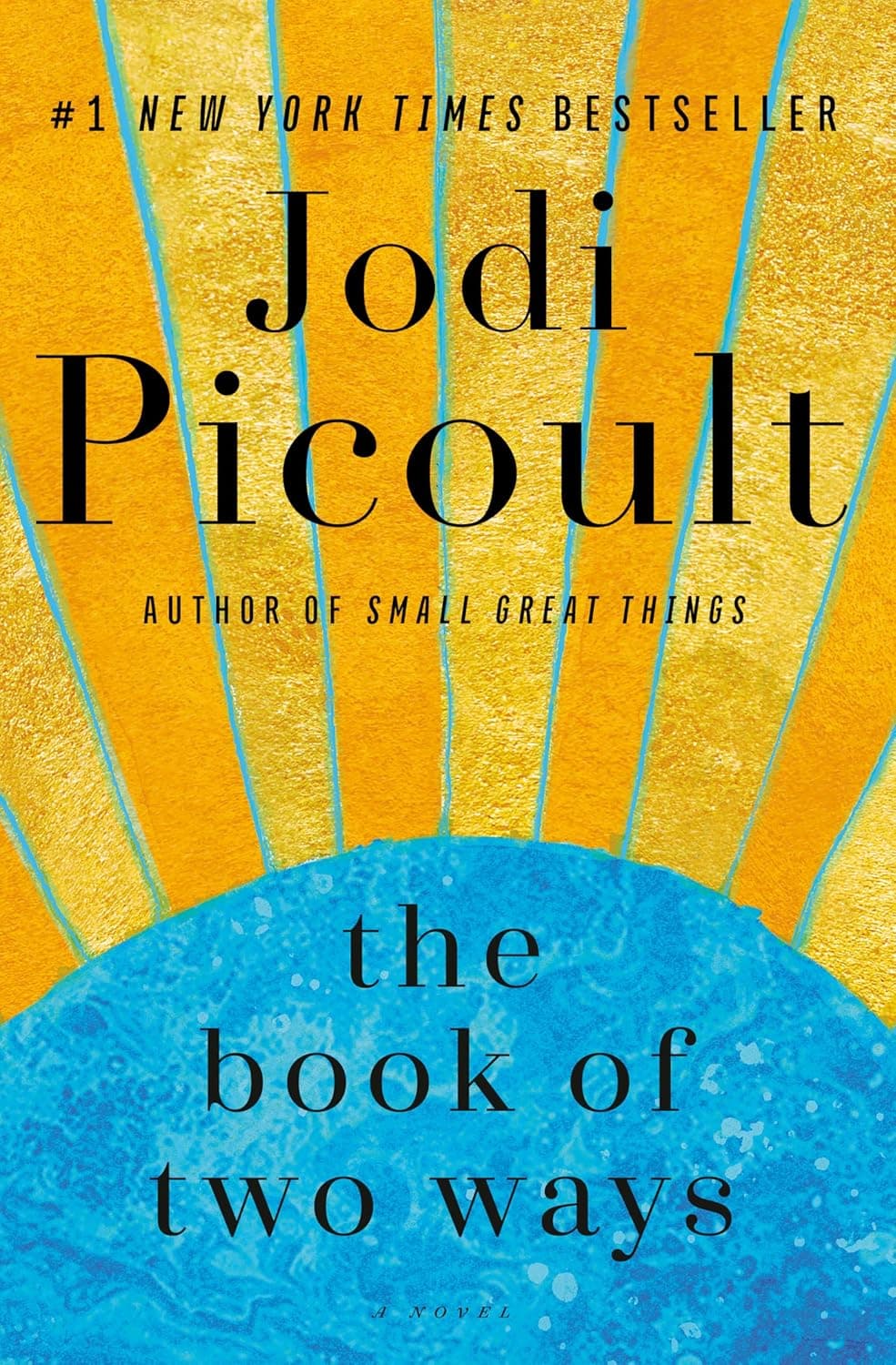
Opening
A near-death jolt splits Dawn Edelstein's life into two tracks: the one that brings her back to Egypt and the one that returns her to Boston. As she steps into the heat of Cairo and the chill of a strained marriage, the novel frames her every move as a choice between paths she once walked away from and a life she painstakingly built.
What Happens
Chapter 1: Cairo
Dawn lands in Cairo and immediately feels the past press in—the language she hasn’t spoken in fifteen years tumbles back, the city’s heat and dust feel like a memory made physical, and the taxi ride to Ramses Station becomes a corridor through time. She thinks of the question she asks dying clients—“What’s left unfinished?”—and knows her answer is Egypt: the work, the landscape, the version of herself she abandoned when her mother got sick. As the taxi glides through traffic, she recalls her Yale years as a rising Egyptologist specializing in Middle Kingdom funerary beliefs and the evolution from Pyramid Texts to Coffin Texts, with Re and Osiris guiding the dead. Her focus, the Book of Two Ways—two mapped routes through the afterlife, black for land and blue for water—anchors her theory that the coffin’s painted spells activate only in the presence of the mummy, a map that requires a body to “turn it on.”
She reaches Deir el-Bersha as Sirius pierces the horizon—the Sothic rising the ancients read as rebirth. Taking it as an omen, she arrives at the Dig House, modernized since her grad-school days yet instantly familiar. Harbi, son of the old caretaker, greets her, remembers her, serves her a meal she could have ordered in a former life. On the wall hangs an epigraphic copy she once drafted with Wyatt Armstrong, a precise, beautiful rendering that restores not just a tomb scene but her confidence that she once mattered here. Surrounded by the comforts of the past, she lets Harbi assume she is staying—and doesn’t correct him.
Chapter 2: Two Ways
After the plane crash in the Prologue, the narrative forks: in one present, Dawn is in Egypt; in the other, she is home in Boston. First, the story winds back to 2001 at Yale, where she meets Wyatt in a bar—arrogant, titled, maddening—and then discovers he’s one of seven students in her elite cohort under Professor Ian Dumphries. He is a linguist obsessed with grammar; she studies placement and iconography. Their rivalry flares in the Museum of Fine Arts, Boston, where they argue in front of the Book of Two Ways: he treats words as freestanding; she insists the coffin and mummy shape meaning. The clash crackles with attraction and announces the book’s central question—how do you read a life without its context?
In 2003, during a dig season, they’re assigned to correct a famous scene in Djehutyhotep II’s tomb. Their banter sizzles until Dawn falls from a ladder and Wyatt catches her; the contact burns away some hostility. They speak openly about why their work matters—to preserve memory, to carve out a kind of immortality. In the present at the Dig House, Dawn finds his dissertation and reads, stunned, that he cites her museum argument as the fulcrum of his thesis: the grammar can’t be separated from context. The dedication is an ancient Egyptian love poem, and she knows it’s meant for her. When the real Wyatt appears in the doorway, the two timelines collide, and she says, “I want to finish what I started.”
The other present unfolds in Boston. Dawn walks into her home and into the fallout from her husband Brian Edelstein’s emotional affair with a postdoc, a breach compounded by his missing their daughter Meret Edelstein’s birthday. Dawn’s profession emerges: she’s a death doula, a calling born when her mother died of ovarian cancer and she left Egyptology to shepherd the living through their last goodbyes. Brian—steady, brilliant—repents, and their sex feels like a truce rather than a solution.
A flashback shows how they met in hospice, where Brian, a quantum physicist, explained Schrödinger’s cat and the multiverse: every observed moment splits into multiple outcomes, each as real as the others. That science feels like a mirror of the Book of Two Ways’ mythic map. Back in the Boston present, old wounds reopen fast. Meret, precociously smart and painfully self-critical, bristles at Dawn over body-image landmines and loyalty to her father. The chapter ends with Dawn and Brian locked in a quiet standoff. He asks what she wants; she answers, “I shouldn’t have to.”
Character Development
The opening establishes a woman divided and the two men who embody her two selves—work and wonder in Egypt, stability and grief-forged love in Boston. Across both tracks, Dawn’s deepest conflict is between context and content: who she is versus where she belongs.
- Dawn: Torn between the unfinished life of a scholar and the meaningful calling of a death doula, she moves with purpose toward the places where she once thrived—and where she felt needed. Her voice is sharper, her desires clearer, and her willingness to risk greater.
- Wyatt: He enters as an entitled rival but reveals integrity and vulnerability. His scholarship evolves because of Dawn’s insight, and his dedication confirms enduring love.
- Brian: Loving and remorseful, he seeks repair yet clings to a rational framework that can’t mend emotional fractures on its own. His multiverse lens shapes how he understands choice—and excuses.
- Meret: Gifted and guarded, she aligns with her father while testing boundaries with her mother. Her insecurity around her body complicates the household’s already fragile peace.
- Winifred 'Win' Morse: Dawn’s new client in Boston, an artist with ovarian cancer who shares Dawn’s birthday, functions as a living mirror—another woman measuring her time and choices.
Themes & Symbols
Two systems—ancient myth and modern physics—frame the same human ache. The novel foregrounds Choices and Alternate Paths by splitting the present, letting readers inhabit both outcomes at once. In Egypt, Dawn steps into The Past's Influence on the Present, where memory, scholarship, and desire still shape who she is. Her return is powered by Regret and Unfinished Business, a conscious attempt to finish the work and the love she set aside.
Boston grounds the story in Death, Dying, and the Afterlife as lived experience—vigils, last words, practical care—while Dawn’s marriage tests Love, Marriage, and Infidelity under the weight of betrayal and forgiveness. At home, motherhood exposes raw seams of Motherhood and Family Dynamics: how to protect, how to repair, and how to let a child become herself without absorbing a parent’s unresolved pain.
Symbols:
- The Book of Two Ways: A literal map of the afterlife that doubles as the novel’s structure—two routes, one destination, and a traveler who must choose.
- Quantum Mechanics/The Multiverse: A scientific echo of myth, granting plausibility to simultaneous lives and forcing the question of what “real” means when multiple outcomes exist.
- The Sothic Rising (Sirius): A sky-born sign of rebirth aligning with Dawn’s return, marking a season of renewal and risk.
Key Quotes
“It showed two roads snaking through Osiris’s realm of the dead: a land route, black, and a water route, blue... both ways wind up in the same place.”
This image encapsulates the novel’s design: different choices may lead to a shared end, making the journey—and the self made along it—what matters. It also underlines Dawn’s scholarly belief that maps require context to be read at all.
“The minute we look at them, we become part of that mathematical equation and we ourselves get split into multiple timelines, where different versions of us see different, concrete outcomes.”
Brian’s multiverse explanation reframes choice as multiplicity, not loss. It gives language to Dawn’s split realities and suggests responsibility persists across outcomes: you still have to live with the you you make.
“I want to finish what I started.”
Standing before Wyatt, Dawn names her motive without hedging. It’s a declaration of agency and a thesis for the Egypt track: completion, not nostalgia.
“I shouldn’t have to.”
Dawn’s answer to Brian refuses the emotional labor of translating her needs for someone who has hurt her. It exposes the fault line in their reconciliation: desire without understanding.
Why This Matters and Section Significance
These chapters build the novel’s signature double helix: myth and math, Egypt and Boston, head and heart. By letting both presents unfold, the book invites readers to weigh not only what Dawn chooses but what each choice costs—professionally, romantically, and as a mother.
Wyatt and Brian aren’t just romantic foils; they are worldviews. Egypt promises intellectual resurrection and the completion of a self deferred. Boston embodies love forged in grief and the daily work of care. Together, the opening establishes high personal stakes, a richly researched backdrop, and a narrative engine powered by the tension between the paths we take and the lives we leave waiting.