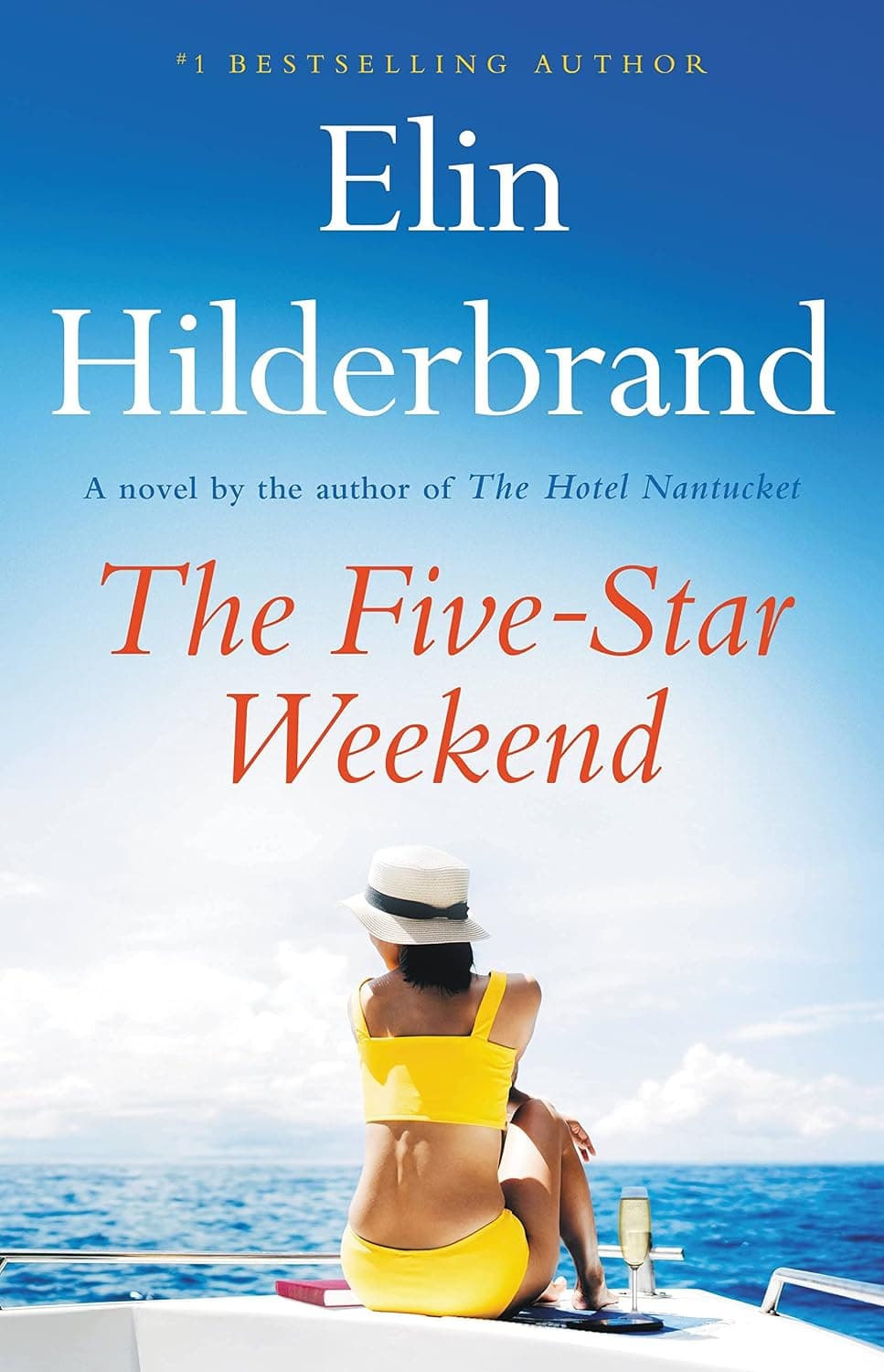
The Five-Star Weekend
At a Glance
- Genre: Contemporary women’s fiction; “beach read” with emotional depth
- Setting: Nantucket, post-pandemic present day
- Perspective: Third-person rotating (Hollis, friends, and her daughter), interwoven with texts, posts, and video
- Tone: Witty, warm, and bittersweet; equal parts escapist and earnest
Opening Hook
When a perfect life shatters overnight, what do you do with the pieces? Hollis Shaw, a beloved food blogger whose brand is built on elegance and control, loses her husband, renowned surgeon Matthew Madden, in a sudden car crash. Her grief is public, messy, and judged—especially by her daughter, who thinks her mother is grieving “wrong.” So Hollis engineers a cure she can control: one perfect weekend with one “best friend” from every era of her life. But the truth has plans of its own.
Plot Overview
Act I: Loss, Image, and the Idea
The novel opens with the curated sheen of Hollis’s online persona, punctured by the shock of Matthew’s death in the Prologue. Early chapters trace the fog of mourning, the brittle distance with her daughter, Caroline Shaw-Madden, and the way public grief becomes performance in the Chapter 1-5 Summary. When Hollis reads about a “Five-Star Weekend,” she seizes on the idea: invite one best friend from her teens, twenties, thirties, and forties to Nantucket for a flawlessly orchestrated reset. If she can’t fix the past, maybe she can script the present.
Act II: Four Friends, Four Fault Lines
The guests arrive with luggage—and secrets. There’s Tatum McKenzie, the stalwart Nantucket friend from high school; Dru-Ann Jones, the high-powered college roommate freshly “canceled”; Brooke Kirtley, the suburban “mom friend” whose marriage is quietly imploding; and Gigi Ling, a midlife “best friend” Hollis only knows online. The weekend begins as Hollis planned—gorgeous menus, glamorous outings—but old frictions (especially Tatum versus Dru-Ann) and new unease ripple beneath the surface, as covered in Chapter 6-10 Summary through Chapter 11-15 Summary. The more Hollis performs perfection, the more the fault lines show.
Act III: Heat, History, and a Gathering Storm
Through beach days, dinners, and confessions, the women rediscover what drew them together—and what pushed them apart. Tatum waits on a biopsy result she hasn’t told anyone about. Dru-Ann’s public scandal threatens her livelihood and her sense of self. Brooke confronts the truth of her husband’s misconduct and the life she’s been contorting herself to fit. And Gigi—warm, attentive, disarmingly helpful—keeps a dangerous secret close. Hollis films, toasts, and curates, while Caroline’s camera quietly catches what Hollis misses: authenticity peeking through the gloss.
Act IV: The Public Unraveling
The weekend blows open during a glittering Sunday lunch at Galley Beach, the centerpiece of the Chapter 41-45 Summary. Hollis’s old Wellesley frenemy Electra Undergrove crashes the table, lobs barbs, and then drops a grenade: she recognizes Gigi from Atlanta—as the woman seen with Matthew. The revelation detonates the carefully staged weekend, humiliating Hollis in the one place she thought she controlled the narrative.
Act V: Truth, Then Choice
In the stunned quiet that follows, Hollis demands answers, as chronicled in the Chapter 46-50 Summary. Gigi admits the affair—but adds the one fact Hollis never imagined: Matthew called it off the morning he died, turning back to repair his marriage. He was driving home to Hollis when he crashed. Hollis confirms the timeline in the official accident report and faces the raw calculus of love, betrayal, and intent. Instead of throwing Gigi out, she chooses something harder: grace. As she reckons with her own lapses as a friend, she lets the woman who hurt her stay.
Act VI: What Remains—and What Begins
The final movement gathers quiet victories and forward motion in the Chapter 51 Summary. Tatum’s biopsy is benign. Dru-Ann steadies her career and reclaims her voice. Brooke steps into a new version of herself and leaves her husband. Hollis repairs her bond with Caroline, reclaims her home, and opens the door to old-new love with Jack Finigan. The Epilogue looks ahead, proving the weekend’s fragile, hard-won connections have staying power.
Central Characters
A full roster appears in the Character Overview. These women are not just roles in Hollis’s life; each brings a distinct worldview that tests and ultimately enriches the others.
-
Hollis Shaw: A master of presentation learning to live without a script. Her arc moves from polished isolation to messy, communal healing. By forgiving both the dead and the living, she trades “five-star” control for honest connection.
-
Tatum McKenzie: Loyal, grounded, and the keeper of Hollis’s Nantucket past. Facing a health scare forces her to release an old grudge and show up fully—reminding everyone that constancy can be as brave as reinvention.
-
Dru-Ann Jones: A formidable sports agent brought low by a digital pile-on. Humbled, she relearns apology and intimacy, discovering that influence without intimacy is hollow.
-
Brooke Kirtley: The “mom friend” who has been shrinking herself for years. The weekend helps her name what’s toxic, claim her desires, and choose a life built on self-respect rather than appearances.
-
Gigi Ling: The charming outsider whose presence is both balm and bomb. Her confession reframes the past and forces the group to consider the difference between harm and intention, betrayal and redemption.
-
Caroline Shaw-Madden: Hollis’s daughter and the weekend’s documentarian. Her anger is a shield for grief; by the end, she understands her mother’s humanity—and her own.
Major Themes
For more, see the full Theme Overview.
-
Grief and Healing: Hollis’s weekend is a ritual disguised as a party, turning mourning into a communal act. The book insists grief is nonlinear, resistant to choreography, and made bearable by the people willing to witness it.
-
Friendship and Its Evolution and Friendship and Connection: Hilderbrand maps how friendships stretch, sour, and revive across decades. The women relearn that “best” is less about constancy than about showing up when it counts.
-
Secrets and Deception: Every woman keeps something back—an affair, a diagnosis, a public scandal—and those omissions distort reality. Truth-telling is painful but generative; it breaks things open so they can be rebuilt.
-
Forgiveness and Reconciliation: Forgiveness here is active, not sentimental—a decision to stop living inside a wound. By extending grace, the characters make space for their own growth and the possibility of repaired bonds.
-
Mother-Daughter Relationships: Hollis and Caroline’s fraught dance anchors the emotional core. Their reconciliation shows how grief complicates love—and how naming hurt can reset the relationship.
-
Authenticity vs. Public Persona: From a glossy food blog to a career-ending feed, the novel interrogates curation culture. It argues that performing perfection isolates, while revealing the mess invites true intimacy.
Literary Significance
The Five-Star Weekend showcases Elin Hilderbrand at her most deft: a sunlit Nantucket setting wrapped around thorny questions of image, intimacy, and repair. It updates the classic friendship novel for the age of influencers and “cancel culture,” pairing juicy social drama with earned emotional payoffs. By structuring the cast across life stages, Hilderbrand turns one woman’s grief into a panorama of female experience—how ambition, marriage, motherhood, and friendship collide and reshape identity. Critically and commercially beloved, the book affirms why Hilderbrand dominates summer reading: she makes pleasure and seriousness coexist, delivering a story that sparkles on the surface and lingers underneath.