Opening
Two high-stakes agendas collide: an idealistic founder fights to save his small pet-food company while a rising corporate star chases a career-making deal. Together they test the line between pressure and trust, setting up a practical exploration of Genuine Influence vs. Manipulation in negotiations, leadership, and everyday conflict.
What Happens
Introduction
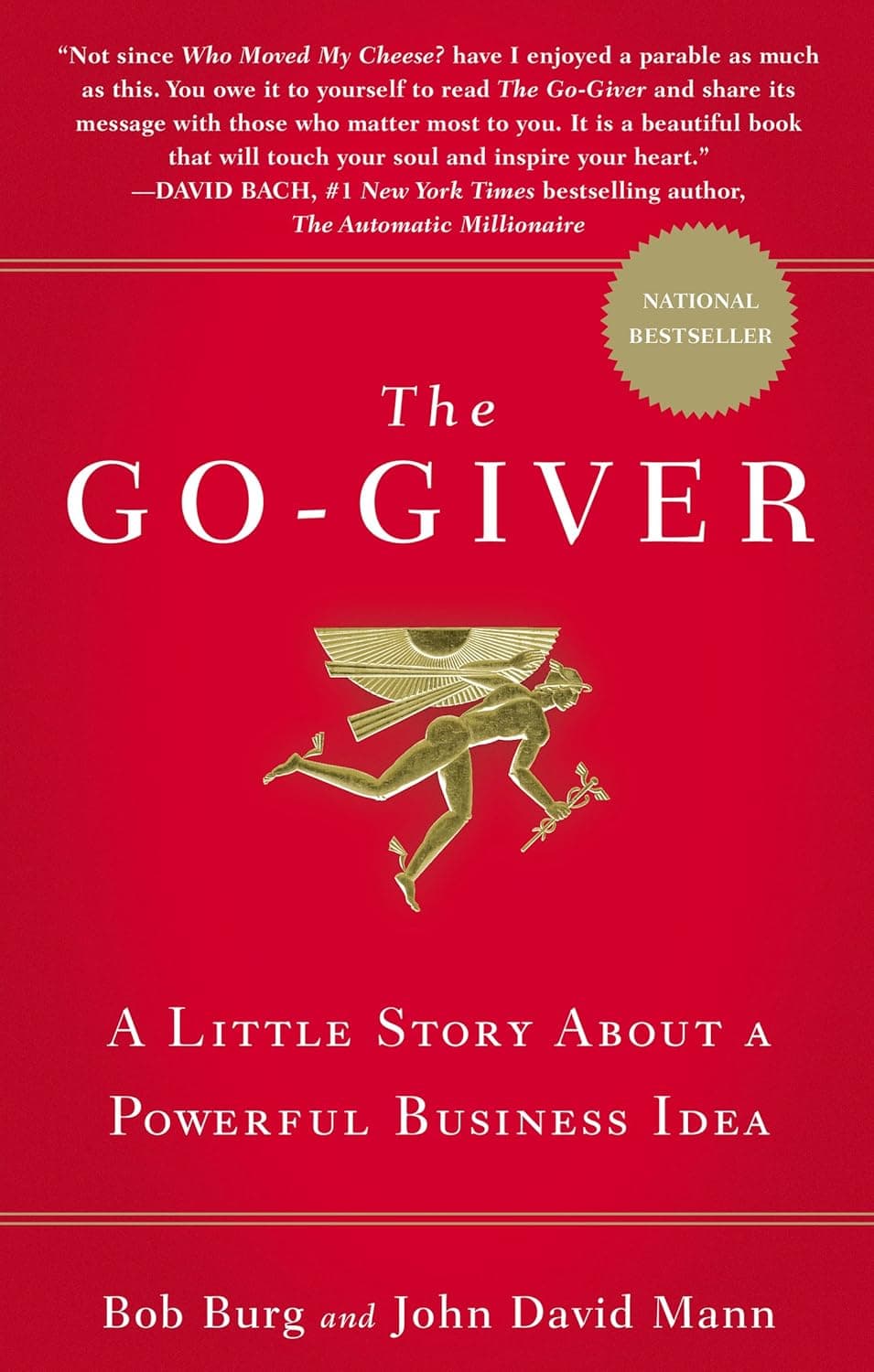
Bob Burg and John David Mann revisit the core idea that anchors their work: influence isn’t granted by money or title—it creates them. True influence comes from placing other people’s interests first.
They frame this new story as a hands-on guide to empathy, civil discourse, and conflict resolution. The aim: to show what it looks like to become a person others trust for wisdom and judgment, whether at the bargaining table or in polarized conversations.
Chapter 1: Jackson
The narrative introduces Jackson Hill, founder of Angels Clothed in Fur, a small natural pet-food brand built on uncompromising quality and the The Go-Giver Philosophy of Value Creation. He meets with Gillian Waters, a buyer at national giant Smith & Banks Pet Supply, praying for a contract that will save his company. A bank loan comes due in a week; without a lifeline, he goes under.
Gillian praises Jackson’s brand but offers an exclusive national distribution deal—exactly the wrong fit. The scale would force massive expansion he can’t finance, and exclusivity would cut off the small accounts that nurtured his business. Cornered, he proposes that Smith & Banks underwrite his expansion. Gillian, surprised, agrees to take it up the chain and schedules a follow-up in one week—Jackson’s do-or-die deadline. He leaves feeling like “a man who had just been to see the executioner.”
Chapter 2: Gillian
We shift to Gillian’s point of view. A driven mid-level executive and single mother, she’s targeting the Senior VP of Distribution role. Landing Angels Clothed in Fur could lock in her promotion and secure her daughter Bo’s future. She’s done her homework on Jackson’s company but hides it in the meeting to keep a negotiating edge.
Jackson’s ask to finance his expansion upends her plan—and forces her to seek approval from the very SVP whose job she wants. Pressure mounts. At the gym, she vents to her trainer and best friend, Katie, who urges her to see “The Coach (George Henshaw),” an enigmatic consultant with a “Winning Strategy.” Gillian distrusts gurus, but the stakes push her toward a meeting.
Chapter 3: The Dog Park
Back with Jackson, his dog Solomon provides a brief pocket of joy before reality intrudes. At the dog park, his friend Keith, a retired firefighter, tells him to learn the “tricks and tactics” needed to survive. Then Keith shares a story: his own disability settlement deadlocked until a retired judge mediated a solution that left both sides happier than expected. The judge calls her approach “Natural Negotiation.”
That night, Jackson debriefs with his father, Walt Hill, a battle-hardened negotiator. Walt scolds him for not wielding classic power plays like “The Flinch” and “The Challenge,” urging intimidation over openness. Jackson recoils at the cynicism yet fears his gentler instincts are failing him. Two opposing paths—manipulation versus collaboration—pull at him as the deadline ticks down.
Chapter 4: The Judge
Desperate, Jackson calls the retired judge. A warm, musical voice answers: Celia Henshaw. Serendipity strikes—she’s a devoted Angels Clothed in Fur customer with five cats whose health has improved on his food. Gratitude breaks the ice.
Celia presses him to articulate what he truly wants, not just what he fears. When he asks why her method is “Natural Negotiation,” she flips the question: why is his food “natural”? Because it’s what animals are designed to eat, he says. “Exactly.” She invites him to breakfast at her office Monday morning, nudging him toward a values-aligned way to negotiate.
Character Development
A looming deadline forces both protagonists to confront how they relate to power, pressure, and other people’s needs. Each faces a mentor path that could define who they become.
- Jackson: Passionate but overwhelmed, he refuses to betray his early customers or compromise quality. He seeks help, opening himself to a method that honors his values and might keep his company alive.
- Gillian: Ambitious and rigorously prepared, she treats the deal as a strategic win—but her devotion to Bo humanizes her drive. Her willingness to consult a coach hints at growth beyond zero-sum thinking.
- Walt Hill: Embodies old-school, combative dealmaking. He tempts Jackson with certainty and control, but at the cost of trust.
- Celia Henshaw (the Judge): A warm, incisive mentor. She centers desire, alignment, and connection, signaling a path where influence grows from understanding rather than force.
- The Coach (George Henshaw): A looming counter-mentor for Gillian, representing a second philosophy of influence whose contours are yet to be revealed.
Themes & Symbols
The story sets up a clear polarity between coercion and trust. One path chases advantage through pressure tactics; the other builds durable agreements by uncovering what each side genuinely wants. The authors position “natural” negotiation as a humane alternative to gamesmanship—a process aligned with how people actually make decisions when they feel seen and respected.
Empathy emerges as the missing ingredient. Jackson and Gillian misread each other because they don’t see the pressures the other carries. By widening perspective—what the book later frames as Empathy and Perspective-Taking—negotiation shifts from winning to solving, from fear to clarity. Jackson’s company itself models value-first behavior: begin with service, then structure deals that allow value to scale.
Symbols:
- The Dog Park: Free, joyful connection contrasts with guarded corporate posturing—nature’s version of frictionless rapport.
- The Gym: Gillian’s self-imposed strain mirrors the crushing stakes at work; her discipline is strength and burden.
- “Angels Clothed in Fur”: A name that sanctifies service. It signals a mission-first enterprise where profit follows purpose.
Key Quotes
“When you’re not sure what you want, look at what you have that you love, that gives you joy. Chances are excellent, what you want is more of that.”
Celia reframes negotiation as an exercise in clarity. By locating desire in what already brings joy, she replaces scarcity-driven tactics with abundance-minded alignment.
“A man who had just been to see the executioner.”
Jackson’s image after the meeting captures the mortal stakes of small-business life—and the psychological toll of a one-week deadline under asymmetrical power.
“The Flinch” and “The Challenge.”
Walt’s playbook names the posture of manipulation: provoke fear, sow doubt, seize ground. The labels themselves sound like combat maneuvers, highlighting the moral and strategic contrast with Celia’s “natural” approach.
“Natural Negotiation.”
Keith’s term signals a reset: successful deals need not be adversarial. The phrase links Jackson’s product philosophy to a parallel human process—healthy choices are the ones we’re designed to make.
Why This Matters and Section Significance
These chapters lock in the stakes, the deadline, and the duel of philosophies. By telling the story through two perspectives, the book trains readers to see beyond their own position—essential groundwork for any real agreement.
The setup also launches parallel mentorship arcs: Jackson turns toward Celia’s values-led influence; Gillian eyes a power-oriented Coach. Their impending negotiation becomes a laboratory for the book’s central claim: sustainable success comes not from outmaneuvering others, but from aligning interests, expanding value, and earning trust.