What This Theme Explores
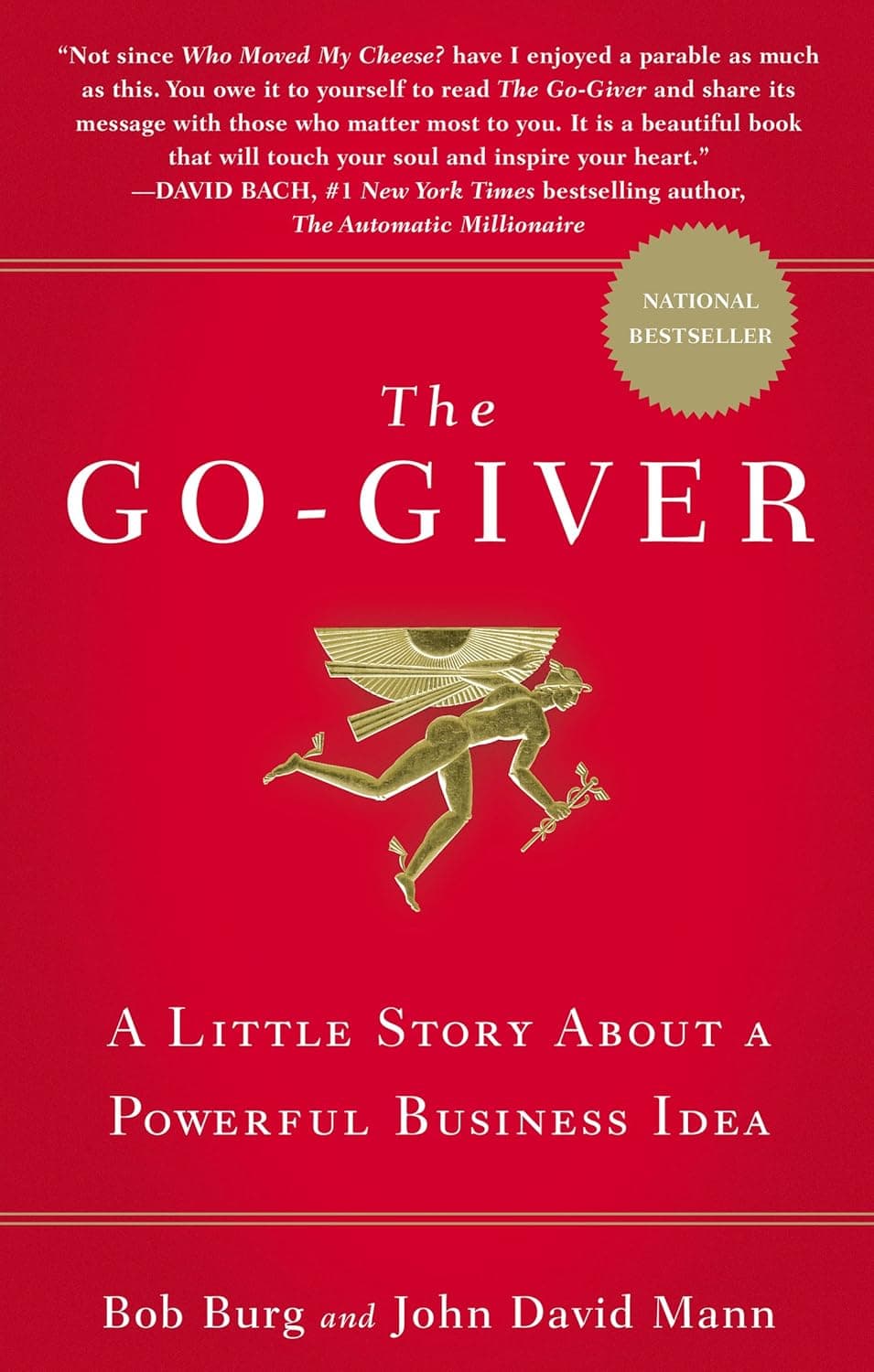
The Go-Giver Philosophy of Value Creation asks what happens when success is measured not by extraction but by contribution—when influence is redefined as helping others win. It probes how “value” expands in human relationships: the more you give, the more possibilities open. In negotiation, it challenges the reflex to “win” at another’s expense, proposing collaboration as a higher, more creative standard. The theme ultimately argues that ethics and effectiveness are not rivals but allies: generosity is strategy.
How It Develops
At the outset, Jackson Hill and Gillian Waters enter their negotiation with opposing aims and narrow frames. Jackson’s product embodies care and quality, yet his business posture is tentative and defensive. Gillian arrives determined to secure a victory for her firm and herself. Value exists in the product but not in the process, and the conversation stalls because each tries to protect rather than contribute.
Guided separately by The Judge (Celia Henshaw) and The Coach (George Henshaw), both protagonists learn to master their emotions, listen for the other person’s interests, and set a gracious frame. The mentors redefine influence as an act of service—give attention, give safety, give understanding—and the negotiation begins to thaw. Mrs. B.’s breakfast kitchen models the principle in action: value doesn’t wait for a return, it creates the conditions for it. A failed, self-protective meeting in Chapter 11-15 Summary exposes how manipulation and pressure narrow options rather than expand them.
In the final movement, Jackson releases his fear of losing the deal and holds fast to his core values, which invites Gillian to see a path beyond win/lose. She proposes a third option—a partnership—that honors both sides’ contributions. With the support of the ultimate go-giver, Elizabeth Bushnell (Mrs. B. / Aunt Elle), the new venture produces more collective value than the original contract ever promised, turning a standoff into shared success.
Key Examples
Value creation in the story shifts from an abstract ideal to a practical, repeatable approach: give first, and new solutions appear.
-
Jackson’s Core Mission: Jackson’s company is built to serve animals, not to squeeze margins. His uncompromising standard—“Only the purest, only the freshest, only the best”—shows that he defines worth by the benefit he provides, not the price he can command. His early declaration makes his intent explicit:
“I want to reach more animals with the best the earth has to offer. Only the purest and freshest. That slogan—I really mean it.” By anchoring his identity in service, he later finds the courage to negotiate from principles rather than panic.
-
The Mentors’ Altruism: The Judge’s “pro bono” counsel—“for the good”—and the Coach’s freely given time embody value without immediate reciprocity. Their generosity creates a safe learning space where Jackson and Gillian can experiment with new mindsets. The mentors model the very influence they teach: people change most in the presence of sincere, unpressured help.
-
Gratitude as the Source of Success: When the Coach relays Mrs. B.’s lesson, gratitude reframes business as expression, not extraction.
“‘Because,’ she said, ‘gratitude is the secret to all magnificent success.’” Gratitude turns giving into a habit rather than a tactic, expanding the range of outcomes the characters can even imagine.
-
The “Third Option”: The climactic shift comes when Jackson refuses to trade integrity for a signature, which signals that value—not victory—governs his choices. That act frees Gillian to propose partnership rather than concession. The result is not a weaker compromise but a stronger solution that creates more value for customers, company, and community.
Character Connections
Jackson Hill embodies the theme’s heart. He begins as a craftsman of value—devoted to animals—but lacks confidence in the boardroom. As he learns to bring the same generosity to conversation that he brings to his product, he moves from defensiveness to curiosity, asking what would help the other side win. That shift multiplies options and preserves his integrity.
Gillian Waters personifies the theme’s challenge: can ambition align with service? Initially a “go-taker,” she chases a result at the expense of relationship. Her turning point is realizing that influence flows from understanding, not overpowering; by offering the partnership, she proves that strategic generosity advances both her career and the mission.
The Judge and the Coach form the philosophy’s two hands. The Judge imparts the ethical backbone—self-mastery, respect, and the discipline to “go first” in giving safety and clarity. The Coach translates these values into actionable technique—framing, empathy, and language that invites collaboration. Together they demonstrate that value creation is a repeatable practice, not a personality trait.
Elizabeth Bushnell (Mrs. B. / Aunt Elle) is the story’s gravitational center of generosity. Her daily service feeding children shows that giving is its own reward—and also a powerful attractor of resources and allies. By backing the new venture, she proves that when leaders invest from a place of purpose, communities and markets organize around that value.
Symbolic Elements
-
Angels Clothed in Fur: The company name elevates pets from market segment to “angels,” reorienting the business around care, not commerce. It signals that the product is a vehicle for service—and that profit should follow purpose, not define it.
-
Rachel’s Famous Coffee: This recurring setting models a culture where every touchpoint adds value. The staff’s simple “My pleasure” becomes a micro-practice of framing interactions generously, showing how small courtesies compound into trust.
-
Mrs. B.’s Breakfast Kitchen: Operating outside transactional logic, the kitchen is a living proof that giving can be a system, not a sporadic act. It reframes scarcity: by feeding others first, the community discovers it is richer than it thought.
-
The “Third Option”: More than a tactic, the third path symbolizes abundance thinking. It materializes only when both parties stop guarding turf and start asking, “What could create the most good here?”
Contemporary Relevance
In a climate of polarization and zero-sum metrics, value creation offers a humane operating system: begin with contribution, and design for mutual benefit. It counters performative toughness with practical empathy and replaces short-term wins with compounding trust. The approach scales from startups to civic life:
- Ethical leadership: shifting from shareholder primacy to stakeholder stewardship that uplifts employees, customers, and communities.
- Collaborative innovation: harnessing diverse perspectives to build solutions no single silo could devise.
- Conflict resolution: moving entrenched positions toward shared interests and durable agreements.
- Personal fulfillment: aligning ambition with service so that achievement also feels meaningful.
Essential Quote
“Your true worth is determined by how much more you give in value than you take in payment.”
This axiom crystallizes the theme’s inversion of conventional success. It measures influence by contribution, not leverage, and insists that the most reliable path to results is to make others tangibly better off. In the story, once the characters adopt this metric, negotiation transforms from contest to co-creation.