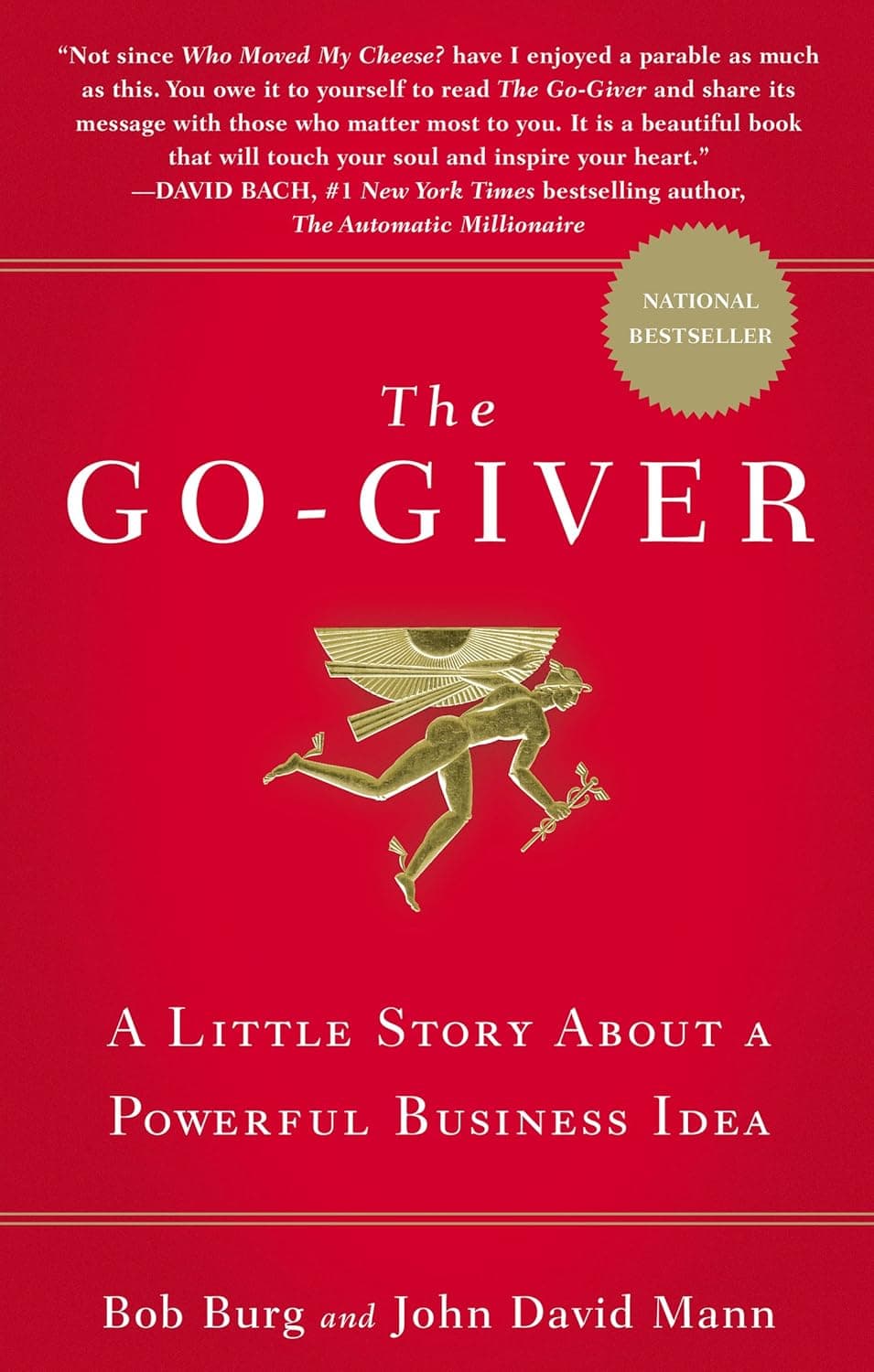
As a modern parable, The Go-Giver reframes success as the byproduct of generosity, trust, and shared purpose. Its characters move from fear and zero-sum tactics to a mindset that creates value for others, discovering that influence, empathy, and collaboration are disciplines—not shortcuts. Together, these themes form a practical philosophy for turning inner alignment into outer results.
Major Themes
The Go-Giver Philosophy of Value Creation
The Go-Giver Philosophy of Value Creation recasts success as the natural outcome of serving others first. Pindar’s paradox—“the more you give, the more you have”—plays out in Jackson’s uncompromising product quality, Mrs. B.’s philanthropic vision, and the final partnership that multiplies value for animals, customers, and the founders. In this world, value precedes profit, and service becomes the most reliable strategy for sustainable success.
Genuine Influence vs. Manipulation
Genuine Influence vs. Manipulation contrasts “pull” built on trust with “push” tactics rooted in fear and control. The Coach’s definition—helping others do what they already want, for their reasons—stands against Walt Hill’s maneuvers like “The Flinch” and “The Takeaway.” Gillian’s arc, from posturing to principled persuasion, shows how real influence emerges when serving others replaces winning at their expense.
Empathy and Perspective-Taking
Empathy and Perspective-Taking is the book’s practical bridge between intention and impact. The Judge’s mantra—step into the other person’s shoes—paired with the Elephant of Babel metaphor and the Coach’s embodied listening (“eyes…posture…back of your neck”) turns empathy into a rigorous habit. As Jackson and Gillian learn to see beyond their own stakes, conflict gives way to understanding and creative problem-solving.
Collaboration over Competition
Collaboration over Competition challenges the dog-eat-dog reflex by redefining winning as shared achievement. From Sadaharu Oh’s “pitchers as partners” to the story’s “third option,” the book shows how cooperation unlocks solutions competition cannot even see. The final venture—combining Jackson’s product, Gillian’s business acumen, and Mrs. B.’s capital and wisdom—proves that collaboration compounds value.
Supporting Themes
The Power of Authenticity
Authenticity anchors value and influence by aligning action with principle. Jackson’s refusal to dilute quality becomes both conflict and brand, while Walt Hill’s confession exposes the hollowness of a life built on tactics—linking authenticity to the book’s critique of manipulation and its celebration of value creation.
Mentorship and Guidance
The parable’s teachers—The Judge and The Coach—model learning through questions, not answers. Their guidance catalyzes emotional mastery, empathy, and influence, while Mrs. B. embodies these principles at scale, turning personal growth into social impact and collaborative success.
Emotional Mastery
Inner calm is the gateway to every other discipline. The Judge’s “Master your emotions” and the Coach’s “Breathe” make self-regulation the precondition for listening, reframing conflict, and choosing collaboration over ego-driven victory.
Theme Interactions
- Value Creation → Genuine Influence: Serving others first builds trust, making “pull” persuasion natural and manipulation unnecessary.
- Emotional Mastery → Empathy → Collaboration: Quieting reactivity enables true listening, which reveals the needs that inspire “third-option” solutions.
- Manipulation ↔ Competition: Zero-sum thinking breeds tactics that create winners and losers, choking off trust and long-term partnership.
- Authenticity ⇄ Value & Influence: Integrity amplifies perceived value and credibility, reinforcing influence without coercion.
- Mentorship → Integration: Guidance accelerates the shift from concepts to habits, aligning inner state with outward strategy.
Together, these dynamics show a chain of causation: master yourself → understand others → create shared value → earn real influence → build partnerships that outperform any solo “win.”
Character Embodiment
Jackson Hill Jackson personifies value creation and authenticity: his “only the best” ethos is both his strength and his struggle. As he learns emotional mastery and empathy, he lets go of being right and becomes the kind of partner who can create more value than he could alone.
Gillian Waters Gillian embodies the pivot from manipulation and competition to genuine influence and collaboration. Motivated by what matters at home as much as at work, she learns to listen, reframes negotiation through empathy, and champions the “third option” that unlocks the final partnership.
Elizabeth Bushnell (Mrs. B. / Aunt Elle) Mrs. B. is the master giver: her philanthropy dignifies recipients and her business acumen multiplies value. She functions as both exemplar and catalyst, proving that generosity scales and that collaboration can be engineered.
The Coach (George Henshaw) The Coach teaches the mechanics of influence—breathe, listen, create safety—captured in the “open back door” metaphor. His principles turn persuasion into an act of service, moving Gillian from control to trust.
The Judge (Celia Henshaw) The Judge grounds negotiation in empathy and self-mastery: step into their shoes, master your emotions, let go of being right. Her questions pull Jackson out of fear and into perspective, transforming conflict into alignment.
Walt Hill Walt embodies the scarcity mindset: tactics over trust, dominance over dialogue. His admission of emptiness reveals the cost of manipulation and underscores why authentic influence and collaboration endure.
Keith and the Senior VP Keith voices the “dog-eat-dog” belief but becomes a quiet proof of collaborative gains; the Senior VP stays transactional, sharpening the book’s contrast between zero-sum wins and value-creating partnerships.