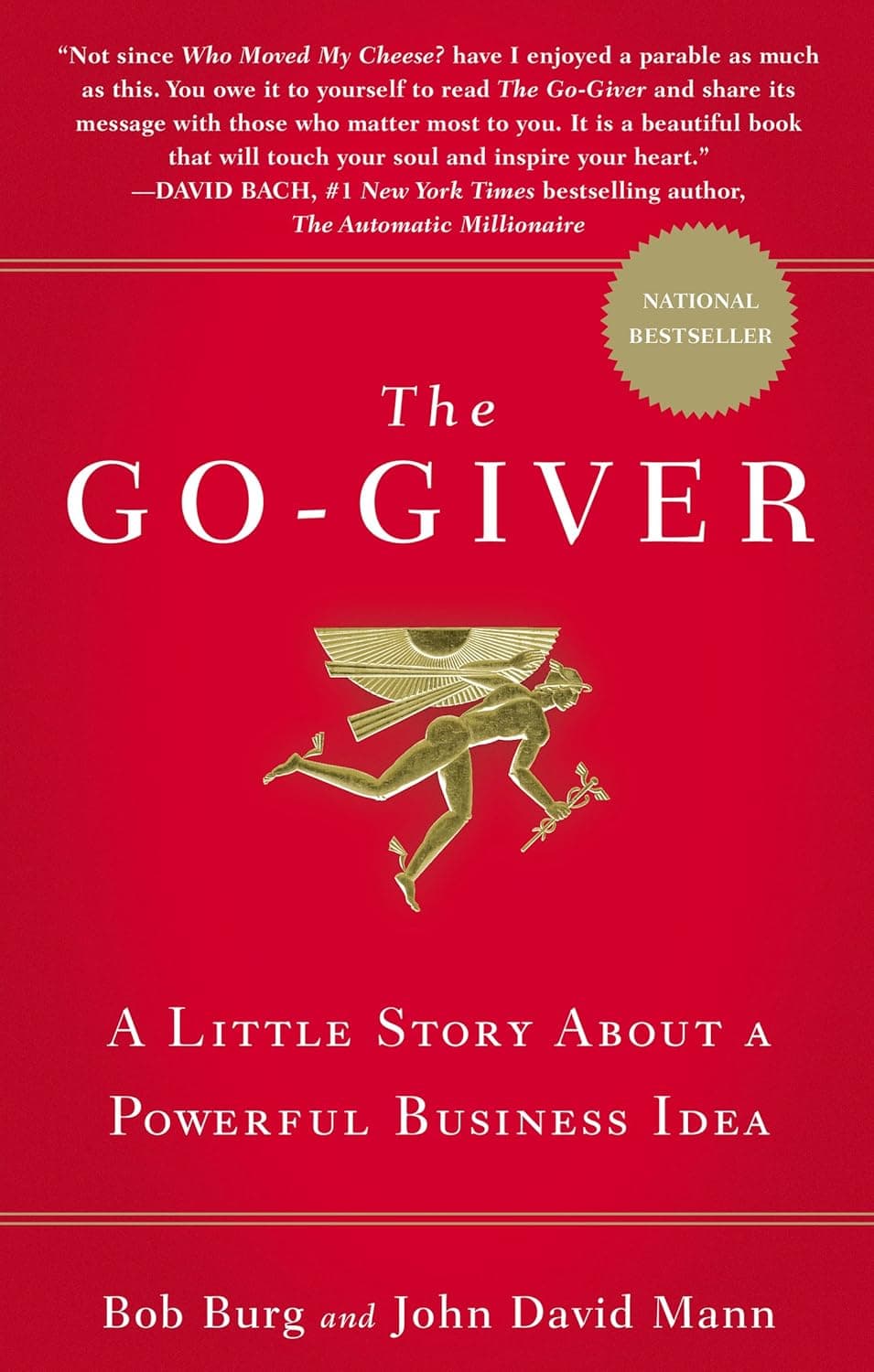
What This Theme Explores
Empathy and perspective-taking in The Go-Giver ask a demanding set of questions: What changes when we feel another person’s fear, stakes, and values as if they were our own? How does influence shift from a contest of arguments to a bridge of trust when we stop performing and start listening? The story argues that empathy is not passive softness but an active, disciplined practice—stepping into another’s shoes and “listening with the back of your neck”—that turns negotiation into co-creation. By reframing persuasion as resonant connection, the book suggests that the surest way to serve ourselves is to understand others first.
How It Develops
At the outset, Jackson Hill and Gillian Waters are adversaries orbiting their own anxieties and ambitions. Their opening encounters default to posturing and control, not curiosity—each treats the other as an obstacle to be managed. This posture keeps their communication brittle and transactional, guaranteeing misreads and escalation.
The hinge of the arc arrives through mentors who rewire their approach. Guided by the Judge, Jackson learns the Second Clause—step into the other person’s shoes—shifting his attention from rebuttal to real inquiry about Gillian’s stakes. Coached by the Coach, Gillian reframes persuasion as deep listening rather than verbal leverage. Small moments—like Jackson noticing the photo on Gillian’s desk—become apertures through which humanity replaces stereotype.
By the final act, empathy matures into craft. The Judge introduces the Fourth Clause—communicate with tact and empathy—defining empathy as resonance and tact as its truthful, compassionate voice. In their climactic meeting, both speak plainly without aggression, hear what is true beneath what is said, and reach for a “third option” that honors integrity on both sides. What began as a war of wills ends as a win-win designed by mutual understanding.
Key Examples
-
Initial breach of empathy in Chapter 1: Gillian’s mispronunciation and strategic detachment trigger Jackson’s defensiveness, locking them into a dominance frame rather than a dialogic one.
“So,” the woman said, still looking down at the papers on her desk. “Mr. Hall.” “Hill,” said Jackson, already feeling defensive. She looked up. “Sorry?” “It’s Hill. Jackson Hill.” This brief exchange shows how small slights harden into narratives—each reads the other as an antagonist, making understanding impossible.
-
The turning question in Chapter 7: The Judge pushes Jackson to consider Gillian’s stakes, exposing the emptiness of his one-sided certainty.
“All right. I see that. Now, what are the stakes for her?” … “I have absolutely no idea.”
“Ah,” she said. “So, maybe not so solid a sense?” By admitting he hasn’t even asked, Jackson recognizes that confidence without curiosity is just a polished blind spot. -
Empathy defined and voiced in Chapter 11: The Judge reframes empathy as feeling and tact as its articulate expression.
“Empathy is feeling what the other person is feeling.” … “Tact is the ability to speak to that place… with compassion. Tact is the act of giving empathy a voice.” This elevates perspective-taking from technique to relational ethics—truth told in a way the other can actually receive.
-
Breakthrough moment in Chapter 13: Jackson states his limits plainly, and Gillian senses the absence of gamesmanship.
He wasn’t trying to win.
He was letting go. Her shift from suspicion to resonance collapses the adversarial frame and makes collaboration—not capitulation—the logical next step.
Character Connections
Jackson Hill’s growth tracks the movement from fear-driven self-protection to principled empathy. Learning to interrogate Gillian’s interests rather than defend his own position, he discovers that honoring his values and honoring hers are not opposites. His eventual calm candor models how integrity invites trust—and how trust expands the space of possible solutions.
Gillian Waters begins as a strategist who treats leverage as virtue. Under pressure—and guided by listening—she recognizes that sustained influence depends on reading subtext and respecting limits. Her decision to drop a “winning hand” in favor of a humane compromise is not weakness but a redefinition of victory: outcomes that preserve dignity are stronger than those that merely extract concessions.
The Judge and the Coach operationalize empathy from different angles. The Judge provides language and law—“step into their shoes,” “communicate with tact and empathy”—turning empathy into a disciplined practice. The Coach brings texture—“listen,” “be gracious”—training attention to tone, timing, and the unsaid. Together they embody steady presence, the quiet authority of people who see others clearly. Their influence extends indirectly too, as stories about figures like Elizabeth Bushnell model how grace and firmness can coexist.
Symbolic Elements
The photo on Gillian’s desk: This ordinary image—her daughter with a cat—cuts through Jackson’s caricature of a corporate antagonist. It anchors the idea that every counterpart carries private commitments, and that seeing them softens tactics into relationship.
The tuning fork and the chime: The Judge’s metaphor casts empathy as resonance—when one is struck, the other vibrates. The symbol shifts empathy from analysis to attunement, suggesting that openness, not cleverness, makes connection audible.
The elephant statue: The parable of the blind men underscores the incompleteness of any single viewpoint. It cautions that certainty without synthesis produces conflict, while truth emerges when partial perspectives are combined.
“Listening with the back of your neck”: The Coach’s phrase elevates listening from hearing words to sensing presence—posture, breath, micro-pauses. It names the bodily, intuitive side of empathy that detects sincerity before it is proven.
Contemporary Relevance
In a world primed for argument and optimized for speed, The Go-Giver’s empathy insists on slowness, curiosity, and reciprocity. The book proposes a counter-economy of influence: value grows when we dignify the other’s reality, whether in boardrooms, civic debates, or family rooms. Its framework offers practical tools—ask about their stakes, listen for what matters, speak truth with care—that convert polarization into problem-solving. The promise is pragmatic, not sentimental: understanding is the shortest path to durable agreements.
Essential Quote
“Empathy is feeling what the other person is feeling.” … “Tact is the ability to speak to that place… Truthfully, yet at the same time, with compassion. Tact is the act of giving empathy a voice.”
This line captures the book’s thesis: empathy isn’t enough unless it is communicated in a way the other can bear. By pairing felt understanding with compassionate candor, the story shows how honest speech—delivered with care—transforms conflict into cooperation.