Opening
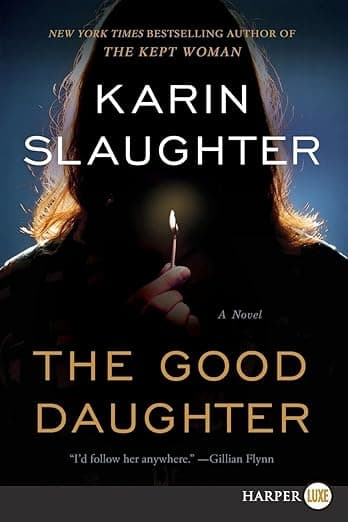
After the Pikeville school shooting, Charlotte Quinn scrambles to help the suspected shooter while her father, Rusty Quinn, insists the girl is innocent. In New York, Samantha Quinn builds a fortress of discipline around old wounds—until an urgent message pulls her back to Georgia and the family history she tries to bury. The past erupts into the present, binding both sisters to a case that reopens every scar, for them and for their hometown.
What Happens
Chapter 5: The Yearbook
Charlie brings Ava Wilson, mother of the accused shooter Kelly Wilson, to Rusty’s fortified office. Rusty is absent; the office manager, Lenore, parks Ava with the news while bottling her fury at Charlie’s recklessness during the shooting. In the bathroom, Lenore lets it out—she was terrified watching SWAT aim rifles at Charlie—and Charlie, ashamed, admits her own self-destructive patterns, the same ones her estranged husband Ben Bernard calls out.
Alone, Charlie wrestles with an ethical bombshell: she stole Kelly’s yearbook before the police search. She knows it belongs with the authorities—then Rusty storms in. He has already spoken to Kelly and calls her a “unicorn,” their term for a rare innocent client. Charlie, who witnessed the attack, pushes back and flags the missing murder weapon, but Rusty sidesteps with aphorisms and drops another blow: the DA, Ken Coin, told him about her affair.
When Charlie finally shows him the yearbook, Rusty tells her to open it. Page after page is defaced with violent misogyny—rape threats, graphic drawings, slurs. The relentless bullying reframes Kelly’s case; Rusty sees a powerful mitigating narrative. Driving him home, Charlie passes the vandalized farmhouse—“GOAT FUCKER” sprayed across it—and Rusty offers oblique advice about her marriage. He compares her need to be right to her mother Gamma Quinn, suggesting that trait is pushing Ben away, the way it once frayed his own marriage.
Chapter 6: The Past Is Never Dead
Charlie returns to the empty house she shared with Ben, flooded by memories of what they were—and by the last two years of needling criticism that helped end it. A crude animated reenactment of the shooting blares from the TV when Ben walks in to retrieve a file. Their conversation turns raw upstairs: he’s still been visiting Rusty monthly; he saw the goat graffiti. Charlie repeats Rusty’s “happy versus right” advice. Ben rejects it, then confronts her infidelity and her sprint toward danger at the school. “Why did you run toward the gunshots?” he demands, and when she falters, he snaps, “And look what happened!”
A call interrupts the spiral. Ben answers, and his face falls. He tells Charlie Rusty has been stabbed.
Flashback: What Happened to Charlotte
The narrative snaps to thirteen-year-old Charlotte in the chaotic “HP” farmhouse after a fire destroyed their home. Gamma is secretly sick, coughing blood into the sink, when two masked men with a shotgun burst in demanding Rusty. They are Zachariah Culpepper and his brother, Daniel.
Gamma tries to shield her daughters. Zachariah blows her away with the shotgun, splattering Charlotte. He digs his fingernails into fifteen-year-old Sam’s eyes, then marches both girls through the woods to a pre-dug grave intended for Rusty. In the struggle, Daniel’s pistol goes off; the bullet hits Sam in the head, and she tumbles into the grave.
Zachariah turns on Charlotte, intent on rape, but Daniel attacks him. Charlotte runs—bleeding feet, lungs burning, driven by the echo of her sister’s coaching: don’t look back, trust me, keep your head down. She sprints through miles of woods until she collapses at a neighboring farmhouse and finds help.
Chapter 7: The Good Daughter
The narrative shifts to Sam in New York. She’s a 44-year-old, high-performing patent lawyer who lives alone with the fallout of a gunshot to the head: a metal plate, a jagged scar, compromised vision, chronic pain, and a monkish routine of swimming and meditation. It’s her birthday—the same age Gamma was when she died.
She listens to Rusty’s annual voicemail, a folksy performance capped with a startling new line: “Your sister sends her love.” The message needles at the estrangement between the sisters, rooted in a disastrous visit years earlier when Sam’s rage drove Charlie away.
At work, Sam learns about the Pikeville shooting. One victim is Douglas Pinkman, her former track coach; his wife is Judith Pinkman, the woman who sheltered Charlie after the attack. She also learns Rusty is representing Kelly Wilson. That night in her sterile new apartment, she pours a glass of wine for her late husband, Anton, that she won’t drink. Then an email arrives from Ben: “Charlie needs you.”
Chapter 8: The Reunion
Sam flies private to Georgia, steeling herself with memories of Anton and the life that might have been. At Dickerson County Hospital, she reunites with Charlie, stiff and formal after twenty years. Ben buffers the tension. Seeing Lenore, Sam realizes—finally—that she’s a transgender woman, a truth once obscured by Gamma’s scorn.
In Rusty’s room, he greets Sam with booming theatrics and a Shakespeare quote, even spinning a movie-plot version of his attack. Sam, furious at his manipulation and distance, wallops him with her purse. When the dust settles, Rusty begs: take Kelly’s arraignment. She’s a unicorn. Charlie argues conflict—she’s a witness—and points out Sam isn’t a criminal lawyer. Sam, disgusted by the pull of Pikeville’s chaos, storms out.
Chapter 9: Last Word
Sam finds the hospital’s Serenity Garden and steadies her shaking hands. Charlie joins her, and they finally speak plainly. Charlie offers copies of Gamma’s academic papers—survivors of the fire—as a piece of their mother neither of them has held in years, admitting that seeing Sam is like seeing a ghost of Gamma.
They move to the present. Charlie confesses she called Sam because she couldn’t shoulder Rusty’s life-or-death medical decisions alone. Sam apologizes for her past explosions—Pikeville makes her mean. Charlie brings up the teacher Mason; Sam recognizes the name and explains the deeper danger: Mason Huckabee’s sister was raped in a case where Rusty defended the attacker, and she later died by suicide.
The revelation tightens the noose around both the case and the family. Sam reads what Charlie really needs—her sister—and decides. No one will stand up for Kelly at arraignment if she doesn’t. She agrees to do it, then closes the garden gate and says, “Last word.”
- Key beats:
- The yearbook exposes a campaign of bullying against Kelly, crucial for her defense.
- Ben confronts Charlie’s trauma-driven recklessness and links it to their imploding marriage.
- Rusty is stabbed, forcing a family reckoning.
- A full flashback lays bare Gamma’s murder and the girls’ assault.
- Sam returns, clashes with Rusty, and—despite herself—steps into the case.
Character Development
Charlie: Shame and defiance collide as she faces the fallout of the shooting and her marriage. The yearbook pushes her from witness to reluctant investigator, while Lenore’s fear forces Charlie to admit her pattern of courting danger.
- Owns her recklessness as a trauma response.
- Longing for Ben surfaces alongside accountability for her infidelity.
- Reaches for help by pulling Ben—and then Sam—back into her orbit.
Sam: Precision and control define her adult life, but Pikeville cracks the veneer. Her body carries the attack; her mind manages it—until Rusty and Charlie force her to engage.
- Estrangement from Charlie softens into guarded openness.
- Grief for Anton remains ritualized but unresolved.
- Chooses action over avoidance by taking Kelly’s arraignment.
Rusty: The showman becomes a patient. His charm, quotes, and tall tales mask need—and strategy.
- Frames Kelly as a “unicorn,” revealing his gut for innocence.
- Admits he needs Sam, a rare vulnerability.
- His stabbing transforms him from untouchable advocate to case catalyst.
Ben: The moral ballast refuses to enable Charlie’s spirals.
- Names the link between her past and her present risk-taking.
- Maintains quiet loyalty to Rusty.
- Bridges the sisters with a simple call: Charlie needs you.
Gamma: Absent but everywhere.
- Flashback proves her ferocity and sacrifice.
- Papers and memory restore her intellect and complexity.
- Her legacy—rigor, righteousness, and rigidity—shapes both daughters.
Themes & Symbols
Family Trauma and Its Aftermath (link): The flashback converts backstory into lived horror. Every present-tense choice echoes it—Charlie runs toward danger; Sam constructs a life of discipline to hold pain at bay. Their estrangement is a survival tactic that the case makes impossible.
The Past’s Influence on the Present (link): Old cases shadow new crimes. Rusty’s enemies bleed into the present. The Huckabee history recasts the shooting’s context. Even kindness loops back: Judith Pinkman once sheltered Charlie; now she’s a widow.
Sisterhood and Familial Duty (link): Ben’s “Charlie needs you” tests a broken bond—and it holds. Duty, not sentiment, pulls Sam home. In the garden, honesty edges them from stalemate to wary alliance.
Secrets and Lies (link): Gamma hides her illness; Charlie hides an affair; Rusty fictionalizes his stabbing; Sam lies about her flight. Lenore’s identity—missed for years—exposes how bias distorts truth. Secrets protect and poison in equal measure.
The Yearbook: A smiling artifact turned weapon, it reveals the brutality beneath the hallways—sexualized threats, dehumanizing jokes, collective cruelty. As evidence, it complicates Kelly’s culpability and reframes motive, intent, and mercy.
Key Quotes
“And look what happened!”
Ben’s accusation connects Charlie’s present-tense heroics to her foundational trauma. It’s the shock line that forces her to see motive, not just action, and it marks the limits of his patience—and love.
“Your sister sends her love.”
Rusty’s voicemail ends with a line that doesn’t fit his usual performance. It’s both lure and olive branch, pulling Sam into a story she vowed to avoid and hinting at Rusty’s rare willingness to triangulate for reconciliation.
“Don’t look back. You have to trust me to be there. Just keep your head down and run.”
Sam’s coaching becomes Charlotte’s survival mantra—and the sisters’ lifelong operating system. It defines how they cope: forward motion at any cost, even when the cost is connection.
“Last word.”
Sam’s childhood refrain becomes adult reclamation. She chooses engagement on her terms, signaling a shift from avoidance to agency—and redefining the power balance between the sisters.
“Charlie needs you.”
Ben’s four words cut through history, pride, and geography. The plea reframes duty as love and sets the reunion—and the legal plot—in motion.
Why This Matters and Section Significance
These chapters pivot the novel from mystery to reckoning. The extended flashback drags the core trauma into the present, making sense of the sisters’ opposite survival strategies and the implosion of Charlie’s marriage. Introducing Sam as a co-protagonist reshapes the narrative voice—from Charlie’s raw instinct to Sam’s analytic control—so the book can interrogate trauma emotionally and intellectually.
Rusty’s stabbing fuses the family drama with the legal thriller, forcing a reunion neither sister wants. The yearbook reframes Kelly Wilson’s case, complicating guilt and inviting questions of mitigation, motive, and mercy. By the end, Sam’s decision to take the arraignment unites the plotlines: the past’s wounds, the present’s crimes, and the sisters’ fragile path back to each other.