Opening
The epilogue pivots to a shadowy first-person narrator known only as “The Watcher,” who surveys the entire saga like a grand experiment. From this cool, elevated vantage, the lives and games of the Hawthorne universe compress into a single calculation—one that ends on the unsettling possibility of action: “Perhaps.”
What Happens
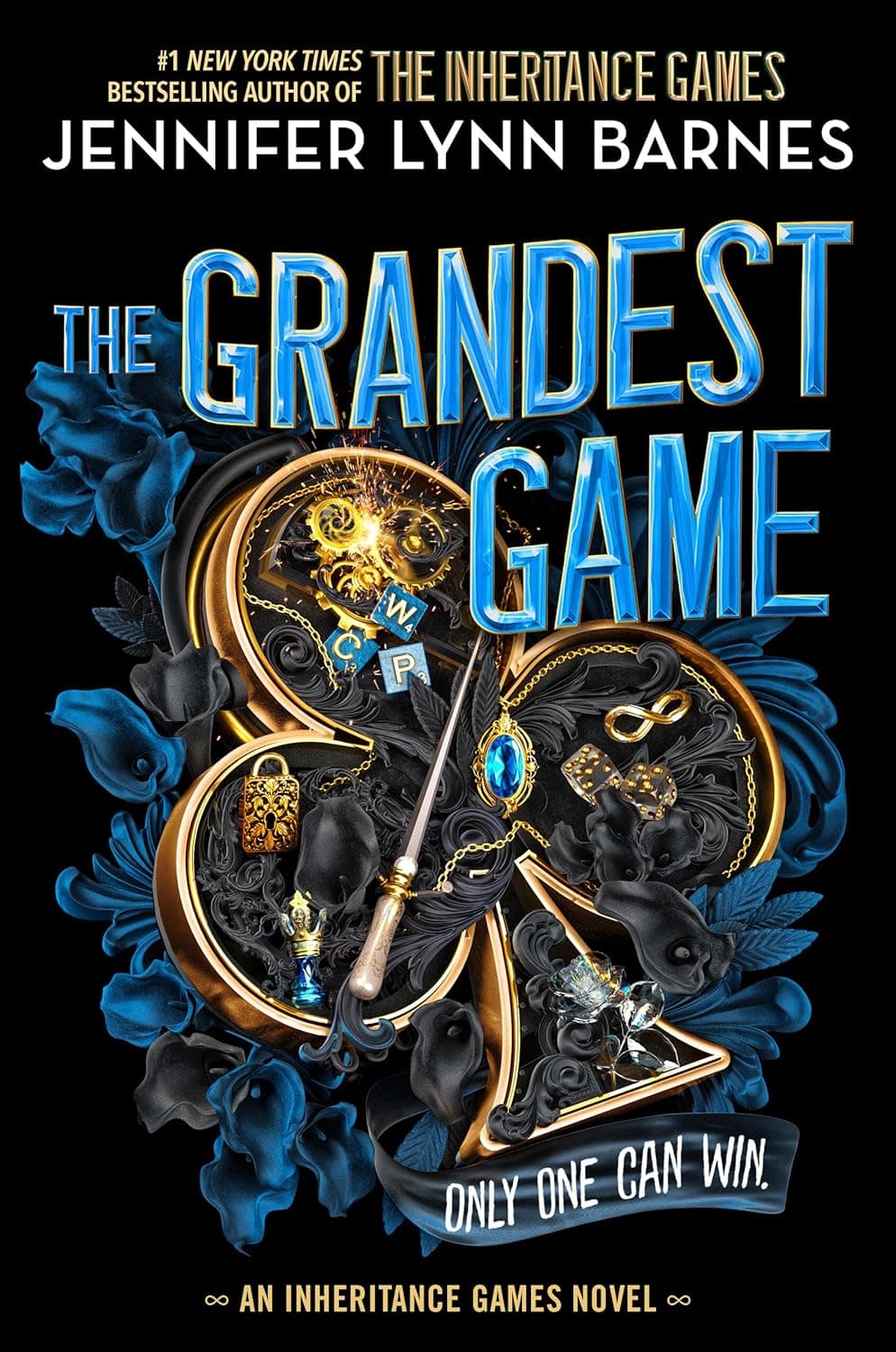
The camera swings away from the familiar cast and settles on an unseen observer who names what merits attention: “The Grandest Game,” the bond and exploits of Jameson Hawthorne and Avery Grambs, and a new slate of contenders that includes Lyra Catalina Kane and the boy from the Devil’s Mercy, (Rohan). The catalog reads like a dossier—lives reduced to data points, stakes recast as variables in a larger design.
From this perch, The Watcher weighs involvement versus restraint: perhaps “watching [is] all the situation merited,” perhaps there are “no true problems to be solved.” The tone stays exacting and impersonal, as if people are pieces on a board and outcomes are simply the results of correct play.
Formally, the epilogue yanks us out of the book’s prior focalizers—Grayson Hawthorne and Gigi Grayson—and into a first-person mind that has been observing all along. The final word, “Perhaps,” snaps the lens shut with a warning: observation can become intervention, and the game can always get bigger.
Character Development
The Watcher emerges as a new, enigmatic force who operates above and around the known players.
- Mysterious reach and power: Their omnidirectional surveillance of elite, secretive families implies extraordinary resources.
- Analytical detachment: They assess people and crises as “situations,” signaling distance and a strategist’s mindset.
- Ambiguous role: Potential puppet master, guardian, or future antagonist—their motives remain opaque, widening the series’ power map.
Themes & Symbols
The epilogue doubles down on Secrets and Hidden Truths. Even after puzzles appear solved, a deeper layer watches from the dark. The revelation of The Watcher reframes every victory as partial and provisional; someone else still holds a wider view.
It also re-centers Games, Puzzles, and Strategy. By explicitly naming “The Grandest Game,” the epilogue places Tobias Hawthorne’s and Sterling Kane’s machinations inside an even larger contest. The players think they’re moving freely; the epilogue suggests a meta-board, higher stakes, and rules not yet revealed.
Key Quotes
“The Grandest Game.”
This phrase elevates the novel’s events from personal drama to tournament-level strategy, implying that what we’ve seen is only one bracket in a multi-tiered competition.
“Watching was all the situation merited.”
The Watcher values restraint as strategy. Power, here, is the freedom to wait—and to decide when observation becomes control.
“No true problems to be solved.”
The line treats upheaval and danger as manageable variables, suggesting mastery over chaos and a chilling confidence in predictable outcomes.
“Perhaps.”
A one-word cliffhanger that punctures the preceding calm. It introduces doubt, foreshadows escalation, and promises that passive surveillance may give way to direct moves.
Why This Matters and Section Significance
The epilogue expands the series’ scope and resets the stakes. By revealing an intelligence beyond the characters’ awareness, it turns resolved plotlines into opening gambits for whatever comes next.
- Expands the world: Conflicts among Hawthornes, Kanes, and Graysons become one theater in a broader network of influence.
- Raises the stakes: A hidden player with unknown aims signals bigger, riskier puzzles ahead.
- Creates suspense: Ending on “Perhaps” ensures the question of intervention—and identity—drives anticipation into the next installment.