What This Theme Explores
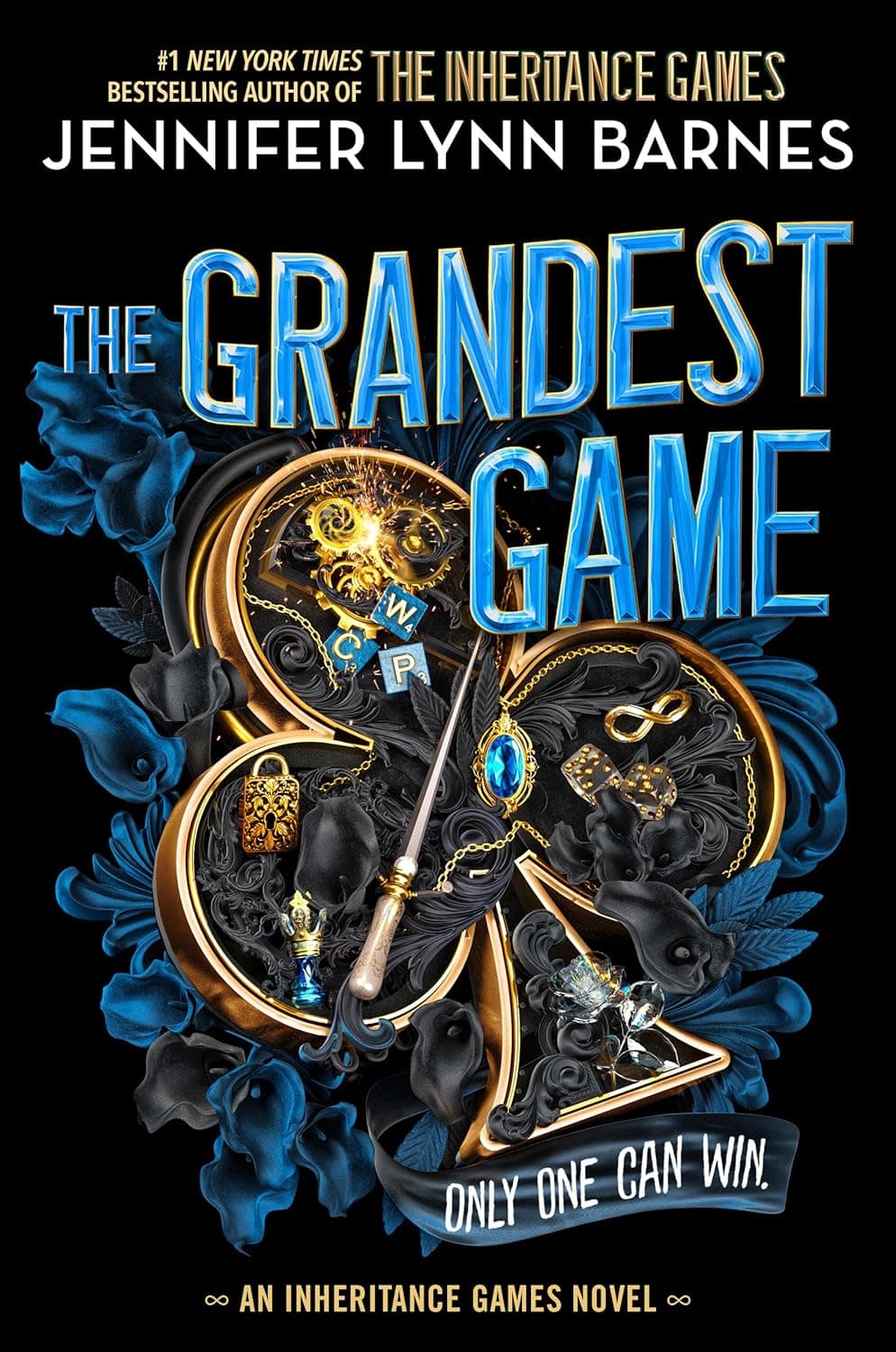
Games, Puzzles, and Strategy in The Grandest Game asks who gets to set the rules—and who survives when the rules change. It treats riddles, ciphers, and elaborate contests as mirrors for social maneuvering among the ultra-wealthy, where wit, nerve, and emotional resilience become currency. Under the watch of Avery Grambs, contests expose not only intelligence but also ethics: when is a “win” worth the cost, and when does strategy become manipulation? The novel ultimately probes whether mastery of the game can coexist with genuine connection—or whether treating life as strategy risks making people into pieces.
How It Develops
At the outset, the theme is cleanly codified: the Grandest Game has rules, rounds, and clear stakes. Early contenders like Gigi Grayson and Rohan approach the wild-card scramble with distinct playbooks—pattern-sleuthing versus social manipulation—making the competition feel like a dazzling puzzle box where the clever and the bold can earn their ticket.
Midway through, the story forces a pivot from solo brilliance to uneasy alliance. The Grandest Escape Room binds rivals into teams, making trust, role assignment, and calm under pressure as crucial as cracking an anagram. Psychological play bleeds into the formal contest: a coercive Truth or Dare with Savannah Grayson weaponizes intimacy, showing that some of the most consequential “moves” aren’t mechanical solves but interpersonal gambits.
By the end, the game sprawls beyond its borders. A planted listening device and the revelation of secret sponsors expose a meta-contest run by unseen hands; even a power outage proves that control is a façade. The transformation is complete: what began as an exhilarating set of puzzles becomes a hazardous reality where the stakes escalate from prize money to reputation, freedom, and revenge.
Key Examples
Even the smallest challenges are pressure tests of perspective, nerve, and collaboration.
-
Decoding the System: Before the official contest starts, Lyra Kane treats a classroom exam like a code to be broken, reading intent instead of content. Her success reframes “intelligence” as the ability to see the architecture of a problem, not just its surface. Chapter 1
-
The Grandest Escape Room — The Anagram Door: Lyra, Grayson Hawthorne, and Odette Morales shift from overthinking to pattern reorientation, unlocking SWORD/WORDS, PLATE/PETAL/PLEAT, and SONIC/COINS/SCION. The sequence dramatizes a core principle of the novel’s games: answers hide in plain sight, rewarding flexibility over brute force. Chapter 34
-
The Riddle Challenges: Separate teams solve lateral-thinking riddles—one arriving at “night,” another at “mouth”—which underscores that interpretation, not accumulation of facts, wins the day. The riddles also differentiate team dynamics, revealing who leads, who doubts, and who reframes the question at the crucial moment. Chapter 38, Chapter 40
-
The Movie Montage Cipher: A code embedded in old film clips demands cross-disciplinary smarts—visual recall, math, and symbolic inference. The task blurs entertainment and analysis, echoing how the Grandest Game disguises surveillance and strategy as spectacle. Chapter 48
-
Games Within the Game — Truth or Dare: Rohan leverages a simple party game into information extraction, turning social pressure into a strategy engine and Savannah into both opponent and instrument. The scene exposes the ethical fault line between playing to solve puzzles and playing to control people. Chapter 58
-
Games Within the Game — The Listening Device: When Gigi finds a bugged necklace, the board itself proves compromised. The discovery reframes every earlier victory as potentially orchestrated, raising the subtextual question: who is truly playing, and who is being played? Chapter 45
Character Connections
Avery and the Hawthornes design puzzles that reward range: logic, intuition, collaboration, and poise under pressure. Their curatorial delight is tempered by the series’ recurring irony—that architects of games can be ensnared by them—especially as Grayson’s forced participation collapses the distance between maker and piece, destabilizing his need for control.
Rohan treats life as a board state, assigning roles and calculating exchanges with chilling efficiency. His habit of mentally mapping rivals as chess pieces reveals both his tactical acuity and his moral blind spot: people become positions rather than persons, a worldview that promises victories but endangers his humanity. Chapter 5
Gigi embodies joyful pattern recognition, trusting that every maze has a thread if you look closely enough. Her method—careful observation, creative leaps, and optimism—keeps the story’s games playful even as the stakes rise, from decoding the wild-card clue to reading the dollhouse’s hidden logic. Chapter 4
Lyra’s strength is embodied intuition: she feels how systems move. Whether cracking a coded exam or valuing Scrabble tiles by gameplay potential, she resists linear traps and reads the room as readily as the clue, making her a bridge between pure logic and social intelligence. Chapter 30
Savannah plays a zero-sum sport. Her directness—physical, mental, and strategic—tests the limits of “win at all costs,” forcing teammates and rivals to decide whether cooperation is a tactic or a conviction. Chapter 9
Collectively, these styles suggest the book’s argument: no single intelligence guarantees success. Hybrid players thrive; purists risk collapse. Characters like Knox (and, at times, Rohan) show how reducing others to pawns streamlines decisions but corrodes trust—and ultimately, victory conditions.
Symbolic Elements
The Grandest Game: The contest is a miniature of elite society, where rules appear transparent but advantages are coded. Its layered design insists that what looks like play is often power—calculated, curated, and televised.
Hawthorne Island as Board: Described by Brady Daniels as a closed system, the island promises control while quietly inviting intrusion. The discovery of bugs and sponsors punctures the fantasy of a sealed board, proving that every game sits within a bigger one.
The Grandest Escape Room: A literal lock-in that doubles as an emotional one, it traps characters with their histories, grudges, and dependencies. Escape requires solving both the mechanism and the team: failure of trust is as fatal as a wrong answer.
Chess and Game Pieces: Strategy motifs—Rohan’s mental chessboard above all—symbolize the urge to dominate chaos by assigning roles. The imagery flatters the strategist while warning that overreliance on control reduces the self to a player who can’t see beyond the grid.
Contemporary Relevance
The novel’s obsession with puzzles speaks to a culture that gamifies everything: fitness apps, career ladders, dating, branding. Escape rooms and strategy TV make play public; algorithms and surveillance make it consequential. The hidden sponsors and bugged jewelry tap current anxieties about unseen arbiters of success—tech platforms, financiers, institutions—suggesting that meritocratic “wins” often unfold on tilted boards. In that climate, the book argues for adaptability and ethics: play hard, but remember the people across the table aren’t merely pieces.
Essential Quote
“Trying to write trick questions backfires if the person taking the test knows how to look for tricks.”
This line condenses the theme’s philosophy: games reward meta-awareness—reading the writer, not just the words. It valorizes perspective-shifting over rote smarts and foreshadows the novel’s escalation from solving puzzles to diagnosing the puzzle-makers themselves. When the board turns out to be rigged, only players who can “look for tricks” beyond the rules survive with both the prize and their integrity intact.