Confronting Mortality
What This Theme Explores
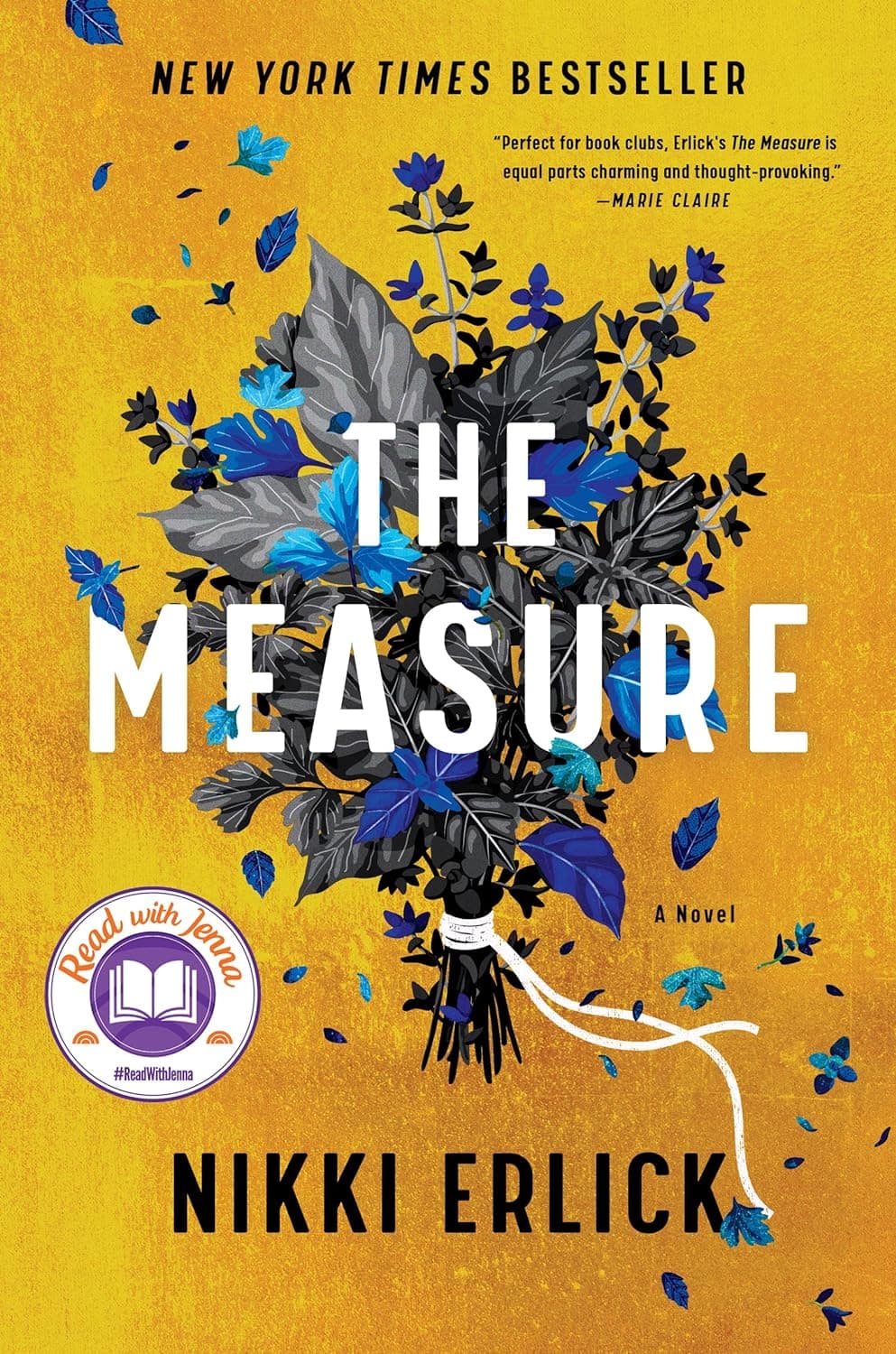
Confronting Mortality asks what changes when death becomes not a distant abstraction but a measured certainty. In The Measure, the mysterious strings turn finitude into data, compelling people to decide whether knowledge of their end-date diminishes or deepens their lives. The theme probes how fear, denial, and urgency collide with love, purpose, and ethics once lifespan becomes visible. It ultimately tests whether the “measure” of a life is time itself or what one dares to do with it.
How It Develops
The story opens with rupture: identical boxes appear worldwide, each holding a string that reveals the length of a life. Early chapters capture the vertigo of choice—whether to face the truth at all—as characters like Nina and Ben weigh opening their boxes in the Prologue and Chapter 1-5 Summary. Mortality first feels speculative, a thought experiment and a dare.
When science confirms the strings are real in the Chapter 6-10 Summary and the personal becomes irrefutable in the Chapter 11-15 Summary, the theme shifts from metaphysical to logistical. People who open their boxes—especially Maura—must navigate employment, insurance, intimacy, and meaning under the shadow of certainty. Support groups, rituals, and new vocabularies emerge to metabolize the terror and turn it into community.
Knowledge then scales into power. As the world sorts itself by string length, discrimination hardens, and fear is weaponized. Political actors such as Anthony Rollins use “safety” to justify surveillance and exclusion, and violence targets short-stringers in the Chapter 31-35 Summary. The theme widens: confronting mortality becomes not just a private reckoning but a social crucible that reveals a society’s ethics.
Finally, the novel pivots from dying to living. Later chapters ask how to choose love, risk, and service when time is finite, tracing sacrifices, reconciliations, and legacies in the Chapter 51-55 Summary. By the time we reach Several Years Later, characters model a hard-won peace—less about beating the clock than about investing their measured days with purpose.
Key Examples
The novel stages confrontations with mortality in moments that clarify both fear and courage.
-
The Initial Discovery: When Nina and Maura open their boxes together, the graphic disparity between their strings transforms an idea into a shock to the body. The scene crystallizes how measurement alters love, power, and future plans in an instant, turning a couple’s private hope into a countdown neither asked for.
At the time, they weren’t able to interpret the exact meaning of the lengths of their strings, but they placed them between their fingertips and held them out next to each other. One thing was instantly, sickeningly clear: Maura’s string was barely half the length of Nina’s. The image makes mortality tactile, forcing both to redefine commitment when asymmetry is no longer hypothetical.
-
The Support Group: The “Living with Your Short String” circle, where Ben, Maura, and Hank speak frankly, reframes mortality from solitary burden to shared language. By naming their terror and trading coping strategies, they transform dread into solidarity, showing that community can redistribute the weight of the inevitable.
-
Hank’s Sacrifice: A doctor who once believed his job was to hold death at bay, Hank repurposes his dwindling time by protecting others during a protest. His choice reframes control: if he cannot extend his life, he can still determine its meaning. Confronting mortality, here, becomes the engine of moral clarity.
-
Javier’s Choice: Javier switching strings with his friend Jack is a brazen attempt to rewrite fate in order to serve. Paradoxically, that act of agency—risking a shorter life—affirms that value lies in vocation and love, not longevity. Mortality is not passively suffered but actively negotiated.
-
The Final Years: In the epilogue, Nina carries on after Maura’s death, helping raise the children of Amie and Ben. The long arc of grief and caretaking shows mortality’s afterlife: the living renegotiate identity through memory and responsibility, proving that legacy is an ongoing form of presence.
Character Connections
Maura’s short string radicalizes her attention. Rather than shrink, she spends fast and brave—channeling urgency into activism, affection, and work that outlives her. Confronting mortality distills her choices; she becomes proof that a shortened horizon can sharpen, not diminish, a life’s impact.
Ben’s journey runs inward: the knowledge of a short string detonates his relationships and self-concept, yet he learns to choose intimacy anyway with Amie. By committing to love and family under a visible clock, he dramatizes the theme’s core paradox: acceptance of death can expand one’s capacity to live fully.
Nina embodies the survivor’s confrontation: to love someone whose time is brief is to accept grief in advance. Her arc insists that “long life” is not insulation but responsibility—she must decide how to honor the finite life beside her and how to carry its meaning forward once she is left behind.
Hank faces mortality from both sides of the stethoscope. The strings challenge his professional identity—what does a healer do when outcomes are prewritten? His final act resolves the tension by redefining care as presence and protection, not only cure, turning resignation into agency.
Anthony Rollins converts mortality into leverage, exploiting fear to restrict and divide. He shows how confronting death can curdle into control when weaponized by power, making clear that the ethical test is not only personal: a society’s response to finitude reveals its character.
Symbolic Elements
The Strings: Indestructible and precise, the strings literalize lifespan while exposing its limits as a metric. They render time measurable but not meaningful, pushing characters to craft significance beyond a number.
The Boxes: As invitations to knowledge, the boxes dramatize the threshold between ignorance and awareness. “The measure of your life lies within” names both the physical string and the inner reckoning required to interpret it.
The “Strung Together” Pin: Two intertwined lengths—unequal, yet bound—capture communal acceptance. The pin transforms private terror into shared emblem, suggesting dignity and belonging even within asymmetry.
Contemporary Relevance
The Measure’s mortality calculus echoes a world shaped by pandemics, climate risk, and political polarization, where data about danger can either deepen care or license exclusion. The novel mirrors real debates over triage, privacy, and equity, revealing how fear often targets the vulnerable labeled “at risk,” while solidarity builds new forms of kinship. By dramatizing how individuals and institutions respond to finite time, the book urges readers to resist reductive metrics—lifespan, risk scores, productivity—and to invest instead in relationships, justice, and the ethical use of knowledge.
Essential Quote
“The measure of your life lies within.”
This inscription distills the novel’s thesis: the box contains a number, but the true “measure” is the meaning one forges in response. It reframes the string as a mirror, not a sentence—what counts is not how long the line runs, but what you trace with it.