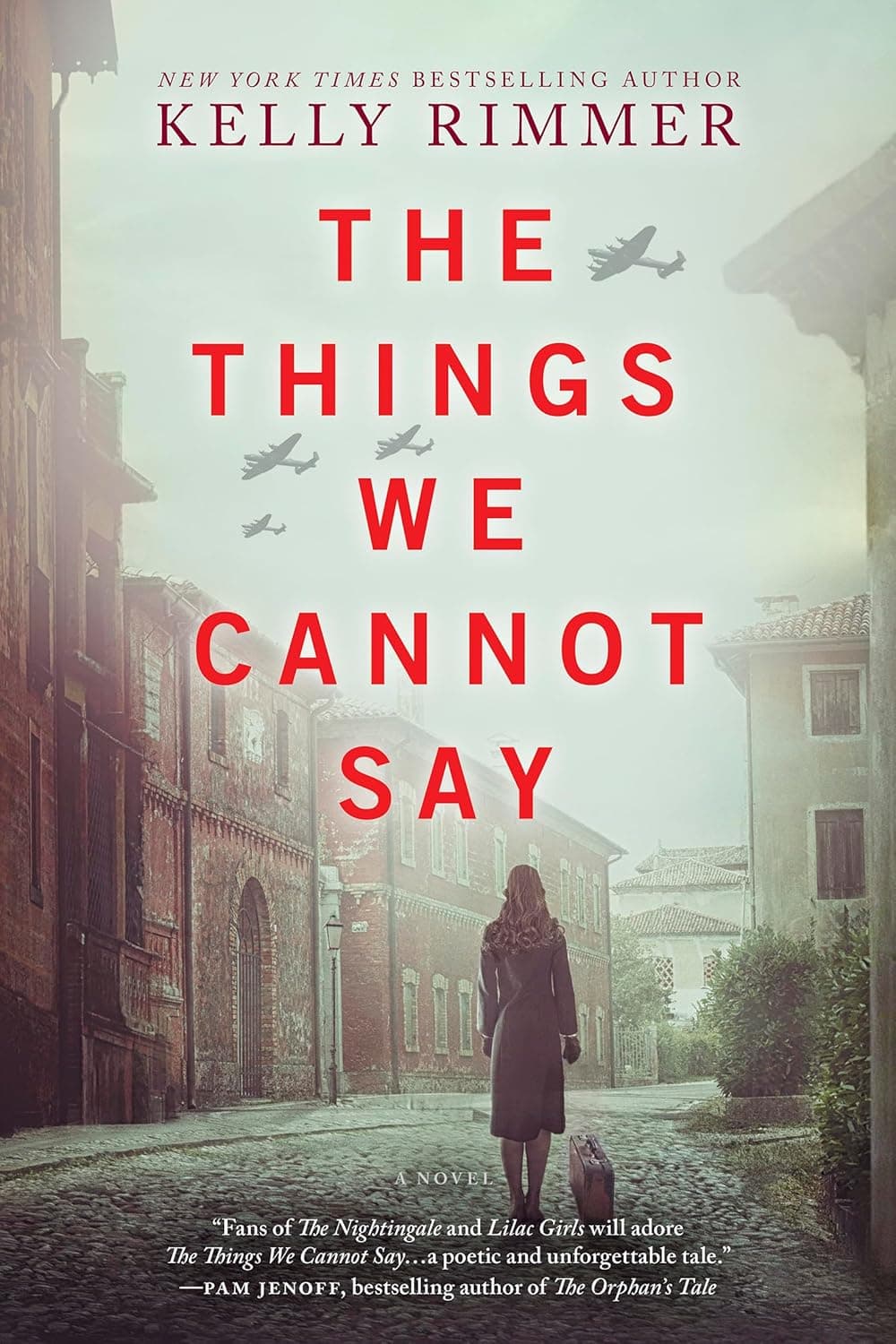
Opening
War splits one family’s history into two timelines that begin to braid together. In occupied Poland, Alina Dziak risks everything to reunite with Tomasz Slaski, while, decades later, Alice Michaels faces her grandmother’s urgent command to fly to Poland and “Find Tomasz.” The revelations ignite the themes of War, Trauma, and Survival, Communication and Silence, Love, Sacrifice, and Loyalty, and Family Legacy and Intergenerational Connection.
What Happens
Chapter 11: The Reunion in the Woods
A new Nazi decree announces collective punishment: anyone aiding Jews will be executed, along with their families. Over Sunday lunch, Faustina hints that neighbors are hiding Jews for profit before Alina’s father shuts her down, a stifling silence that deepens the household’s fear and reinforces Communication and Silence. Alina resents being kept in the dark, a frustration mirrored by nine-year-old Emilia Slaski, whose drawings turn ominous.
News arrives from Justyna: her aunt Nadia might know something about Tomasz Slaski. Alina bolts into the night—past curfew, without papers—racing up the hill to Trzebinia. Footsteps stalk her through the woods. At the clearing, a whisper calls her name. She falls, looks up—and finds Tomasz. Gaunt and filthy, he admits he’s been hiding nearby for weeks, stealing food to survive. He refuses to explain why he’s in danger from both Nazis and Poles, and warns Alina to avoid Nadia’s family. Their reunion pulses with relief and fear, and Tomasz promises to come to her window at night—an uneasy vow of Love, Sacrifice, and Loyalty.
Chapter 12: Babcia’s Last Request
Before dawn, Alice Michaels weighs the limits of her “gilded cage”—safe, but dependent on her husband, Wade. Her daughter Callie, shaken after using a slur toward her brother Eddie Michaels, researches its origins and seeks forgiveness; Alice comforts her, their tenderness undercut by the family’s tensions.
At the hospital, Julita Slaski-Davis (Babcia) lays out artifacts: a tiny hand-stitched leather baby shoe; a long-ago letter asking Alice to accompany her to Poland; and a faded letter in Polish signed “Tomasz.” Unable to speak, Babcia programs her AAC device with a stark plea: “Alice plane Poland. Alice plane Trzebinia. Find Tomasz,” and the cryptic “Babcia fire Tomasz.” The demand feels impossible—Alice has Eddie’s care and a life that can’t just be paused—yet Babcia repeats the message until Alice discovers a list of Polish names and addresses, including “Alina Dziak” and “Emilia Slaska.” The pull of Family Legacy and Intergenerational Connection tightens around her.
Chapter 13: The Rosary Deception
Alina and Tomasz start meeting at her window, whispers snatched from the dark. The danger becomes unbearable when her father nearly catches them. To keep Tomasz close, Alina announces a “spiritual commitment” to pray the rosary on the hill each morning for twenty minutes. Faustina agrees instantly, pressing a thick slab of bread into Alina’s hand “for your time of prayer”—a gesture that feels like consent to a deeper secret.
At dawn, Alina finds Tomasz perched high in a tree, and they finally hold each other in daylight. He sketches a future in America to blot out the present, sidestepping the “trouble” he won’t name. Alina passes him the bread; he promises to eat half and share half with his “friends.” The woods become their sanctuary—part confessional, part lifeline.
Chapter 14: Unearthing Family Secrets
Alice’s mother, Julita, arrives at the hospital and identifies the baby shoe as an object Pa cherished without explanation. She reveals Babcia once wanted to name Alice “Alina,” a family name—suddenly the list in Babcia’s iPad links directly to Alice. Julita wonders aloud if Pa was Jewish. He attended church but never took communion; in retirement, he and Babcia also visited the synagogue. The silence around their wartime past starts to crack.
Julita recalls Babcia writing for decades to a sister in Poland—Emilia (or Amelia)—who never replied. “Emilia Slaska” on the list appears to be that sister. With Alice’s children present, Babcia’s device speaks clearly: “Alice home now. Later, Alice plane Poland.” The instruction shifts from confused pleading to fixed resolve, leaving Alice torn between her daily obligations and a mandate that feels like destiny.
Chapter 15: The Confession
Pressed by Alina, Tomasz finally tells the truth. After Warsaw falls, he’s captured and given a grotesque choice: join the Wehrmacht or his family dies. He complies and is assigned to help force Jewish families into the Warsaw Ghetto, his calming voice weaponized to soothe terrified children with lies. The moment that breaks him comes when he recognizes Saul Weiss, a respected surgeon and mentor, inside the ghetto. Saul’s gentle smile—kindness amid horror—shatters Tomasz’s complicity.
Tomasz deserts, escaping through the sewers with Saul and Saul’s wife, Eva. Żegota operatives guide them back toward Trzebinia, where Saul and Eva hide with their newborn, Tikva. Tomasz steals food and supplies for them and for other hidden Jews. Alina recoils at the brutality of his past but not from him. She recognizes his shame and the courage of his defiance. She chooses him—and his mission—declaring that his calling is now hers. Their youthful romance hardens into a partnership, forged by danger and purpose under War, Trauma, and Survival.
Key Events
- Alina risks curfew and papers to find Tomasz—and collides with him in the Trzebinia woods.
- Babcia uses her AAC device to command Alice to “Find Tomasz,” placing a baby shoe and old letters in her hands.
- The “rosary” ruse lets Alina meet Tomasz at dawn, with Faustina quietly abetting the deception.
- Julita hints Pa may have been Jewish; Babcia’s decades of unanswered letters to Emilia point toward Poland.
- Tomasz confesses conscription into the Wehrmacht, his role at the Warsaw Ghetto, desertion, and his rescue of Saul, Eva, and baby Tikva.
- Alina pledges herself to Tomasz’s dangerous work, shifting from secrecy to resistance.
Character Development
Across these chapters, identities crack and reform under pressure. Love ceases to be a feeling and becomes labor—daily, dangerous, and shared.
-
- Sheds her “kept-in-the-dark” adolescence for bold agency—sneaking out, inventing the rosary ritual, smuggling food.
- Reframes love as action, vowing to join Tomasz’s mission rather than idealize him from afar.
- Finds a quiet ally in Faustina, reading the subtext of a mother’s bread and silence.
-
- Returns hollowed by guilt, his gift for storytelling redirected into survival strategies and protective fantasies.
- Moves from coerced complicity to active resistance, driven by a need for redemption and loyalty to those he shelters.
- Accepts Alina as a partner, not a protected memory.
-
- Confronts the limits of her “gilded” safety and the pull of a mandate that predates her.
- Begins to reinterpret her identity through Babcia’s artifacts, names, and the possibility of Jewish heritage in her family.
- Balances devotion to Eddie with a rising duty to complete Babcia’s unfinished story.
Themes & Symbols
The chapters braid Communication and Silence with Love, Sacrifice, and Loyalty. In Poland, secrecy shields and isolates: parents suppress truths; lovers whisper at windows and trees. In the present, Babcia’s AAC device pierces decades of quiet, compressing a lifetime into imperatives that launch Alice’s quest. Love operates as a vow of risk—Alina’s clandestine walks, Tomasz’s thefts for hidden families, Alice’s readiness to cross an ocean—each act a pledge that costs something.
Under War, Trauma, and Survival, the story refuses easy heroism. Tomasz’s “choice” exposes moral injury as a wound that demands repair through action. Meanwhile, Family Legacy and Intergenerational Connection threads names (Alina, Emilia), objects (the baby shoe), and rituals (church, synagogue) into a lineage Alice must decipher to give Babcia peace—and to understand herself.
Symbols
- The Woods/Hill: Once romantic terrain, now a covert chapel and refuge—where faith becomes practice and love becomes logistics.
- The Baby Shoe: A compact reliquary of loss and secrecy, tying Pa’s silence to Babcia’s plea and Alice’s unfolding mission.
- The AAC Device: A bridge across aphasia and time, translating urgency into action; it democratizes communication and collapses silence.
- The Rosary: Both spiritual cover and moral commitment, sanctifying deception used to preserve life.
Key Quotes
“Alice plane Poland. Alice plane Trzebinia. Find Tomasz.” This is Babcia’s thesis statement—a compressed directive that fuses place, person, and purpose. The command vaults Alice out of domestic stasis and into a quest that binds the two timelines.
“Babcia fire Tomasz.” Opaque and unsettling, this phrase hints at a pivotal event—danger, destruction, or a moment of irrevocable choice. Its ambiguity functions as a narrative lock that only a journey to Poland can open.
“Alice home now. Later, Alice plane Poland.” The device reframes urgency as sequence: attend to the present, then fulfill the mandate. It honors Alice’s responsibilities while insisting the larger duty cannot be postponed indefinitely.
“Your calling is my calling. We do this together.” Alina’s vow elevates love into shared vocation. The line marks her passage from guarded lover to co-conspirator, converting private devotion into public risk.
Why This Matters and Section Significance
These chapters pivot the novel from parallel stories into a single mystery anchored by the name “Tomasz.” For Alina, reunion leads to responsibility: she moves from waiting to acting, accepting peril as the price of love and aligning herself with resistance. For Alice, Babcia’s artifacts and commands transform family unease into a clear quest; she inherits not only keepsakes but a moral task.
The structure—slow-burn clues in the present and withheld truths in the past—creates a puzzle the reader solves alongside the characters. Hints dropped by Faustina and Tomasz foreshadow betrayals and choices that will test every bond. What begins as romance and caregiving evolves into legacy work: the living answer for the silent, and the past demands courage from the present.