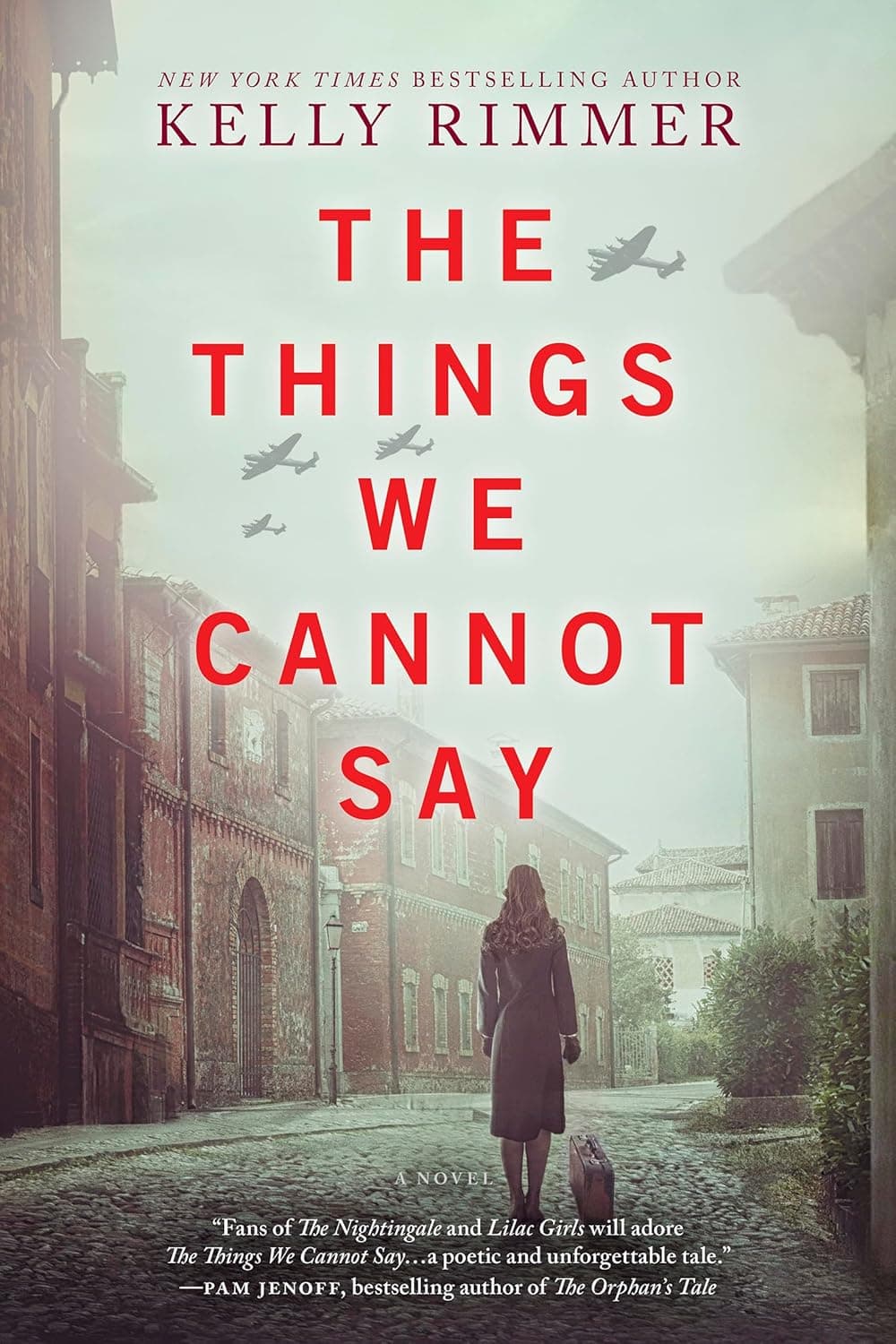
Opening
Two timelines collide as Alice Michaels battles a family crisis in the present while a mysterious name—Tomasz—pulls her into a past scarred by war. In occupied Poland, Alina Dziak fights to survive as danger closes in, while Alice navigates marriage fractures, parenting tensions, and her grandmother’s urgent plea.
What Happens
Chapter 6: A Glimmer of Hope
At the hospital, Alice struggles to calm Eddie Michaels, who frantically taps the “lunch” button on his iPad after a disastrous grocery trip triggered by a yogurt packaging change. With her mother, Julita Slaski-Davis, off searching for Babcia’s old photo box, Alice dreads calling Wade for help and braces for the fight that follows. Their tense exchange exposes a marriage strained by blame and exhaustion, a living example of how Communication and Silence erode connection.
Wade arrives unexpectedly contrite. He brings the “right” yogurt and soup—enough to avoid future crises—wraps Alice in a rare, steadying hug, and offers to handle Callie and dinner. The small tenderness, steeped in Love, Sacrifice, and Loyalty, restores fragile hope. As Eddie settles with his yogurt, Julita returns, clutching the long-sought box Babcia requested.
Chapter 7: Please Find Tomasz
Babcia brightens as she sifts through the box, selecting a cracked sepia photo of a slim, handsome young man. On the back: “Photograph by Henry Adamcwiz, Trzebinia Hill, 1 July 1941.” Alice assumes the subject is her late Pa, but Julita insists otherwise. The image sparks the first physical thread of Family Legacy and Intergenerational Connection.
Using Eddie’s iPad, Babcia painstakingly types her demand: “Find Tomasz. Please find Tomasz.” Julita dismisses it as stroke-induced confusion, but Babcia refuses, tapping out: “Not Pa. Trzebinia. Poland. Tomasz.” Then Eddie opens Google Maps and locates Trzebinia, delighting Babcia. Seeing fierce clarity in her grandmother’s eyes, Alice chooses intuition over logic and promises, “Yes, Babcia. Alice find Tomasz.” The vow binds her to uncover whatever truth Babcia has guarded for decades.
Chapter 8: The Cage Shrinks
The narrative shifts to Nazi-occupied Poland. Alina’s life narrows to backbreaking farm work after her brothers and her beloved, Tomasz Slaski, are taken. Terrified for her safety, her parents forbid her from leaving the farm, warning of the lapanka—random roundups that vanish people without a trace. The suffocating logic of War, Trauma, and Survival defines each day.
Two Nazi soldiers arrive. While the older one talks to her father, the younger stares at Alina with predatory interest. She has forgotten her identity card; fear paralyzes her. After they leave—having remarked on her father’s “pretty daughter”—Alina’s mother forces her to hide her beauty in her brothers’ clothes and scarves. Her most harrowing instruction: survival may require submission to violence. Weekly visits from Tomasz’s younger sister, Emilia Slaski, bring fragments of town horrors the adults will not voice.
Chapter 9: Smoke on the Horizon
Alina realizes her parents are secretly keeping back food from their Nazi quotas when she smells jam cooking at night. Her mother denies it with a ferocity that confirms their risk: they survive by subterfuge—hidden eggs, black-market trades, careful lies. Above it all looms a new omen: a steady column of black smoke tainting the sky with a sickening smell. Her mother calls it a furnace at a work camp; dread tells Alina it is worse.
Grief arrives in blows. News comes that Filipe dies at his work farm; later, Stanislaw succumbs to dysentery. Their father collapses into depression, their mother hardens to keep them alive. With her brothers gone, Alina clings to the idea of Tomasz as her final, fragile hope—yet she stops asking about him, fearing the next loss will break her.
Chapter 10: The Only Refuge
Back in the present, Alice’s home erupts when Callie rails against having a substitute teacher—calling it a “human rights abuse”—and hurls a slur while glancing at Eddie. Alice sends her to her room; Wade sides with Callie, insisting she needs more academic challenge. The split exposes incompatible parenting philosophies and deepens marital fissures.
Drained, Alice retreats to a bath with wine and dinner—the only place she can think uninterrupted. She tries to tell Wade about Babcia’s plea, hoping for comfort, but their talk becomes a fight about secrets, anger, and unmet needs. Choosing distance over another hollow battle, Alice takes a pillow to Eddie’s trundle and sleeps there, insulated by his steady presence.
Character Development
These chapters sharpen fault lines and reveal private vows.
- Alice Michaels: Overwhelmed yet resilient, she toggles between crisis management and emotional triage. Her promise to find Tomasz signals a decisive turn from reactive caregiving to purpose-driven action.
- Wade Michaels: Capable of tenderness and practical help, yet emotionally inconsistent. His apology at the hospital contrasts with defensiveness at home, underscoring a husband who can manage logistics but struggles with vulnerability.
- Alina Dziak: Transitions from sheltered girl to vigilant survivor. She learns strategies of concealment, endures predation’s threat, and internalizes loss while preserving a quiet ember of hope.
- Julita Slaski-Davis: Rational, efficient, and brittle under stress. Her reliance on logic blinds her to Babcia’s clarity, clashing with Alice’s intuition.
- Babcia (Hanna Slaski): Wordless but unwavering. Her determination pierces the fog of her stroke; she directs the family toward a buried truth only she fully understands.
- Eddie Michaels: His iPad becomes a bridge—first for his own needs, then as a tool enabling Babcia’s breakthrough—reframing “assistive” technology as the family’s lifeline.
Themes & Symbols
Communication and Silence threads both timelines: assistive tech empowers Eddie and Babcia to express urgent needs while Alice and Wade, fully verbal, fail to connect. In Poland, survival demands silence—about hidden food, about the smoke, about violations that must be endured, not named. The cost of what is said—and what is swallowed—shapes destinies.
War, Trauma, and Survival compress choice into impossible equations. Alina’s mother reframes resistance and consent through the cold calculus of staying alive. Grief—Filipe, then Stanislaw—erodes the family’s center while the black smoke turns the landscape itself into a warning. Across time, Alice’s crises may differ in scale, but the narrative emphasizes continuity: trauma echoes through generations, and care takes the form of sacrifice.
Family Legacy and Intergenerational Connection emerges through artifacts and vows. A single photograph reroutes a modern family; Alice’s promise becomes the hinge between Babcia’s concealed story and the present’s fractures. The past does not sleep—it summons.
Symbols:
- The Box of Photos: A key that unlocks memory, proof that family history leaves a paper trail waiting to be read.
- The Smoke on the Horizon: Dread made visible—industrialized death glimpsed before it’s understood.
- Alice’s Bathtub: A private sanctuary where agency is briefly restored and decisions crystallize.
- Eddie’s iPad: A conduit for truth, enabling those without speech to steer the plot—and the family.
Key Quotes
“Photograph by Henry Adamcwiz, Trzebinia Hill, 1 July 1941.” This inscription anchors the mystery in time and place, transforming a family heirloom into a historical breadcrumb that demands pursuit.
“Find Tomasz. Please find Tomasz.” Typed slowly on Eddie’s iPad, Babcia’s plea reframes her silence as precision, not confusion. It catalyzes Alice’s quest and supplies the novel’s central engine.
“Not Pa. Trzebinia. Poland. Tomasz.” Fragmented language communicates absolute clarity. Babcia rejects misinterpretation and insists on the difference that matters—the name that will unlock everything.
“Rape is a weapon,” her mother explains. The line distills the moral devastation of occupation. It instructs Alina in the cruel arithmetic of survival and exposes how war targets not just bodies but spirit and identity.
“Yes, Babcia. Alice find Tomasz.” Alice’s promise is a commitment to action and a bridge across generations; it turns duty into devotion and grief into motion.
Why This Matters and Section Significance
Chapters 6–10 establish the novel’s dual-engine structure: a present-day family story propelled by a mystery and a wartime survival narrative tightening like a vise. The section raises the stakes on both fronts—Alice’s marriage and parenting strain threaten to splinter her support system just as Babcia’s directive demands resolve, while Alina’s world contracts under surveillance, hunger, and loss.
Together, these chapters forge thematic mirrors: breakdown and breakthrough in communication; sacrifice as love’s practical form; and legacy as both burden and guide. By the end, Alice has a mission, Alina faces encroaching terror, and Tomasz becomes the name that binds two lives across time.