Opening
On the eve of a move they can’t afford, Jackson and his giant cat friend Crenshaw lie under the stars and face the truth Jackson keeps swallowing. Across five linked chapters, secrets surface, fear spikes, and the family chooses honesty over silence—an emotional pivot that reframes their struggle with Poverty and Homelessness.
What Happens
Chapter 46: A Giant Teachers' Lounge
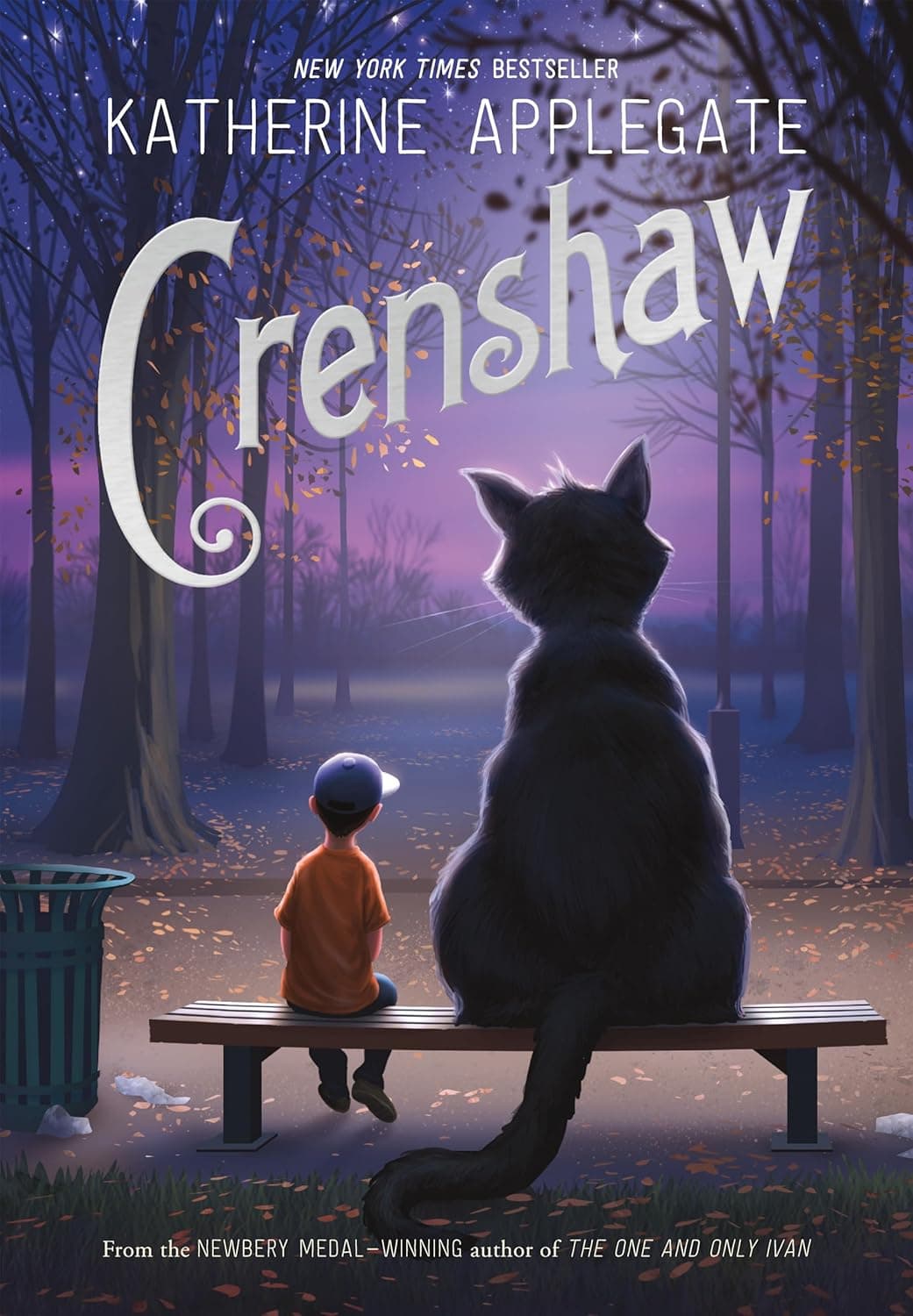
In the backyard, Jackson and Crenshaw talk while the cat stalks crickets. Crenshaw lays out the rules of imaginary friends: he knows everything Jackson knows, plus whatever he has “time to learn on his own,” which is why he uses words Jackson doesn’t. When Jackson asks why Crenshaw is so huge now, Crenshaw answers, “You need a bigger friend now,” a line that makes visible how Jackson’s anxieties have grown, sharpening the theme of Coping with Stress and Trauma.
The conversation widens. Crenshaw says he knows other imaginary friends, including Marisol’s buddy “Whoops,” and—most startlingly—that Jackson’s Dad once had one too: Finian, a skinny, trombone-playing dog. Crenshaw describes the place where imaginary friends wait as “a giant teachers’ lounge,” where they rest and trade stories until needed. He compares them to books: “We’re created, we’re enjoyed, we’re dog-eared and creased, and then we’re tucked away until we’re needed again.” The metaphor turns imaginary friends into durable tools for surviving childhood’s hardest stretches.
Chapter 47: Are Bats Nice Guys?
Sleep won’t come. Jackson’s mind hooks onto a fourth-grade lesson about vampire bats: after feeding, they sometimes regurgitate blood to share with colony mates who went hungry. His teacher calls it altruism and wonders aloud if bats might be “better human beings than human beings are.”
The image stings. Jackson sees how the bats’ communal safety net contrasts with his family’s thin one. In a world where scary animals share, his family’s isolation feels sharper, his sense of unfairness heavier. The bat fact becomes a mirror for the silent, grinding cost of Poverty and Homelessness.
Chapter 48: The Facts
Jackson wakes from a cave nightmare where he screams for help and no one comes. Shaking, he admits to Crenshaw what he hasn’t said out loud: he cannot live in the minivan again. He decides to run away, to ask Marisol if he can live with her family.
Crenshaw offers one piece of guidance: “Tell the truth to the person who matters most… You.” Jackson sits down and writes a note titled “Here are the facts,” a raw inventory of hunger, fear, anger, and confusion—a plea for Honesty and Communication. He leaves ten dollars to repay the stores he stole from and adds postscripts: take care of the dog, and be honest with his little sister, Robin.
Chapter 49: Infinitely More Complicated
As Jackson readies to leave, Robin knocks, unable to sleep in her stripped room. She brings her stuffed dog and favorite book, and suddenly Jackson is choosing between escape and the small, urgent duty in front of him.
He looks at Robin, at the crumpled note in his fist—then tosses it aside. He stays, reading until they drift off together. The choice embodies Family and Resilience: staying doesn’t fix the crisis, but it anchors both kids against it.
Chapter 50: A Jiggly Line
Morning brings reckoning. Jackson wakes to find his parents on his floor, the note smoothed out on his dad’s lap. They apologize for hiding their “grown-up problems,” and Jackson finally erupts: he hated being hungry, hated sleeping in the car, and wants to know why they can’t be like other parents. The room fills with tears and truth.
Afterward, Jackson’s anger loosens into clarity: he wants the truth, always. They make a new deal—no more secrets. Dad shares a lead on a music store job with a temporary garage apartment, not perfect but real. Life, Dad says, isn’t an upward line but a “jiggly line” of ups and downs, and you keep trying. Jackson’s Mom suggests breakfast. Crenshaw watches and nods, as if the family has finally learned the language it needs.
Key Events
- Crenshaw reveals Dad once had an imaginary friend, Finian.
- Jackson fixates on altruistic vampire bats and the contrast with human care.
- After a nightmare, Jackson writes a blunt “Here are the facts” note and plans to run away.
- Robin’s fear pulls Jackson back; he stays and reads to her.
- Jackson’s parents find the note; a painful, honest confrontation follows, and they agree to full transparency.
- Dad shares a job lead with temporary housing, giving the family a concrete, if fragile, hope.
Character Development
These chapters pivot the family from secrecy to candor and push Jackson from quiet observation to brave speech.
- Jackson: Moves from bottling fear to declaring it. His impulse to run away shows how cornered he feels; staying for Robin shows maturity. Demanding honesty reframes his role from protected child to trusted participant.
- Crenshaw: Functions as guide, not fixer. He normalizes Jackson’s fear, reframes it with metaphors, and gives him the tool he needs: tell the truth. His approving nod signals his work is nearing completion.
- Jackson’s Parents: Drop the facade and listen. Their apology and agreement to transparency reset the family’s dynamics around trust rather than protection-by-secrecy.
Themes & Symbols
Honesty and Communication crescendos here: Jackson’s “Here are the facts” note brings buried pain to the surface, and the family’s agreement cements a new norm. The hard conversation doesn’t end their problems but gives them a shared vocabulary for facing them.
Family and Resilience emerges in choices, not miracles: Jackson stays for Robin; the parents absorb their son’s anger without defensiveness; the family accepts a partial solution. Coping with Stress and Trauma hums beneath everything—from the cave nightmare to the growing size of Crenshaw—showing how fear distorts reality until truth puts it back in shape. Symbols do quiet work: the crumpled note becomes a repository of unspoken feelings; when his parents smooth it out, they symbolically acknowledge and honor what Jackson tried to hide. The “jiggly line” reframes success as endurance rather than perfection.
Key Quotes
“You need a bigger friend now.”
Crenshaw’s line literalizes Jackson’s swelling fear and reframes imaginary friendship as adaptive care. The friend grows because the problem grows—Jackson’s psyche is scaling its own support.
“We’re created, we’re enjoyed, we’re dog-eared and creased, and then we’re tucked away until we’re needed again.”
By likening imaginary friends to books, Crenshaw turns comfort into a reusable resource. It suggests Jackson can shelve and retrieve courage as life’s demands change.
“Are bats better human beings than human beings are?”
The teacher’s question becomes a moral barometer. Jackson’s fixation exposes his hunger for a social safety net and his grief that even “scary” animals practice a generosity his family lacks.
“Tell the truth to the person who matters most… You.”
Crenshaw’s advice shifts the focus inward: self-honesty precedes any conversation with others. The note that follows is less a message to his parents than an act of self-clarity.
“Here are the facts.”
Jackson’s title weaponizes his favorite comfort—facts—into emotional truth. Listing the “facts” lets him translate chaos into sentences his parents must read.
“Life isn’t a straight upward line… it’s a jiggly line.”
Dad’s metaphor rejects fairytale fixes and promises persistence instead. It gives the family a shared image for setbacks that doesn’t equal failure.
Why This Matters and Section Significance
This section forms the novel’s emotional apex: silence breaks, and the family replaces secrecy with truth. Jackson’s growth—from collecting facts to telling his own—unlocks a more honest bond with his parents and a livable path through uncertainty. Crenshaw doesn’t erase hardship; he helps Jackson face it, so the family can move from dread to cautious, realistic hope together.