Opening
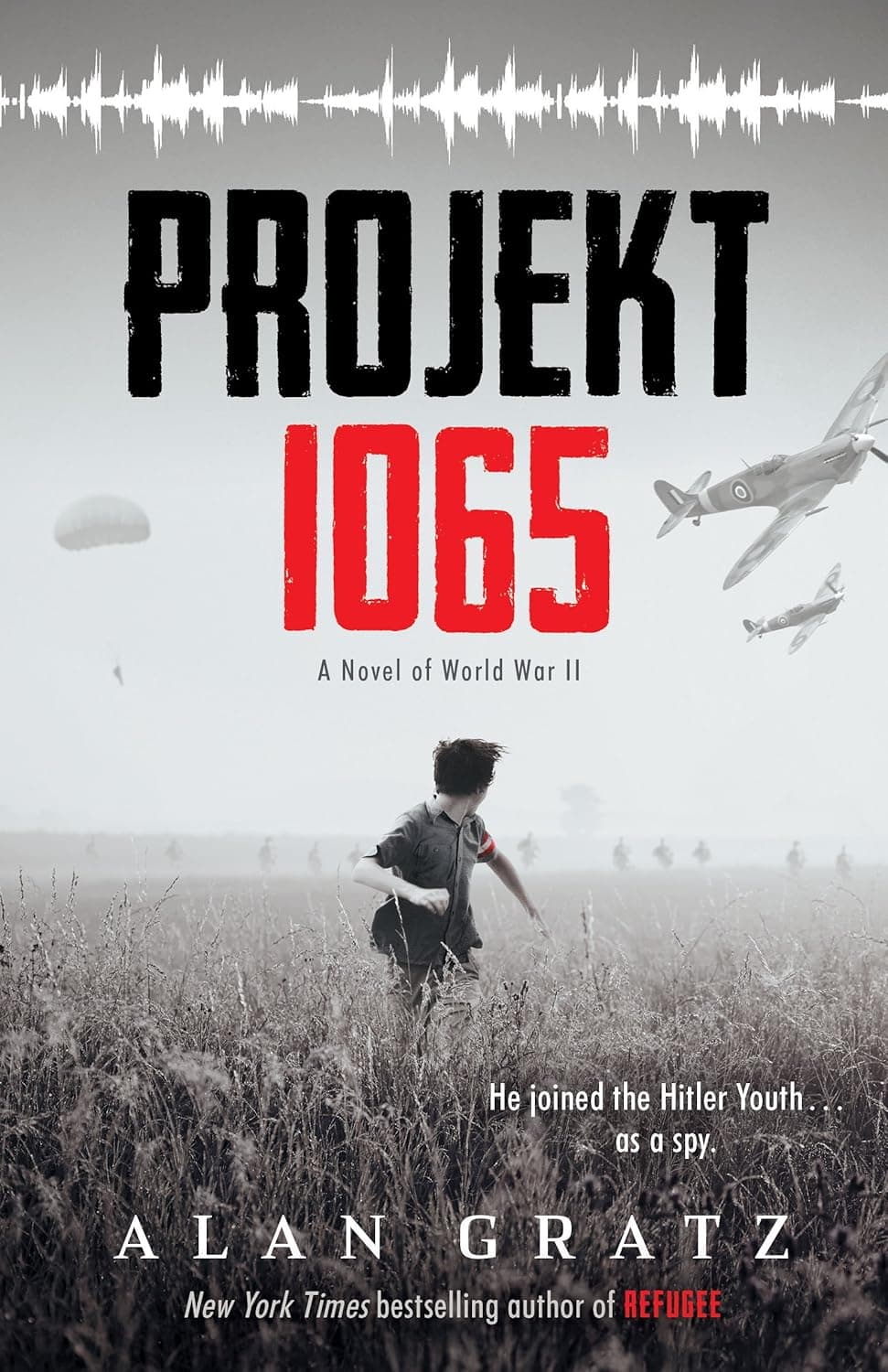
Amid a pounding air raid over Berlin, Michael O'Shaunessey turns a spy’s hunch into a mission-defining breakthrough—only to discover that the greatest barrier isn’t the Nazis, but his own fear. As the city burns, Lieutenant Simon Cohen becomes both coach and confessor, guiding Michael through the moral fog of war and the vertigo that might sink the Allied cause. A flash of graffiti from the Edelweiss Pirates reminds Michael that resistance survives even in the heart of the Reich.
What Happens
Chapter 26: Saving Bacon
Bombs fall as Michael reveals to Simon that he has seen—and memorized—the first page of the Projekt 1065 blueprints. He sketches the page from memory on the spot, and Simon, stunned, realizes that securing the full plans would dwarf any aerial intel he was sent to collect. He swears that this could “save all of England, America, and Russia’s bacon,” and the mission pivots: Michael must cozy up to Fritz Brendler to memorize the remaining eleven pages.
One catch threatens everything. Michael is days from moving up from the Jungvolk into senior Hitler Youth; to pass, he has to leap from a two‑story building. His acrophobia makes that jump impossible. If he fails, he’s separated from Fritz, who’s headed for the elite Streifendienst (SRD), and the blueprints vanish with him. Simon, ankle sprained and sirens wailing, hustles Michael to the embassy roof to begin training under cover of the raid. The mission now depends on Michael mastering his terror.
Chapter 27: Payback
On the roof, the city glows hellish orange as Berlin burns. Michael sees the consequence of his intel for the first time: factories smashed, civilians and forced laborers likely among the dead. The work he’s done suddenly feels stained, and the theme of Moral Compromise and the Cost of War crashes in on him.
Simon steadies him with hard truths. He calls the bombing “payback” for the Blitz, recalling nights under German bombs in London. The calculus is brutal, he says, but necessary to stop a greater evil. Michael’s guilt doesn’t vanish; instead, he understands that espionage is not abstract. Winning requires choices that cost pieces of his innocence.
Chapter 28: Oh, Crap!
The rooftop itself becomes Michael’s battlefield. Standing at the edge, his legs quiver, vision blurs, and his body locks. He collapses, and Simon catches him before he hits the tar. Simon tries distraction tactics—complex math problems—but the numbers tangle with the panic and make it worse, underscoring Courage, Fear, and Confronting Weakness.
Switching strategies, Simon cracks a classic Englishman‑Scotsman‑Irishman joke. The punchline—“Oh, crap!”—breaks through, and Michael laughs through the nausea. Simon urges him to channel his Irish instinct to rib the English whenever fear spikes. But the phobia still swamps him; he vomits and crumples. Simon doesn’t push. He sits with Michael in quiet solidarity, signaling that this fight will be won by patience, not force.
Chapter 29: A Bevy of Quail Makes Me Quail
To level the ground between them, Simon reveals his own secret dread: birds. One bird he can manage; a flock unmans him. He tells a childhood story of his stern father’s “cure”—planting him on a chimney as hundreds of swifts erupted in a frenzy, wings and claws rasping past. The terror didn’t heal him; it deepened the wound.
Simon reframes fear as something to manage, not crush. He promises no cruel shocks, only “small steps” and control. The confession bonds them. Simon moves from rescued pilot to true mentor, modeling vulnerability and a humane approach to courage.
Chapter 30: The Edelweiss Pirates
The next afternoon, Michael walks through a city ash‑choked and broken. Hitler Youth boys haul debris and stack bodies. A small orphan cries alone. The human cost of the raid is everywhere—the price of “payback” measured in ash and grief.
Then he spots bright defiance scrawled on a blasted wall: “DOWN WITH HITLER!” and “THE HIGH COMMAND LIES!” Beside it blooms a stencil of an edelweiss—the emblem of the Edelweiss Pirates, German youths who resist in small, risky ways: graffiti during raids, quiet sabotage, refusal to conform. Like the alpine flower that thrives in rock and cold, their courage grows where it shouldn’t. Michael feels less alone. Resistance lives inside Germany, too.
Character Development
Michael O’Shaunessey
- He shifts from a clever infiltrator to a boy bearing the moral weight of real casualties.
- His acrophobia becomes the mission’s choke point, forcing him toward a more intimate, grueling bravery.
- He begins to accept that courage involves patience, humor, and failure on the way to control.
Lieutenant Simon Cohen
- He evolves from asset to mentor, guiding Michael through fear with empathy rather than bravado.
- His confession of ornithophobia humanizes him and models healthy vulnerability.
- He articulates the war’s harsh logic without denying the cost, anchoring Michael through guilt and doubt.
Themes & Symbols
Moral Compromise and the Cost of War
- The burning of Berlin reframes espionage as a moral battlefield. Michael’s intel saves lives strategically while ending them locally; the tension is the point. Simon’s “payback” argument doesn’t erase guilt—it teaches Michael to carry it without freezing.
Courage, Fear, and Confronting Weakness
- Fear isn’t the enemy; shame about fear is. Michael’s vertigo and Simon’s bird terror expose courage as a practice of “small steps,” humor, and control. The novel rejects brutal cures and celebrates compassionate, incremental resilience.
The Edelweiss Flower
- The edelweiss symbolizes stubborn, pure defiance in hostile terrain. Paired with anti‑Nazi graffiti, it marks a native German resistance that nourishes Michael’s hope and widens the story beyond Allied espionage.
Key Quotes
“This could save all of England, America, and Russia’s bacon.”
- Simon reframes Michael’s memory trick as a strategic earthquake. The colloquial swagger emphasizes both urgency and miraculous opportunity: the blueprints aren’t marginal intel—they’re war‑altering.
“Payback.”
- Simon’s single‑word justification compresses personal trauma (the Blitz) into geopolitical logic. It’s morally cold and emotionally hot, capturing the double bind of wartime ethics: justice and vengeance braided together.
“Oh, crap!”
- The joke’s punchline punctures panic. Humor becomes a tactical tool, not a distraction, teaching Michael to grab any handhold—laughter, banter, insults—to break fear’s spiral.
“Small steps.”
- Simon’s philosophy counters toxic, sink‑or‑swim toughness. It frames courage as a skill built gradually, protecting Michael from retraumatization and keeping the mission viable.
“DOWN WITH HITLER! THE HIGH COMMAND LIES!”
- The graffiti’s blunt force signals internal dissent. It widens Michael’s moral universe: resistance isn’t only foreign bombers and spies—it’s local, youthful, and brave.
Why This Matters and Section Significance
These chapters pivot the novel’s stakes. The objective narrows from generic intel to the precise theft of Projekt 1065, while the true obstacle moves inward: Michael must master his fear or the mission dies. The rooftop becomes a crucible where moral reckoning and physical terror collide, forging the Michael‑Simon partnership that will carry the story forward. The Edelweiss Pirates’ mark threads hope through the rubble, reminding us that even under dictatorship, courage finds cracks to grow.