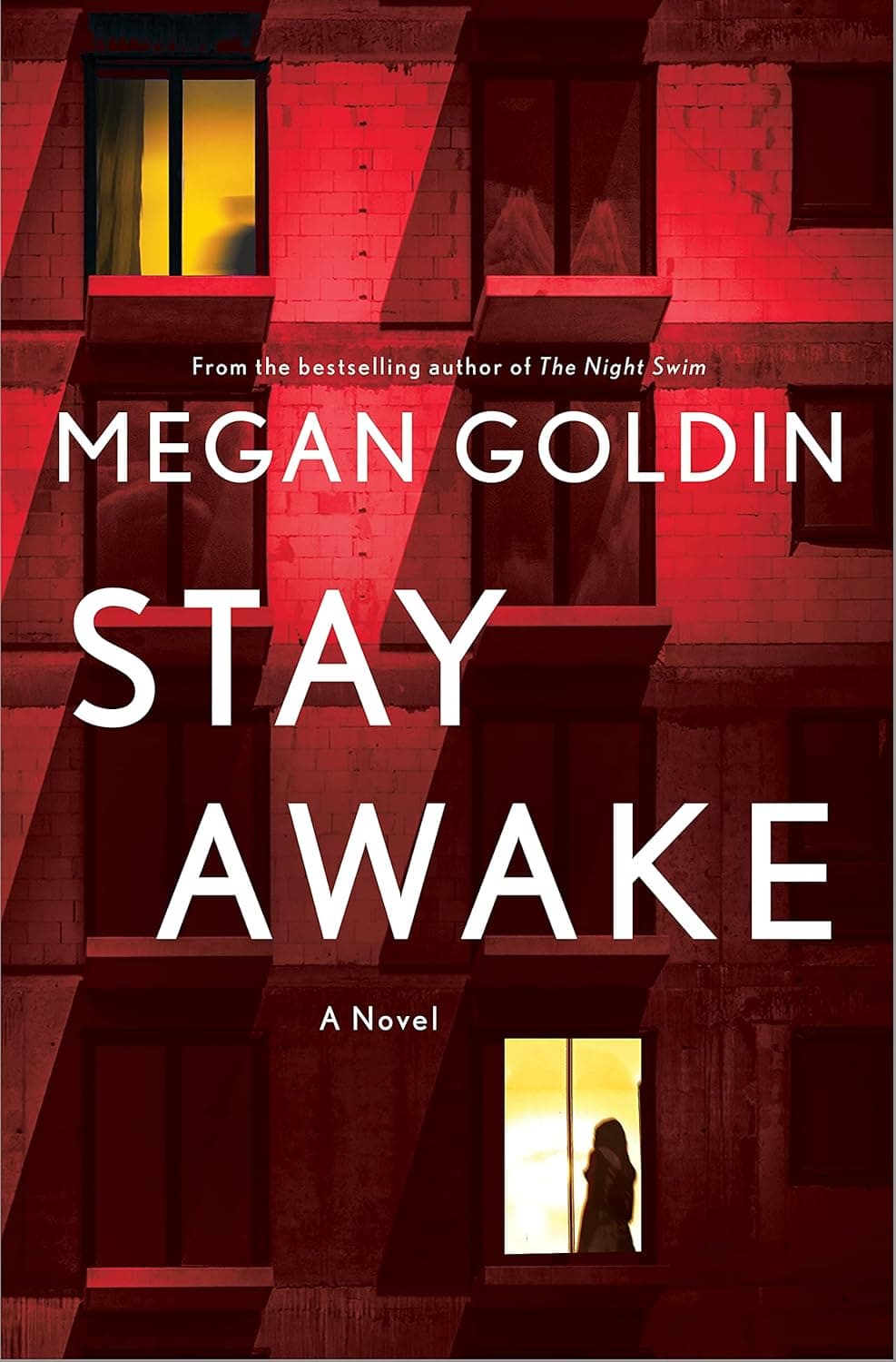
Opening
A lead finally surfaces—and it points straight at Liv Reese. As detectives close in, an overseas call lays bare Liv’s shattered memory and the coping systems that keep her afloat, while a menacing voice on the phone hunts her through a supposed safe house. A flashback reveals the roots of her terror, tying the present crisis to a long campaign of manipulation and fear that fractures her Memory and Identity.
What Happens
Chapter 31: A Lifeline
As Detective Darcy Halliday and Detective Jack Lavelle head to a liquor store for CCTV, they argue motive. Lavelle frames the crime as payback; Halliday insists the blood-written window message looks like a public “statement.” A call from the apartment’s owner, just in from Hong Kong, delivers their first break: the unit was booked under “James E. Carter Jr.” with the White House listed as the address and a Visa card on file—nonsense details that nevertheless give them a trail to the victim.
Halliday then receives an international call from Marcia Nichols, a London social worker who identifies herself as Liv’s caseworker. Marcia fills in the devastating picture: two years earlier, Liv survives an attempted murder and coma but loses memory of the attack. Five weeks ago, her issue escalates into a “repetitive memory blackout”—each time she sleeps, her memory resets to the morning of the attack. Awake, she can form new memories; asleep, they vanish. Severe insomnia likely triggers the spiral. To function, Liv relies on caffeine and stay-awake pills, writes reminders on her hands, and maintains a meticulous journal—her “surrogate memory.” If that journal is lost, Marcia warns, Liv is defenseless, underscoring her profound Vulnerability and Manipulation.
Chapter 32: The Safe House
Led by a delivery driver to what is supposedly her home, Liv steps into a squalid basement apartment and recoils. The space is littered with empty energy drink cans and NoDoz; refrigerator magnets spell out “STAY AWAKE,” matching the command tattooed across her knuckles. Photos of Amy Decker and Marco Reggio are taped to the back of the door, amplifying Liv’s dread and The Unreliability of Perception.
In the sink, a mound of black ash hides a scorched cover stamped “Journal.” Her lifeline is burned. On a half-painted wall, frantic warnings crawl across the plaster: Memories lie. Don’t trust anyone. He’s coming for me. Liv copies the messages onto her arm like a person trying to save herself from herself. A bedroom wall conceals a painted-over clipping about a comatose woman questioned by police. Before she can process it, an old landline rings, slicing through the air and her nerve.
Chapter 33: The Visual
At the liquor store, Halliday and Lavelle scrub through the night’s CCTV. At 2:07 A.M., a figure slips from the alley behind the murder scene. When she steps into the light, Halliday freezes: “That’s Liv Reese.” To confirm, she sends a screenshot to Marcia Nichols in London, who calls back immediately—yes, it’s Liv. The image places Liv at the scene around the time of death, making her the prime suspect.
Halliday pushes for patterns: Has Liv ever written “WAKE UP” on herself? Marcia says yes—alongside “STAY AWAKE” and “DON’T SLEEP”—mantras her psychiatrist views as delusions fueled by self-induced insomnia. Marcia leaves the detectives with a chilling caution: lack of sleep can tip a person into psychosis. The case now has a motive that isn’t revenge, but unraveling sanity.
Chapter 34: He’s Coming For Me
Back in the basement, the phone won’t stop ringing. A Post-it over the receiver warns, DON’T ANSWER THE PHONE. Liv answers anyway. A muffled male voice knows her name, her condition, her subway awakening. He asks where she put “the knife.” Through the line, car horns and a distant shout bleed in—the same sounds filter through the window. He’s close.
He tells her she’s the prime suspect, that her fingerprints are everywhere, that “WAKE UP” on the window ties the murder to her. He claims he’s the only one who can clear her—if she gives him the knife. Then his footsteps rattle the hall, a key scrapes the lock, and he says it’s “only a matter of time” before police arrive. Liv claws open a barred kitchen window, squeezes through as the door swings, and drops into the alley—alive, barely.
Chapter 35: Two Years Earlier
A flashback tracks The Past’s Influence on the Present. In Brooklyn with Amy, Liv fixates on a box of chocolates she thinks is drugged; Amy points out it’s untouched. Amy worries about Liv’s “paranoia,” citing a 911 call over a missing milk carton and a “break-in” that was just borrowed clothes. Then the apartment betrays them: dry cleaning in the closet neither brought home; a casserole cooking that neither made. Liv concludes someone entered while she slept.
A fresh bouquet of gardenias appears by her bed. An unknown Snapchat message references them, then disappears. Liv calls the police again. Detective Krause mocks her; his younger partner, Detective Regan, takes her seriously. After they leave, Liv overhears Amy on the corner hissing into her phone, “This has gotten out of hand.” That crack in loyalty reframes everything through Trust and Betrayal. Liv throws away the gifts—flowers, casserole, chocolates—as her life slides into the fear that will one day consume her.
Character Development
Liv’s terror sharpens into survival as the story locks her between fractured memory and an immediate, physical threat. Halliday emerges as the clearest investigative voice, while Amy’s past behavior curdles into suspicion.
- Liv Reese: A woman rebuilding herself every morning shows tenacity and instinct under pressure—copying warnings onto her arm, improvising an escape—yet her burned journal leaves her identity unmoored.
- Detective Darcy Halliday: Perceptive and decisive, she reframes motive as message, verifies the CCTV ID, and pushes for behavioral patterns that anchor the case.
- Detective Jack Lavelle: Pragmatic and skeptical, he defaults to a revenge motive, providing a foil to Halliday’s more nuanced read.
- Amy Decker: Supportive on the surface, evasive underneath; her secrecy and dismissiveness in the flashback mark her as potentially complicit.
- Marcia Nichols: A steady, clinical witness whose account of Liv’s condition transforms suspicion into empathy while introducing a plausible, dangerous motive.
Themes & Symbols
The novel entwines trauma and cognition into a thriller engine. Marcia’s account crystallizes Memory and Identity: without continuous memory or her journal, Liv’s selfhood exists in fragments, rebuilt through notes, tattoos, and routines. This fragility is the lever of Vulnerability and Manipulation: in the present, a caller weaponizes her amnesia; in the past, a stalker scripts her reality with gifts and intrusions, then enlists social doubt to make her look unstable.
The flashback dramatizes The Unreliability of Perception. What Liv sees is real—moved items, unexplained food, flowers—but the social frame denies it, eroding her trust in herself. Symbols deepen these pressures: the burned journal is the literal erasure of her “surrogate memory,” while the old telephone collapses sanctuary and threat—a conduit through which the outside world penetrates any safe house. “STAY AWAKE” and “WAKE UP” operate as dueling imperatives: one is survival strategy, the other a taunt or confession staged for witnesses.
Key Quotes
“That’s Liv Reese.”
- Halliday’s instant recognition on CCTV doesn’t just identify a suspect; it resets the investigation’s center of gravity. The visual proof anchors suspicion in fact, forcing the narrative to reconcile Liv’s vulnerability with the possibility of violence.
“Lack of sleep does horrible things to a person’s mind. It can make some people psychotic.”
- Marcia’s warning reframes motive from vengeance to compromised cognition. Insomnia becomes both symptom and accelerant, a condition that can turn self-protection into danger.
“Memories lie. Don’t trust anyone. He’s coming for me.”
- Scrawled on the wall and copied onto Liv’s skin, these lines externalize her fractured inner world. They function as both caution and prophecy, showing how she outsources memory to text while foreshadowing the caller’s arrival.
“DON’T ANSWER THE PHONE.”
- The Post-it dramatizes Liv’s self-rescue system—and its limits. Even her own warning can’t override fear and curiosity, a tension the caller exploits to close in.
“STAY AWAKE.” / “WAKE UP.”
- The mantra on her body and magnets versus the message on the victim’s window turn language into evidence. What began as a survival directive becomes prosecutorial exhibit and public performance, blurring coping mechanism and staged confession.
“It’s only a matter of time.”
- The caller’s taunt compresses the timeline and raises the stakes. The clock is no longer abstract; pursuit has reached the door.
Why This Matters and Section Significance
These chapters pivot the novel from uncertainty to urgency. Halliday’s CCTV confirmation and Marcia’s clinical history converge to make Liv both comprehensible and incriminated: a victim whose condition could drive—or be used to stage—violence. The basement sequence transforms psychological dread into physical pursuit, while the flashback roots the present terror in a long arc of coercion and doubt. Together, they tighten the mystery’s core questions: Who is orchestrating the hunt? What role does Amy play? Where is the knife—and what really happened the night Liv first lost herself?