Opening
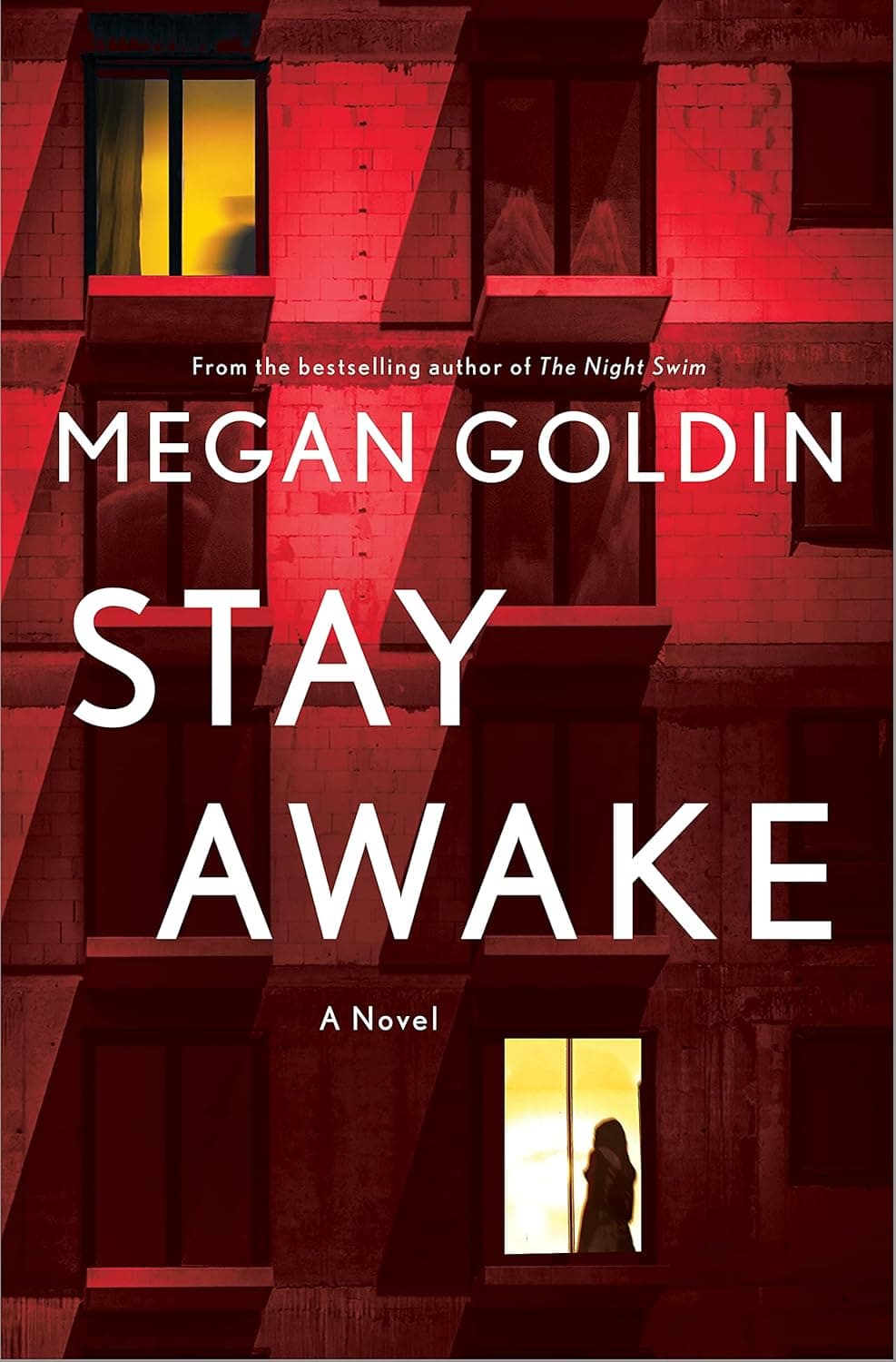
As the investigation tightens, Detective Darcy Halliday and Detective Jack Lavelle peel back a false narrative that paints Liv Reese as a killer. A London psychiatrist’s call, a brutal flashback, and a stalker’s confession reframe the case: the true predator murders to erase witnesses—starting with Ted Cole—and now hunts the only survivor who can expose him.
What Happens
Chapter 41: Killing Her Monster
Driving to Brooklyn, Halliday and Lavelle argue the Ted Cole case. Lavelle insists it’s open-and-shut: Liv has motive (jealousy), means (her fingerprints on a wine bottle that may be drugged), and opportunity (security footage). He points to her insomnia and mental health history as potential triggers for a psychotic break. Halliday pushes back—Ted believed Liv was in danger and rented her a safe house. The case, she says, is an “optical illusion,” a misread puzzle with missing pieces.
Trusting her gut, Halliday cold-calls Dr. Stanhope, Liv’s psychiatrist in London. He confirms, within confidentiality limits, that Liv suffers from an extremely rare dissociative fugue: her memory resets every time she wakes. Likely trauma-induced, it leaves her perpetually confused and highly vulnerable. He compares it to Agatha Christie’s disappearance but emphasizes Liv’s cycle is unrelenting. Liv missed recent appointments; he already asked a social worker to report her missing.
When Halliday says Liv is back in New York, Stanhope suggests her mind is dragging her toward the source of the trauma. He frames it as Liv trying to “kill her monster”—a subconscious bid to retake control and break the amnesia loop. The call hardens Halliday’s conviction: Liv isn’t a murderer; she’s the intended victim.
Chapter 42: Two Years Earlier
Two years ago, Liv is a food writer at Cultura, living with her best friend, Amy Decker, and dating Marco Reggio. On the day Marco plans a special dinner, Liv gets a frantic call from Amy about an “emergency” with their cat. Sick with dread, she races home.
Inside Amy’s room, Liv finds Amy and Marco in bed—naked, stabbed, dead. Before she can register the betrayal or the horror, a man seizes her from behind in a grotesque bear hug. He hisses his script into her ear: the police will believe Liv discovered the affair, flew into a jealous rage, killed them with a chef’s knife, and then turned the blade on herself. He forces her hand onto a knife and drives it into her chest. As he leaves, Liv glimpses his shoes—blood-red with a distinctive dotted pattern.
Bleeding out, she drags the landline to the floor and dials 911. The dispatcher pleads, over and over: “I need you to stay awake... You have to stay awake.” The words become Liv’s lifeline—and later, the mantra she writes on her skin.
Chapter 43: The Decker-Reggio Murders
Halliday and Lavelle head to the 90th Precinct in Williamsburg for the two-year-old Decker-Reggio file. Detective Larry Regan, who worked the case, says his superior, Detective Krause, steamrolled the investigation by fixating on Liv as a jealous attacker. Evidence that didn’t fit was ignored.
Regan lays out what Krause dismissed: a forensic expert determined Liv’s stab wound angle is inconsistent with a left-handed self-infliction; in the weeks before the murders, Liv filed stalking complaints—mysterious casseroles appearing in her oven, milk tucked into her fridge, flowers at her bedside. Regan himself spotted a man watching her window through binoculars. He also traced expensive chocolates left for Liv and confirmed the original box was swapped for one containing drugged truffles.
Krause refused to chase other suspects, including an avant-garde artist called Zee (aka Q) whom Liv panned in print and a photographer, George Yanis, whom she reported for sexual harassment. Regan identified the binoculars man as Joe Chalmers, a short-term renter across the street with a record; Chalmers vanished the day before the murders, leaving beer cans with liftable prints. Regan has just learned Chalmers is back in town. Lavelle wants to move—now.
Chapter 44: You and Ted
Liv slips away from Dr. Brenner’s office and heads to Cultura, where Ted’s listed as her emergency contact. The office freezes in grief: a crying temp at reception, colleagues hugging. A red-haired woman sits Liv down gently and says, “Ted is dead.” Liv doesn’t remember him, but the sorrow in the room makes her cry.
A news report on a wall-mounted TV identifies Edward “Ted” Cole, Cultura executive. The camera catches the scene—and the words WAKE UP! written in blood on a window. Liv stares at her wrist, where the same urgent message is inked. The anonymous call accusing her of murder suddenly feels terrifyingly plausible.
The red-haired woman returns: “Even though you and Ted ended your engagement, it must be unbelievably painful.” The word engagement rocks Liv. Before she can respond, the woman nods toward the lobby: the police have arrived.
Chapter 45: Tying Off Loose Ends
Halliday, Lavelle, and Regan spot Joe Chalmers near a bus stop. He bolts; Halliday, ex-military, runs him down. Cornered, he talks. Two years ago, a man hired him to stalk Liv—gaslight her with tasks that make her doubt reality: stash milk in her fridge, leave a cooked meal in her oven, deliver her dry cleaning. He had keys and a plumber’s disguise. He confirms he swapped a box of fine chocolates with one containing truffles laced with drugs.
Then came a bigger offer: $5,000 to kill Liv and the man she was sleeping with (Marco). Chalmers refused; he wouldn’t do murder. The client said he’d find someone else. After the middleman who arranged the job turned up stabbed in the East River, Chalmers fled. He never saw the client’s face—only well-manicured hands.
With Chalmers’s sworn statement, Halliday and Lavelle lock in a new theory: the Decker-Reggio killer never stopped. Ted pieced it together and tried to protect Liv. The murderer silenced Ted and now closes in on the only living witness. The detectives race the clock to reach Liv first.
Character Development
Halliday’s instincts reset the entire case. The chapters also reposition key players and sharpen the threat.
- Darcy Halliday: Intuition becomes strategy. She moves from sensing an “optical illusion” to leading a focused, evidence-backed hunt for the true killer.
- Jack Lavelle: A skeptic turned partner. Confronted with Chalmers’s confession and the bungled earlier case, he abandons the simplest-answer bias and commits to protecting Liv.
- Liv Reese: No longer a suspect in readers’ eyes, she fully emerges as a victim of trauma and manipulation—yet remains active, searching for answers even as sleep erases her progress. Learning she was engaged to Ted deepens her dislocation.
- The Killer (Unnamed): Revealed as calculating and ruthless—a planner who weaponizes surveillance, drugs, proxies, and staged narratives, and eliminates anyone who threatens exposure.
Themes & Symbols
Memory and identity (Memory and Identity) anchor these chapters. Dr. Stanhope’s diagnosis explains Liv’s resets, while the flashback in Chapter 42 exposes the trauma that splintered her sense of self. Liv’s forgotten engagement to Ted underscores how the past defines us—even when it’s inaccessible—and how fragile identity becomes when someone else controls the story.
The past’s grip on the present (The Past's Influence on the Present) tightens: Ted’s murder stems directly from the Decker-Reggio killings. A flawed investigation lets a predator persist, forcing Halliday and Lavelle to excavate old evidence to solve new crimes. Vulnerability and manipulation (Vulnerability and Manipulation) run through Chalmers’s account of gaslighting—an orchestrated campaign to erode Liv’s sanity and credibility—while trust and betrayal implode on multiple levels: Amy and Marco’s affair, the killer’s staging of Liv as a murderer, and a police department’s failure to see past its own bias.
Symbols
- “Stay Awake”: Born from a dispatcher’s life-or-death command, the phrase becomes Liv’s talisman against oblivion—her fight to survive physically then, and mentally now, as she holds onto reality before sleep wipes her clean.
Key Quotes
“I worry it may be an optical illusion. We have only some of the pieces of the puzzle. It’s made us think the emerging pattern is something other than what it actually is.”
Halliday articulates the novel’s investigative philosophy: evidence can mislead when filtered through assumptions. Her stance invites a reframing that ultimately exposes the true pattern—the killer’s long game.
“I need you to stay awake... You have to stay awake.”
The dispatcher’s plea becomes Liv’s origin story for her mantra. The line fuses survival with memory, turning wakefulness into resistance against both death then and amnesia now.
“Ted is dead.”
Devastating in its bluntness, the line collapses Liv’s unknown past into her chaotic present. It confirms the killer’s reach and deepens the emotional stakes by binding Liv’s erased history to the current hunt.
Why This Matters and Section Significance
These chapters flip the core mystery. Liv shifts from suspect to survivor, and the narrative fuses its timelines: Ted’s murder is a direct aftershock of the Decker-Reggio killings. Introducing Regan’s overlooked leads and Chalmers’s confession exposes institutional tunnel vision and a predator who thrives on it.
The result is a genre pivot—from whodunit to race-against-time. With the killer active and methodical, every hour matters. The investigation now targets the real threat while scrambling to find Liv before the man who stole her memories erases her for good.