Opening
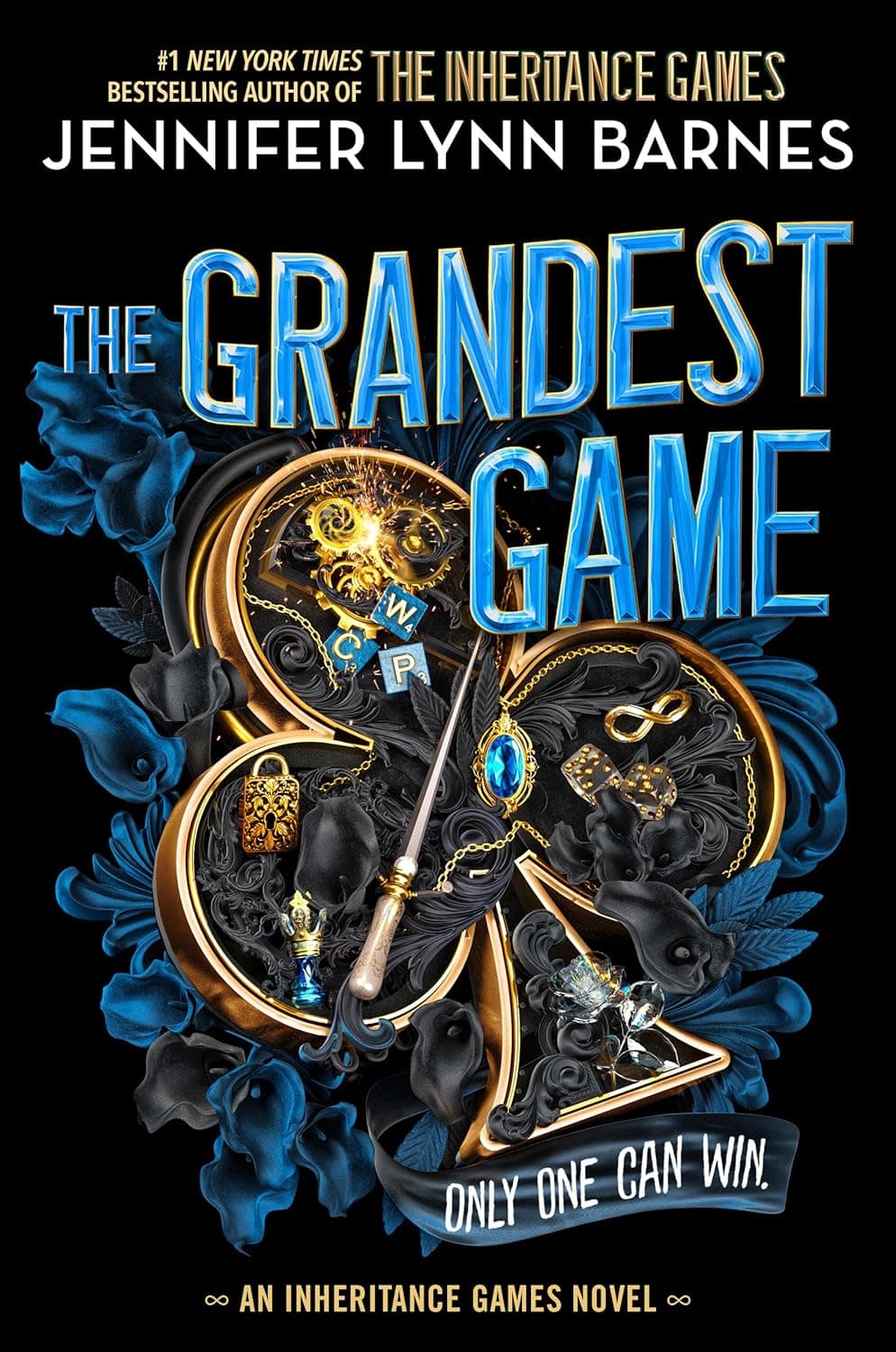
Three teams confront identical chests and a room-sized riddle that turns the Grandest Game’s first round into a showdown of wits. As alliances form and old grudges flare, every object—down to a paper wrapper—matters. Strategy, ego, and attraction collide, and the puzzles force players to use not just their brains, but the room—and each other.
What Happens
Chapter 26: The Game Begins
Inside the chest, Lyra Catalina Kane, Grayson Hawthorne, and Odette Morales find a Sonic cup, magnet poetry, a roll of quarters, a mirrored plate, Scrabble tiles, and a rose petal—plus a screen with three blinking cursors and no instructions. Grayson, recalling Tobias Hawthorne’s games, points out that the first challenge is always discovering the rules, tying the moment to The Influence of the Past. Odette counts the bag and the box as objects; Grayson unwraps the quarters and adds the paper wrapper, bringing the total to nine—an early reminder that nothing is extraneous.
Tension crackles as Lyra and Grayson reach for the poetry magnets at the same time; the brush of fingers flashes them back to their dance on the cliffs. They argue over roles: Lyra rejects his instructions on the Scrabble tiles; he asserts his experience with Hawthorne puzzles. Their friction hovers between antagonism and attraction, and Grayson—half promise, half provocation—vows to keep his hands to himself, brushing up against Romance and Complicated Relationships.
Chapter 27: A Gigi on a Mission
In the study, Gigi Grayson, Brady Daniels, and Knox Landry confront the same set of objects. Knox dismisses Gigi as a “liability,” assuming her Hawthorne-adjacent privilege means she’s coasting—an assumption rooted in Family and Legacy. Gigi demolishes that narrative. In a razor-sharp monologue, she reels off the room’s dimensions, calls out the nine muses carved into the shelves, lists nine uses for the mirrored plate, reveals a hidden knife on her person, and opens a secret desk drawer. Knox has to recalibrate: the “happy-go-lucky rich girl” is a tactical force.
The trio trades specialties, aligning their skills with Games, Puzzles, and Strategy. But the team’s equilibrium tilts when Brady tells Knox, “Severin sends his regards.” The line lands like a threat and a memory, hinting at Secrets and Hidden Truths involving a girl named Calla and a shared, painful past.
Chapter 28: Use the Room
Rohan and Savannah Grayson operate with cool precision. Rohan notes there are only seven player rooms and suspects Grayson’s entry was a last-minute change; he admits Hawthorne blood confers an edge in a Hawthorne game—a clear nod to Competition and Ambition. Savannah shrugs off the disadvantage: they’ll take the edge back.
Rohan produces the metal disk he fought for earlier. When he spins it, the broken lines etched on both sides blur into a single instruction: “Use the room.” They obey. The dining room’s showpiece is a massive table with an inlaid compass; the center disc spins. Rohan stops Savannah from turning it at random. This looks like a combination mechanism, and they proceed methodically.
Chapter 29: Focus on the Words
They pull heavy curtains and find no windows—only murals of a sunrise and a sunset. On a bar cart sits a bottle of sunrise-orange liquid. Looking through it at the sunrise mural reveals a hidden directive: “TO SOLVE THE PUZZLE, FOCUS ON THE WORDS.” The magnet poetry becomes their priority.
They lay out twenty-five words and spot only four verbs. Savannah experiments with plausible pairings and isolates “the,” “skin,” and “rose.” Rohan proposes creating a “bonfire” to burn the rose petal as the next step. When Savannah points out the absence of matches, he pivots to physics: a concentrated beam of light and a concave mirror—exactly the sort of elegant, low-tech solution the game rewards.
Chapter 30: Uneasy Lies the Head
Back in the Great Room, Lyra disregards Grayson’s advice and builds full Scrabble boards, hunting patterns. High-point repeats—“power,” “crown,” “adage”—lead Odette to the Shakespeare line, “Uneasy lies the head that wears a crown.” They input variations of the adage and even the play’s title, Henry IV, Part Two, but the screen denies them.
Grayson reveals his own pattern: the roll contains thirty-eight quarters from 1991 (a palindrome) and two from 2020 and 2002 (anagrams). The adage, he argues, is a clue—look for a literal crown. While he searches the fireplace, Odette “reads” the room like the veteran cleaner she once was and finds hidden seams in the paneling. Grayson presses the right section. A crystal chandelier descends from the ceiling and stops just out of reach. Odette, droll and unyielding, informs them: Grayson will have to lift Lyra.
Character Development
This sequence hardens alliances, exposes fault lines, and reframes first impressions. Each player’s background becomes a tool—or a weapon—inside the puzzle.
- Gigi Grayson: Shatters the “spoiled rich girl” label with forensic observation, tactical creativity, and command of the room. She forces Knox and Brady to treat her as an equal—if not the leader.
- Lyra Catalina Kane: Refuses to be managed. Her pride and independence drive her to defy Grayson’s lead, even as the puzzle pushes them into uneasy partnership.
- Grayson Hawthorne: Leans on Hawthorne game logic and pattern recognition. His control reflex clashes with his promise to keep his distance from Lyra, revealing a fault line between strategy and feeling.
- Knox Landry and Brady Daniels: Their hostility signals a buried trauma involving Calla and Severin. Every jab hints at a deeper, shared wound that may derail their teamwork.
- Odette Morales: Uses life-earned skills—subtle observation, knowledge of spaces, patience—to spot what others miss. She quietly becomes the team’s difference-maker.
Themes & Symbols
The chapters foreground gamesmanship: each team models a distinct approach to problem-solving—intuitive wordplay, pattern logic, observational deconstruction, and methodical deduction. The rooms reward players who recognize that the environment itself is part of the puzzle, collapsing the line between setting and mechanism.
Secrets drive both plot and character. Hidden messages, concealed drawers, and coded objects mirror concealed histories and grudges, especially for Knox and Brady. The past exerts constant pressure—Hawthorne traditions shape Grayson’s instincts, Odette’s former work trains her eye—and ambition turns advantages (lineage, experience) into battlegrounds. Perception vs. reality threads through every interaction: people misjudge Gigi and Odette at their peril.
Symbols:
- The chandelier: a glittering solution just out of reach—solvable only through cooperation and trust.
- The compass table: direction and orientation matter, hinting that “where” is as important as “what.”
- The rose petal: beauty turned instrument—fragile, disposable, and necessary when transformed by fire.
Key Quotes
“Use the room.” This instruction reframes the players’ mindset: the answer isn’t only in the objects but in the architecture. It elevates the setting into a participant in the game, rewarding those who think spatially and systemically.
“TO SOLVE THE PUZZLE, FOCUS ON THE WORDS.” The directive prioritizes language as mechanics, not decoration. It pushes Savannah and Rohan toward precision—verbs, articles, and nouns as levers rather than clues to be admired.
“Uneasy lies the head that wears a crown.” Odette’s literary connection feels like an answer but functions as a meta-clue. The line steers the team from abstract theme to tangible object—a crown in the room—illustrating how the game weaponizes metaphor.
“Severin sends his regards.” Brady’s message detonates the present with the past, signaling a shared history that’s both threat and challenge. It deepens the mystery around Knox and Brady and foreshadows outside forces meddling with the game.
“I’ll keep my hands to myself.” Grayson’s vow is a tactical concession and a boundary marker—one that immediately proves untenable when the chandelier forces physical cooperation. The line encapsulates the push-pull of strategy versus emotion.
Why This Matters and Section Significance
These chapters establish the Grandest Game’s rules of engagement: the room is the board, nothing is extraneous, and teamwork is compulsory—whether teammates like it or not. By intercutting three rooms, the narrative builds parallel tension and showcases contrasting strategies, giving readers a panoramic view of progress and pitfalls. The section also deepens character histories—especially Gigi’s competence and Knox/Brady’s shared damage—so that every solved clue doubles as a revelation.
The chandelier cliffhanger literalizes the book’s central wager: intellect alone won’t win. Trust, proximity, and the courage to act—sometimes with the very person you’d rather avoid—prove just as critical as any answer typed on a screen.