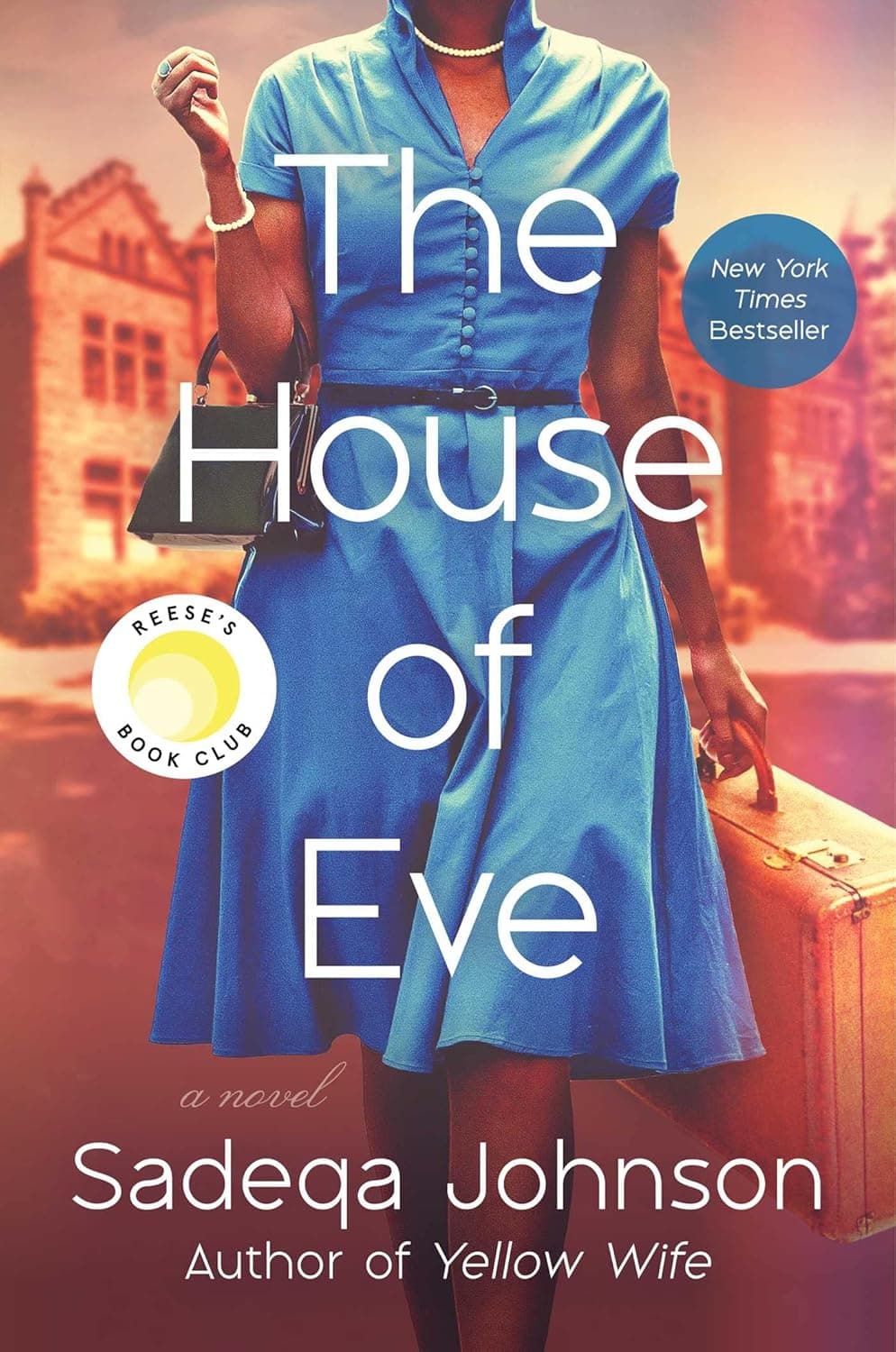
Opening
In a sweltering Philadelphia August and a hushed Washington winter, two women make choices that alter everything. One is pushed by class and survival; the other is pulled by grief and the fear of judgment. Their stories begin to braid as power, secrecy, and love demand impossible sacrifices.
What Happens
Chapter 21: Ultimatum
At fifteen weeks pregnant, Ruby Pearsall endures the heat, the nausea, and the crushing quiet after Aunt Marie’s failed tinctures. A sharp knock breaks the stalemate. Mrs. Shapiro, crisp and unruffled, steps into their worn apartment, inspects it with a twist of her mouth, and talks to a nail on the wall: she knows about the pregnancy and wants to "help you make it all go away."
Her "help" is a paid stay at an elite D.C. home for unwed mothers where the baby will be taken at birth and placed for adoption. The offer is transactional and precise: give up the child and, as a board member, she will guarantee Ruby a full scholarship to Cheyney—perfect for a smart "We Rise scholar." When Aunt Marie questions paternity, Mrs. Shapiro sniffs and mentions a final opening for a "Negro girl," leaving behind a glossy brochure. After the door closes, Aunt Marie lays the decision bare: a life "strapped down with a baby you can’t feed," or college—"climb, scratch and claw like hell to get out," a stark embodiment of Socioeconomic Class and Social Mobility.
Chapter 22: Window to Darkness
The perspective shifts to Eleanor Quarles, who labors without morphine, convinced pain is her punishment. She delivers a stillborn daughter and sees only a perfect, purple foot before a nurse whisks the body away. Numb and sedated, she wakes, rips out her IV, and demands her baby. The nurses restrain and sedate her again; the room hums with a terrible silence.
By morning, William Pride sits beside her, shattered but steady. Then Dr. Avery arrives with a scalpel of a statement: this is her third miscarriage; she must not try again. William corrects him—second, not third—until the doctor consults his notes and looks at Eleanor. Cornered, she confesses the secret she buried in high school: an earlier pregnancy that ended in miscarriage after she lost her virginity. William’s face rearranges "as if she had sucker punched him." He leaves, returns cool and distant. That night, Mother Margaret visits with an alternate path: adoption from her home for unwed mothers, where "quality babies" from "well-bred, educated families" wait. The encounter threads together the claustrophobic weight of Unwed Pregnancy, Motherhood, and Shame and the corrosive pull of Deception and Secrets.
Chapter 23: What's Right
Ruby spends days calling Brooklyn, but Mrs. Shapiro screens every attempt and coolly reports that Shimmy agrees with the plan and is gone "indefinitely." With no money, no partner, and the future on the line, Ruby accepts the deal. Aunt Marie insists on a contract to hold the Shapiros to their scholarship promise, then packs Ruby off before dawn.
In the car, Ruby discovers Shimmy in the front seat—brought along so a woman won’t travel alone. His hand gropes back for hers; their fingers lock as the miles drop away. Outside the forbidding brick home in D.C., he turns, desperate, and asks her to marry him, to run away and keep the baby. She loves him, but she also sees the wall: his family, her poverty, the invisible weight of their names. For the deal to hold, she must let him go. After one last kiss, she steps away. Mrs. Shapiro’s final command trails behind her: "Let him go completely, or the deal is off." Ruby walks forward, choosing survival over romance and engraving the cost of Love, Marriage, and Sacrifice into her steps.
Chapter 24: Cracks and Crevices
Back in D.C., Eleanor sinks beneath grief. William tends to her with small, careful gestures—soup on a tray, a bath drawn—until a fragile closeness returns. Over Italian takeout, he produces Mother Margaret’s card. He can’t lose her. Adoption could save them.
Eleanor wants the child she grew in her own body, but William promises to love any child as his own. They visit Mother Margaret’s cramped office, where the nun describes her "well-bred" girls and, with airy confidence, mentions a "Negro girl" due in January—a "match made in heaven." The phrase exposes the social arithmetic behind their options and hints at Race, Colorism, and Prejudice. Back home, Eleanor agrees on one condition: secrecy. Terrified of Rose Pride’s judgment and the stigma of infertility, she vows to fake the remainder of the pregnancy and present the adoptee as their biological child. William, wanting her happiness more than he wants the truth, agrees to the lie.
Chapter 25: The House of Magdalene
Ruby arrives at the House of Magdalene and meets Mother Margaret’s real operation. The brochure’s gentle glow evaporates. The house is segregated: white girls on the comfortable floors below, four Black girls in a tight attic room above. Infraction means time in a "shaming room." Girls use first names only. Questions die in their throats.
In the attic, Ruby finds her roommates: tender Loretta ("Goldie"), defiant Bubbles, and traumatized Georgia Mae. Bubbles dismisses the rules and swears she’ll keep her baby; Goldie rereads a boyfriend’s letter like a prayer. The routine is rigid—bland food, endless chores, nightly "devotion" where Mother Margaret preaches fornication and repentance. As a girl sobs for the child she has just surrendered, Ruby lies awake, sick with dread. This isn’t refuge. It’s punishment. She decides to keep her head down and survive.
Character Development
Even as the plot hardens around them, both women choose agency inside constraint. One weaponizes secrecy; the other trades love for a ladder out.
- Ruby Pearsall: Pragmatic and newly steeled, she sacrifices romance and motherhood for a shot at education. Her resolve shifts from hopeful striving to survivor’s endurance.
- Eleanor Quarles: At her lowest, she confesses an old shame and then engineers a larger deceit, revealing both vulnerability and a fierce instinct to control the narrative of her life.
- William Pride: Hurt and distant after Eleanor’s confession, he reorients around protecting her—even if it requires a lifelong lie—deepening his complexity as husband and partner.
- Mother Margaret: A pious gatekeeper whose moral language cloaks a profitable system. Her segregation, salesmanship, and euphemisms expose a calculated hierarchy of worth.
Themes & Symbols
The chapters entwine maternal longing with social judgment. Shame polices bodies and choices: Ruby is hidden and disciplined for her sexuality while Eleanor internalizes failure for not producing a child. Adoption becomes both lifeline and instrument of control, converting grief and poverty into transactions. Secrets metastasize—Eleanor’s teenage miscarriage detonates her marriage, only to be replaced by a larger, orchestrated ruse.
Class and race shape every option. Mrs. Shapiro’s offer makes upward mobility a barter, not a gift. Mother Margaret’s talk of "quality babies" and "matching" reveals a marketplace where lineage, education, and color determine value. The House of Magdalene, with its segregated floors and "shaming room," stands as a symbol of sanctified punishment—a prison disguised as charity, where repentance is staged and silence enforced.
Key Quotes
"Help you make it all go away."
Mrs. Shapiro’s language reduces pregnancy to a problem to erase, signaling the transactional logic that governs Ruby’s fate and the moral outsourcing of responsibility.
His face rearranging "as if she had sucker punched him."
William’s physical reaction crystallizes the breach of trust between spouses and the devastating power of a long-buried secret to reorder love.
"Let him go completely, or the deal is off."
Control requires isolation. Mrs. Shapiro demands Ruby sever all ties to ensure the adoption machine runs smoothly—and to keep Ruby’s future dependent on her patronage.
"Quality babies" from "well-bred, educated families."
Mother Margaret’s sales pitch exposes the eugenic undertones of the adoption market, where class and pedigree assign value to infants and absolve buyers with moral gloss.
A "match made in heaven."
What sounds like providence masks social engineering—racial and class matching prettied up as destiny to soothe consciences and maintain hierarchy.
Why This Matters and Section Significance
These chapters lock the novel’s parallel tracks into an inevitable approach. Ruby’s entry into the House of Magdalene and Eleanor’s secret plan to adopt a January baby create powerful dramatic irony: the reader sees the bridge the characters cannot. The choices forged here—Ruby’s sacrifice, Eleanor and William’s deception—become the story’s engine, pushing both women into lives defined by what they hide, what they lose, and what they dare to claim.