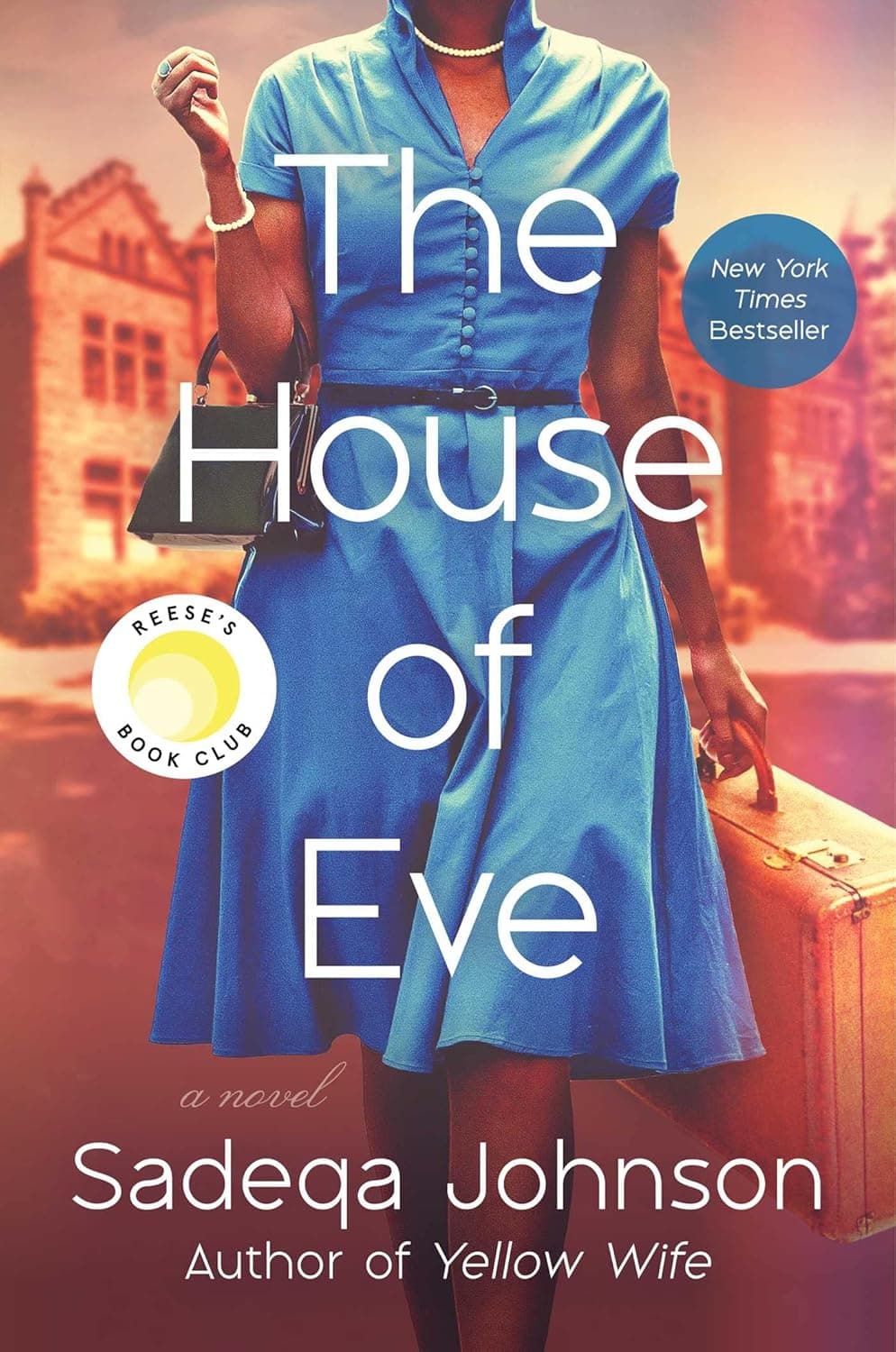
The House of Eve: At a Glance
- Genre: Historical fiction
- Setting: Philadelphia and Washington, D.C.; late 1940s–1950s
- Perspective: Dual-POV narrative alternating between Ruby Pearsall and Eleanor Quarles
- Core conflicts: Unwed pregnancy, infertility, class aspiration, and the price of secrecy
Opening Hook
Two young women come of age in a world that measures their worth by the families they’re born into—and the families they can produce. Ruby Pearsall, a brilliant high schooler clawing her way out of poverty, hides a forbidden love that could destroy her future. Eleanor Quarles, a striver at Howard University, marries into status only to discover that motherhood might be out of reach. Their lives collide at a Catholic home for unwed mothers, where one woman’s devastating loss becomes another’s longed-for gift—and both must live with the cost.
Plot Overview
Act I: Dreams with Deadlines
In Philadelphia, Ruby Pearsall burns to win a scholarship and become an optometrist, even as life at home is precarious under her mother, Inez Pearsall, and a predatory boyfriend. As shown in the opening chapters, Ruby falls for Shimmy Shapiro, a kind, observant Jewish boy who treats her ambitions as real. Their secret interracial romance gives her a refuge—and a risk. In Washington, D.C., Eleanor Quarles arrives at Howard University hungry for belonging. Shut out by an elite sorority, she learns how color, class, and pedigree are gatekeepers in a community she hoped would be a refuge.
Act II: Love, Pressure, and Impossible Choices
Ruby’s unplanned pregnancy detonates her careful plans. Shimmy’s mother forces a bargain: disappear to a home for unwed mothers, surrender the baby, and in return secure the scholarship Ruby needs to escape poverty. Meanwhile, Eleanor meets and marries William Pride, a rising medical student from a prominent Black family. Their love is real, but status comes with scrutiny—especially from William’s formidable mother, Rose Pride. After a series of miscarriages, Eleanor’s hope curdles into desperation as her marriage and place in the Pride family begin to feel contingent on a child she cannot carry.
Act III: The House of Magdalene
Ruby is sent to a Catholic charity, the House of Magdalene, where shame is both policy and weapon. From Chapter 21-25 Summary onward, she endures hard labor, judgment, and isolation before giving birth to a daughter she names Grace. At the same time, Eleanor and William quietly arrange an adoption through the same institution, guided by the enigmatic Mother Margaret. In the novel’s wrenching climax, Ruby is forced to surrender Grace, who is placed into Eleanor’s arms. The Epilogue, set thirteen years later, reveals the haunting aftermath: success shadowed by loss, motherhood shadowed by secrecy, and two women finally facing what their choices have wrought.
For a fuller breakdown, see the Full Book Summary.
Central Characters
Ruby Pearsall
A brilliant teenager from North Philadelphia, Ruby is propelled by talent and a fierce belief that education is her way out. Her love for Shimmy challenges the racial and religious boundaries of her world; her pregnancy forces a decision between self-determination and maternal attachment. Ruby’s journey is a study in resilience—and the lingering ache of a sacrifice made to survive.
Key notes:
- Ambition: Optometry; a scholarship as lifeline
- Obstacles: Poverty, predation at home, racist taboos
- Defining choice: Surrenders her baby to secure her future
Eleanor Quarles
A smart, observant striver from a modest Ohio background, Eleanor is determined to belong. Marriage to William Pride opens doors and intensifies scrutiny: infertility becomes a fault line in her identity, marriage, and social standing. Eleanor’s decision to adopt while concealing the truth asks what stability costs when built on silence.
Key notes:
- Ambition: Career in archives; a respected place in D.C. society
- Obstacles: Classism, colorism, pressure from her in-laws
- Defining choice: Secret adoption to preserve her marriage and status
Supporting Figures
- Inez Pearsall: Ruby’s mother, whose neglect and compromises deepen Ruby’s peril.
- Shimmy Shapiro: Ruby’s first love—tender, earnest, and trapped by his family’s expectations.
- William Pride: Eleanor’s husband; loving yet bound to the Pride legacy.
- Rose Pride: A guardian of pedigree whose demands sharpen Eleanor’s desperation.
- Aunt Marie: Ruby’s tough, steady anchor when the rest of her world falters.
- Mother Margaret: The institution’s iron hand, administering shame as a path to “redemption.”
A full list appears on the Character Overview page.
Major Themes
For a broader discussion, see the Theme Overview.
-
Socioeconomic Class and Social Mobility: Ruby and Eleanor move through stratified Black communities where money, pedigree, and skin tone open or close doors. The novel shows how opportunity is unevenly distributed, and how the same ambition can demand radically different sacrifices depending on where you start.
-
Unwed Pregnancy, Motherhood, and Shame: In the 1950s, sexual transgression is punished publicly and maternally. Ruby’s “shameful” fertility collides with Eleanor’s “shameful” infertility, exposing how society disciplines women at both ends of the spectrum and turning motherhood into both burden and grail.
-
Race, Colorism, and Prejudice: The book maps bigotry from the outside and within. Ruby and Shimmy’s relationship risks violent backlash; Eleanor faces the subtler brutality of colorism and classism among the Black elite, revealing how proximity to power can reproduce prejudice.
-
Deception and Secrets: Secrecy becomes a survival strategy and a corrosive force. Ruby hides her pregnancy to save her future; Eleanor stages a false pregnancy to save her marriage. Both discover that concealed truths reappear as fractures—within families and within the self.
-
Love, Marriage, and Sacrifice: Johnson asks what love demands and what it excuses. Ruby relinquishes a child she loves to claim a life she deserves; Eleanor accepts a child she loves while surrendering honesty. The novel insists that devotion without truth exacts a lasting toll.
-
Mother-Daughter Relationships: Maternal bonds range from neglectful to protective to manipulative. Ruby’s fraught tie with Inez, Eleanor’s complicated but supportive connection with her own mother, and William’s bond with Rose show how a mother’s choices can shape, shield, or scar.
Literary Significance
The House of Eve widens the lens on the “Baby Scoop Era,” focusing on Black women’s experiences in and around homes for unwed mothers—spaces often depicted through a white, middle-class narrative. By centering Ruby and Eleanor, the novel illuminates how race and class inflect shame, access, and agency, and how institutions codify moral judgment as social policy. Johnson’s dual-POV structure braids empathy with suspense, building a narrative that is both gripping and corrective—a modern classic that recovers a silenced chapter of women’s history.
Historical Context
The 1950s demanded conformity, especially from women, whose worth was yoked to marriage and fertility. Abortion was illegal and dangerous; adoption—frequently coerced—was framed as redemption. As Mother Margaret declares, “Out there, they call you whores and sluts. Damaged goods. But in here, you can redeem yourself and pay for your sins.”
Within Black communities, Johnson renders the vibrant intellectual life of Howard University alongside rigid social hierarchies—“paper bag tests,” old-versus-new money, and vigilant gatekeeping. This context clarifies Eleanor’s uneasy initiation into the Pride family and the pressures that drive her choices.
Critical Reception
A New York Times bestseller and a Reese’s Book Club pick, The House of Eve drew praise for its immersive detail, emotional power, and deft plotting. Reviewers highlighted its complex, deeply human characters and the tension sustained by the dual narrative. The novel has been celebrated as both compelling fiction and essential social history, with many readers citing its most piercing lines—collected on the Quotes page—as unforgettable.