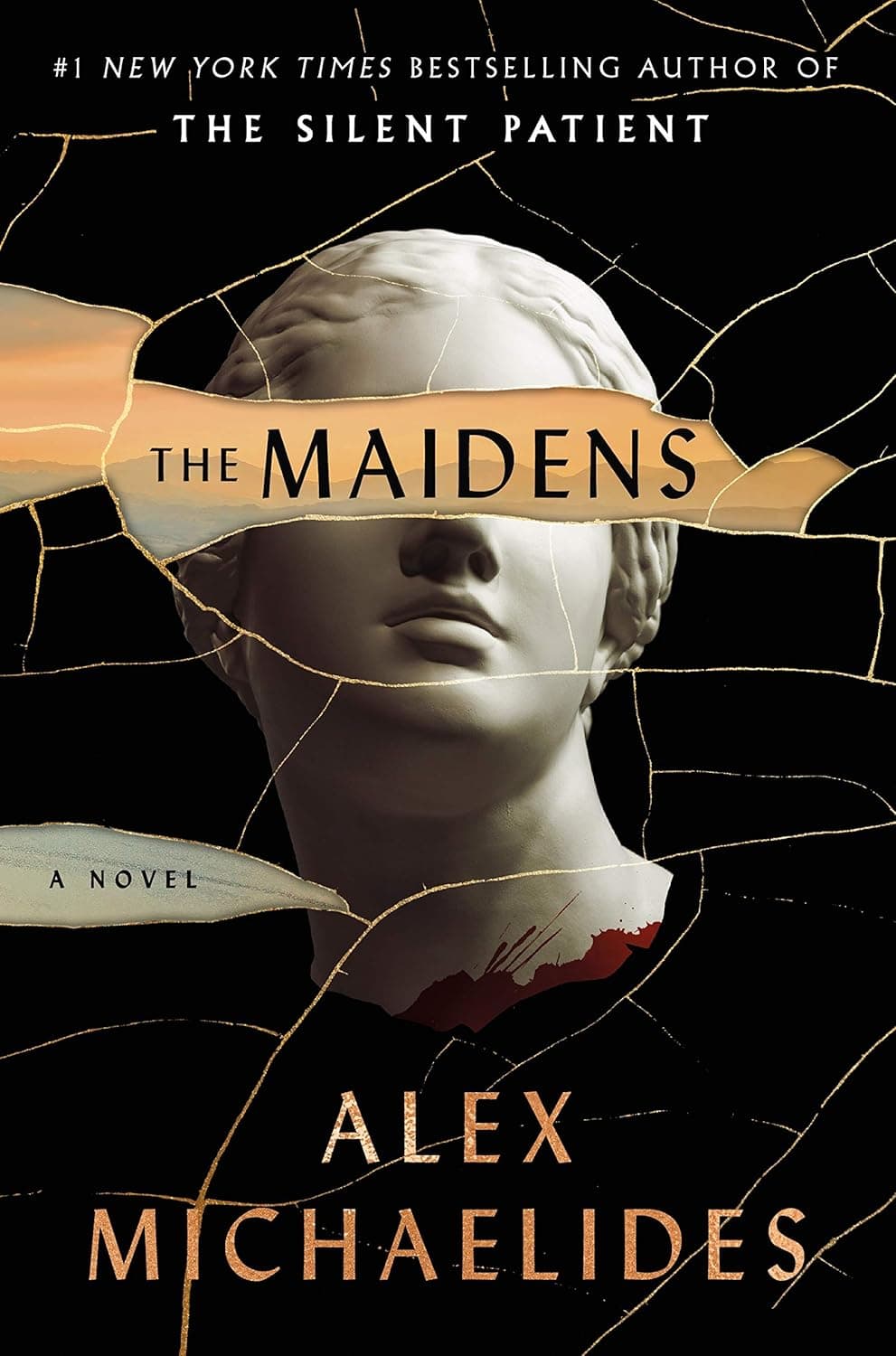
Opening
A hidden letter detonates the story’s assumptions: a plea of love, soaked in trauma and promise of blood, turns every relationship inside out. A frantic warning goes unheeded, a river journey drifts toward a ruin, and a single name at knife-point collapses the mystery into betrayal.
What Happens
Chapter 76
On her way to her niece’s room, Mariana Andros imagines whisking Zoe back to London and safety. The room stands empty until an anxious call from Fred interrupts: he has a premonition that Mariana is in immediate danger. She hangs up, dismissing his fear as “nonsense.”
Alone among Zoe’s childhood treasures—a faded stuffed animal named Zebra—Mariana is shaken by a memory of her niece’s piety. Faithless, she kneels and begs not God but the ancient Maiden to spare Zoe as she did not spare Sebastian. As she rises, Zebra slips from the bed; tucked in a loose seam, Mariana finds a folded, typed letter. Torn between loyalty and dread, she reads.
Chapter 77
The letter, from an anonymous “X,” addresses Zoe directly. The writer recounts a brutal farm childhood after maternal abandonment and a journal with two torn pages—“dangerous” because they told another story. Pain and humiliation harden into resolve: escape, become lovable, and pursue a vocation that leads straight to Zoe.
“X” fears the violence inside them and vows to turn a knife on themselves before hurting Zoe. They claim a premonition on first seeing her and describe a “brilliant, beautiful idea” to complete their union—an idea requiring “blood—and sacrifice.” Signed “Yours, forever—X,” the letter blends confession and threat, forging the novel’s strands of Childhood Trauma and Its Consequences and Obsession and Fixation.
Chapter 78
Mariana reels and leaps to a conclusion: Edward Fosca must have written the letter to Zoe, making her complicit. She reinterprets a glance she once saw between them, realizing what looked like fear might have been something else, a pivot into Appearance vs. Reality. Zoe, fresh from the shower, finds Mariana composed but altered; the letter is hidden away.
Plans of flight evaporate. Zoe insists they go to the riverside folly to search for the murder weapon. Mariana follows in a daze as they take a punt downstream. A prickling sense of pursuit makes her glance back—just long enough to catch Fred’s figure slipping behind a tree.
Chapter 79
Mist lifts off the water. As Zoe poles, Mariana sees her as the Lady of Shalott on a last voyage, and time feels nearly spent. A swan glides up beside the punt and fixes Mariana with black, unreadable eyes before dissolving into the gray.
The folly looms at the bank, its stone worn, an emblem carved over the doorway: a “swan in a storm.” The echo chills Mariana—river omen and heraldry aligned. She steadies herself and follows Zoe into the shadowed interior.
Chapter 80
Inside, Zoe points to the spot where Tara Hampton’s body was found. Then she kneels at a stone window seat, reaches into a concealed recess, and pulls out a knife crusted with dried brown. With unsettling ease, she turns the blade toward Mariana: they are “going for a walk.”
Mariana pleads, “This isn’t you, Zoe. This is him,” and admits she found the letter. Furious at the invasion, Zoe sneers at Mariana’s certainty that Fosca wrote it. “You think Edward Fosca wrote the letter?” she says, astonished. “Then who?” Mariana asks. Zoe’s whisper lands like a blow: “Sebastian, of course.” The revelation detonates the novel’s deepest fault line—an ultimate act of Deception and Betrayal.
Character Development
The mask slips from every face. Grief, devotion, and certainty contort into their opposites as loyalties invert and buried histories surface.
- Mariana: Her skepticism collapses into desperate prayer, then into horror as the letter and Zoe’s confession force her to re-see her marriage, her niece, and herself.
- Zoe: The ingénue vanishes; she moves with intent, retrieves a hidden knife, and controls the confrontation, exposing a long-kept, dangerous allegiance.
- Sebastian: Posthumous redefinition; the letter reframes him as a wounded manipulator whose love language fuses tenderness with ritualized harm.
- Fred: His premonition aligns with events, and his quiet pursuit marks him as a potential lifeline trailing the women to the folly.
Themes & Symbols
Betrayal crowns the section. The story’s trusted center—Sebastian—rots from within, proving how love can camouflage violence and how memory colludes with denial. The pivot from Fosca to Sebastian is a case study in misdirection: grief narrows Mariana’s gaze until she mistakes arrangement for truth.
Appearance and reality diverge at every turn: a stuffed toy houses a manifesto; a protective aunt escorts danger to the river; an academic suspect distracts from the real puppeteer. Trauma’s long shadow explains without excusing—Sebastian’s childhood becomes the crucible that forges his “beautiful idea,” binding love to harm.
Classical texture threads the scene. Through Greek Mythology and Tragedy, Mariana’s prayer to the Maiden and the Lady of Shalott allusion cast the river journey as a fatal procession to a ritual space, the folly as stage and altar.
- The Swan: A living omen on the water and a carved “swan in a storm” over the door, it signals fate closing in—beauty skimming over violence beneath.
- Zebra: Childhood innocence turned reliquary for a predatory secret; a soft body stuffed with sharpened intent.
Key Quotes
“This isn’t you, Zoe. This is him.”
Mariana separates Zoe from the malevolence she perceives, still clinging to the belief that an external man—Fosca—pulls the strings. The line shows her love and her blindness in the same breath.
“Yours, forever— X.”
The letter’s signature fuses intimacy and anonymity, a lover’s vow with a cipher’s mask. The blend primes the reader to misattribute the author and accept obsession as devotion.
“A brilliant, beautiful idea... blood—and sacrifice.”
The rhetoric of artistry elevates violence, aestheticizing harm into a necessary rite. It reveals the author’s self-mythologizing and frames murder as consummation.
“You think Edward Fosca wrote the letter?”
Zoe’s incredulity punctures the novel’s working theory. The question flips the power dynamic—she knows the truth, and Mariana’s investigation lags behind.
“Sebastian, of course.”
One name collapses the mystery. The admission reorders every earlier scene, converting a widow’s grief into the story’s blindfold.
Why This Matters and Section Significance
This run of chapters delivers the book’s seismic shift: the antagonist is not the obvious professor but the beloved husband whose memory organized Mariana’s world. With Sebastian unmasked, the narrative tilts from campus whodunit to psychological tragedy—about how love can sanctify cruelty, how grief can mislead, and how danger can live in the house you mourn. The river, the folly, and the knife align to drive the story into its endgame, where revelation demands reckoning.