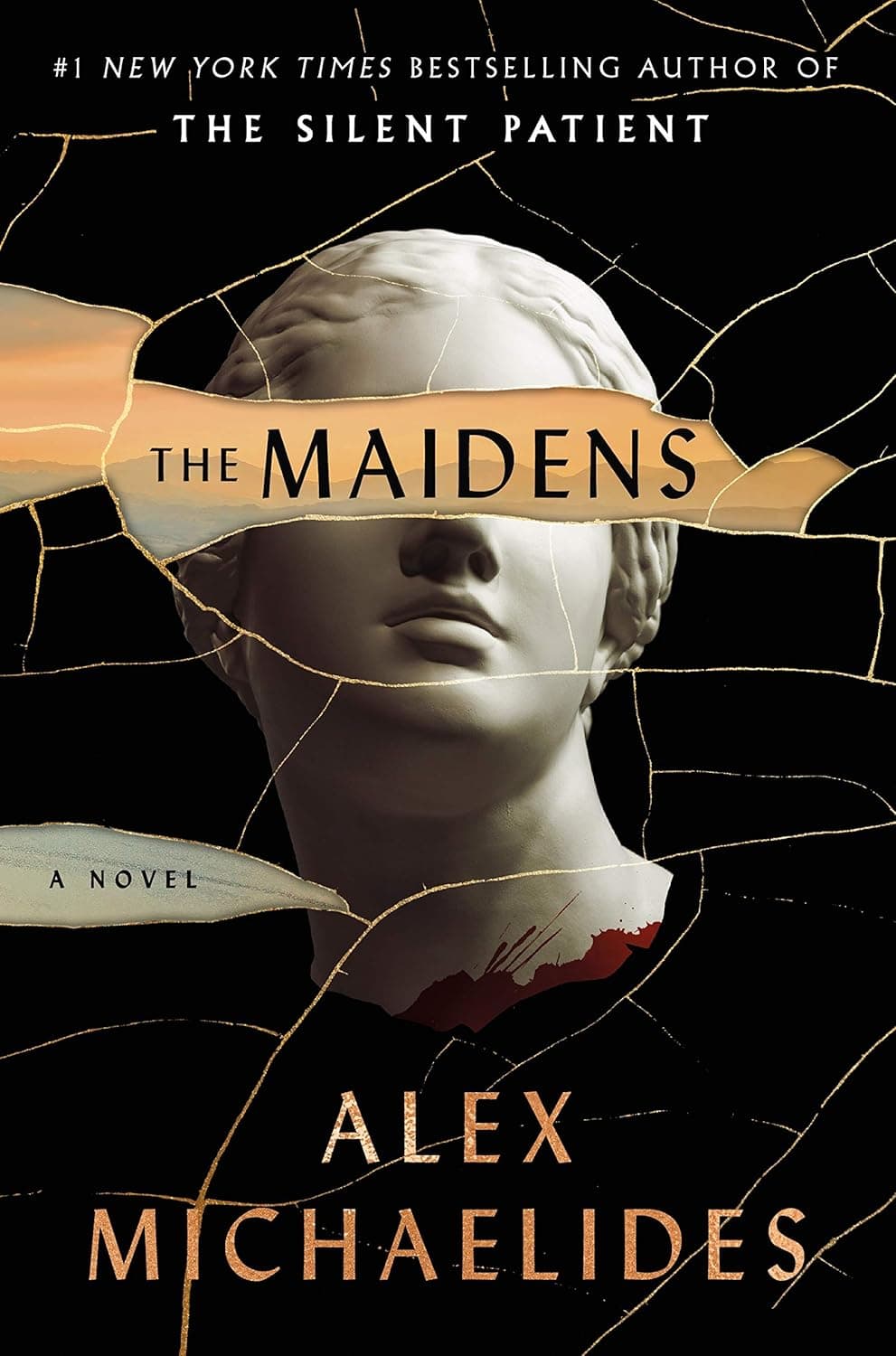
Overview
At Cambridge University, an ancient campus with a modern undercurrent of ambition, a string of ritualistic murders shatters the illusion of safety. The investigation draws a grieving group therapist into the orbit of a charismatic professor and his secret circle of students, where Greek tragedy, obsession, and betrayal intertwine. What begins as a protective aunt’s visit becomes a labyrinth of misdirection in which love is weaponized and appearances conceal monstrous truths.
Main Characters
Mariana Andros
Mariana is the novel’s protagonist and narrator, a London group therapist whose life has been fractured by the death of her husband, Sebastian. Summoned by her niece Zoe to St. Christopher’s College after a student is murdered, she applies her clinical instincts to the case, only to fixate—too quickly and too fiercely—on Professor Edward Fosca as the culprit, a suspicion seeded as early as the Prologue. Her grief and unresolved Childhood Trauma and Its Consequences cloud her judgment, nudging her toward confirmation bias even as her empathy uncovers crucial clues tied to Grief and Loss. Through the investigation, she becomes entangled with Fosca’s secret society, clashes with the police, and leans on unlikely allies, all while projecting old wounds onto new threats. Her journey peels back layers of Deception and Betrayal until the final shock forces her to confront the man she loved, the niece she tried to save, and the limits of her own perception.
Zoe
Zoe is Mariana’s niece at St. Christopher’s, the bright, fragile-seeming student whose frantic call in the Chapter 1-5 Summary launches the plot. Initially framed as a victim who needs rescuing, she carefully curates her vulnerability to steer Mariana toward Fosca, exploiting her aunt’s love and professional confidence. Beneath the façade lies a vengeful, calculating mind bound to the memory of Sebastian and a secret pact that turns friendship into bloodshed—starting with Tara Hampton. Her reveal in Part Six detonates the story’s central misdirection, transforming her from damsel-in-distress to architect of horror and embodying the novel’s meditation on Appearance vs. Reality.
Sebastian
Sebastian, Mariana’s late husband, exists in memory and letters—first as a cherished ideal, then as a specter who rewrites the entire narrative. The posthumous revelations expose a manipulative predator who groomed Zoe, murdered his own father, and devised the Cambridge killings as theatrical misdirection en route to murdering Mariana for her inheritance. His unseen hand turns the plot’s gears, weaponizing Mariana’s grief and turning her love story into the novel’s darkest lie. In retrospect, he becomes the most chilling figure: the fallen idol whose unmasking reframes every relationship and deepens the theme of catastrophic betrayal.
Edward Fosca
Edward Fosca is the alluring Professor of Greek Tragedy who presides over “The Maidens,” a select group of devoted female students. With Byronic charisma and opaque boundaries, he becomes the perfect suspect—courted by scandal, shielded by admirers, and constantly sparring with Mariana in a tense, intellectual cat-and-mouse. While his ethical failures as a mentor and lover render him morally compromised, the murder accusations ultimately dissolve, revealing him as the novel’s central red herring. His dynamic with the Maidens and his theatrical aura echo the book’s classical influences, complicating the line between performance, power, and guilt.
Supporting Characters
Fred
Fred is a theoretical physics PhD student who meets Mariana on the train in the Chapter 6-10 Summary and becomes her earnest, persistent ally—and tentative romantic prospect. Self-deprecating and oddly intuitive (he claims premonitions), he steadies Mariana’s investigation with loyalty and sharp observations. His courage culminates at the folly, where he is stabbed by Zoe while protecting Mariana, an act that ultimately saves her life.
Tara Hampton
Tara Hampton is the first victim and a prominent member of the Maidens, remembered as striking, wealthy, and troubled by drugs and unnamed fears. Her death ignites the investigation and focuses suspicion on Fosca, fueled by whispers of her anxiety around him. Composed entirely through others’ recollections, she remains an absence that shapes every theory.
Henry Booth
Henry Booth is a volatile member of Mariana’s therapy group whose fixation on her bleeds dangerously into her personal life. His storyline mirrors the novel’s preoccupation with obsession and trauma, escalating into a menacing encounter at Cambridge. He amplifies Mariana’s vulnerability and underscores how predators exploit emotional wounds.
Clarissa Miller
Clarissa Miller is an English professor at St. Christopher’s and Mariana’s former tutor, offering warmth, academic ballast, and a link to Mariana’s happier past. Her steadiness provides a moral counterpoint to the campus’s secrecy, even as the violence shakes her faith in the sanctuary of scholarship.
Julian Ashcroft
Julian Ashcroft is a celebrity forensic psychologist and old acquaintance of Mariana’s, brought in by the police to consult. Slick and skeptical, he dismisses Mariana’s intuition in favor of clinical orthodoxy, spotlighting the clash between gut psychology and institutional expertise.
Chief Inspector Sangha
Chief Inspector Sangha leads the investigation with a pragmatic, evidence-first approach that clashes with Mariana’s speculative leaps. Overworked and wary of civilian involvement, he nevertheless becomes a crucial procedural anchor amid the narrative’s theatrical distractions.
Minor Characters
- The Maidens: Fosca’s elite circle of students—Veronica Drake (second victim), Serena Lewis (third victim), and surviving members Carla Clarke, Natasha, Diya, and Lillian—whose devotion, secrecy, and snobbery obstruct Mariana’s search for truth.
- Mr. Morris: St. Christopher’s head porter whose helpful veneer hides an affair with Serena and blackmail of Fosca, making him a prominent suspect.
- Conrad Ellis: Tara’s dealer and casual boyfriend, initially targeted by police but cleared after the second murder undermines the theory.
- Theo Faber: A forensic psychotherapist from The Silent Patient who meets Mariana in London, diagnosing the murders’ performative quality and later treating Zoe at the Grove.
- Mariana’s Father: A powerful, emotionally distant presence whose coldness shapes Mariana’s insecurities and her attraction to controlling men like Sebastian—and her fixation on Fosca.
Character Relationships & Dynamics
At the novel’s heart lies the bond between Mariana and Zoe, a relationship that masquerades as guardian-and-ward until the climax inverts it. Zoe reads Mariana’s grief and clinical habits with surgical precision, feeding her exactly the clues that will confirm a false narrative about Fosca. The intimacy of trust becomes a weapon: Zoe steers, Mariana follows, and the reader learns how easily love can be manipulated when filtered through pain.
The most devastating reconfiguration arrives with Mariana and Sebastian. What began as idealized love—Mariana’s raison d’être—crumbles under the weight of letters and confessions that reveal a predatory architect behind the murders. This betrayal does more than solve the case; it dismantles Mariana’s identity, exposing how nostalgia and mourning can blind even a trained therapist to danger.
Between Mariana and Edward Fosca, the book stages a cerebral duel. He wields charisma and exclusivity—his inner circle of Maidens—as a shield; she counters with psychological inference shaped by her own father-shaped wounds and professional instincts. Their mutual scrutiny—neither fully honest, both performative—turns the campus into a theater of suspicion, where power dynamics and classical aesthetics obscure actual guilt.
The alliance patterns sharpen the factions at play. Investigators and quasi-allies—Mariana, Fred, Chief Inspector Sangha, and, to a contentious extent, Julian Ashcroft—push against the cloistered world of Fosca and the Maidens, with Clarissa Miller offering humane ballast in the academic camp. On the hidden axis, Zoe and Sebastian form the novel’s true conspiracy: a toxic dyad forged through grooming, secrecy, and ritualized staging that mimics classical rites, reinforcing the story’s ties to Greek Mythology and Tragedy.
Finally, peripheral threads heighten the pressure without resolving it: Henry Booth’s obsession mirrors the central predator-prey dynamic; Mr. Morris’s blackmail and entanglement with Serena muddy motives within the college; and Theo Faber’s insight reframes the murders as spectacle designed to mislead. Together, these dynamics create a web where alliances feel provisional, authority is compromised, and every performance—romantic, academic, or criminal—masks a darker design.