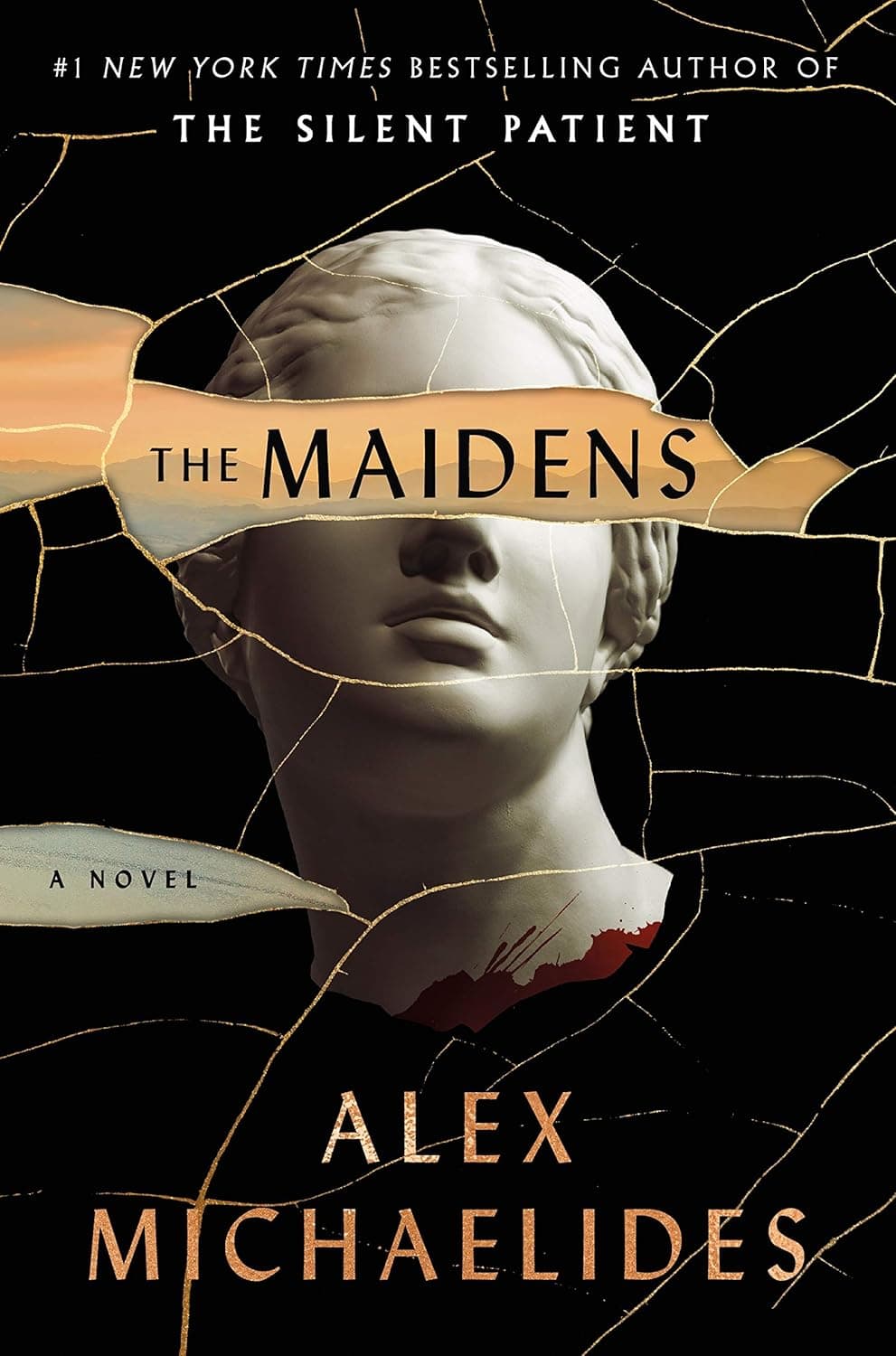
In Alex Michaelides’s The Maidens, a murder mystery becomes a lens for examining how private wounds distort public realities. Grief curdles into obsession, myth dresses violence in beauty, and a hallowed university proves an elegant mask for predation and secrecy. The novel’s psychology and classical allusions braid together to show how the past—personal and cultural—repeats itself in devastating ways.
Major Themes
Grief and Loss
Grief and Loss anchors the novel through Mariana Andros, whose “pathological mourning” for her husband Sebastian saturates every perception and choice. Her bereavement makes the world feel distant and gray, and that numbness drives her to force meaning onto events—especially by finding a villain who can explain her pain. The ruined temple on Naxos, where she last saw Sebastian, becomes the emblem of her shattered ideal and a shrine to the past she cannot release.
Deception and Betrayal
Deception and Betrayal shape the plot and the shock of its revelations: nearly everyone lies, but the most corrosive falsehoods are intimate. Zoe engineers misdirection from the start, but the final treachery belongs to Sebastian, whose loving-husband persona covers infidelity, manipulation, and murder. The novel ultimately exposes not only interpersonal deceit but self-deception—Mariana’s long refusal to see cracks in the story of her marriage.
Appearance vs. Reality
Appearance vs. Reality turns Cambridge’s serene spires into a stage where civility and intellect conceal rot. Figures who seem admirable—like the charismatic professor—prove predatory, while the university’s beauty is a façade for feverish rituals and cruelty. Surface impressions mislead at every turn: Professor Fosca is no murderer yet still abuses power, and Sebastian’s “demigod” glow hides a calculating, violent nature.
Obsession and Fixation
Obsession and Fixation show how compulsive focus substitutes for connection and truth. Mariana’s grief hardens into an obsession with Fosca’s guilt, narrowing her vision and imperiling her judgment, while Zoe’s lifelong fixation on Sebastian becomes a dark devotion that imitates his cruelty. Even Henry Booth’s desperate attachment to Mariana functions as a trauma-soaked red herring, illustrating how obsession can mimic love, purpose, or salvation—and lead elsewhere.
Greek Mythology and Tragedy
Greek Mythology and Tragedy furnishes the novel’s ritual frame and moral language, dressing modern crimes in ancient patterns of sacrifice, fate, and revenge. Euripidean quotations and references to Persephone and Eleusis recast the murders as offerings and initiations—“death and rebirth” in the rhetoric of cult and classroom. Zoe co-opts tragic archetypes to ennoble her actions, claiming the agency of a mythic avenger while evading ordinary guilt.
Childhood Trauma and Its Consequences
Childhood Trauma and Its Consequences is the psychological key that unlocks motive and monstrosity. Journal entries reveal a childhood warped by violence, teaching power through domination and love through fear; that damage echoes in Sebastian’s predation and in Zoe’s trauma bond that mistakes abuse for intimacy. Even Mariana’s insecurity and susceptibility to charismatic authority trace back to a cold, critical father, showing how early wounds script adult choices.
Supporting Themes
The Power of Narrative and Storytelling: The novel exposes how people author stories to make life bearable, persuasive, or grand. Mariana romanticizes marriage to protect herself from loss, Zoe casts herself as a tragic heroine to justify murder, and Fosca curates a persona to retain power—braiding this theme to Deception, Appearance vs. Reality, and Grief.
The Nature of Evil: Evil arises not as the supernatural but as the human—accumulated pain turned predation. The killer’s voice links cruelty to unhealed suffering, aligning evil with Trauma and complicating blame without excusing harm.
Academia and Elitism: Cambridge’s prestige and hierarchy become a shield for secrecy and abuse, letting charisma and tradition override accountability. This environment amplifies Appearance vs. Reality and enables Deception to flourish unchallenged.
Theme Interactions
- Grief and Loss → Deception and Betrayal: Mariana’s mourning creates a hunger for meaning and a culprit, making her easy to mislead and eager to project. Grief narrows her interpretive frame, so false narratives feel like relief.
- Appearance vs. Reality ↔ Greek Mythology and Tragedy: Classical language elevates brutality into “sacrifice,” while Cambridge’s beauty performs innocence; myth and setting collaborate to aestheticize violence.
- Childhood Trauma → Obsession and Fixation: Unresolved wounds calcify into compulsive attachments—Zoe’s trauma bond to Sebastian and Henry’s fixation on Mariana—fueling choices that mimic love but enact harm.
- Academia and Elitism → Deception and Betrayal: Institutional prestige muffles scrutiny, so charisma and status can rewrite truth and recast predators as mentors.
Character Embodiment
Mariana Andros: Mariana embodies Grief and Loss transmuted into Obsession and Fixation, her mourning narrowing into a crusade that mistakes certainty for truth. Her susceptibility to powerful men and to “grand narratives” exposes how Childhood Trauma primes self-deception within glittering institutions.
Sebastian: Sebastian personifies the collision of Deception and Betrayal with Childhood Trauma; his charm is a mask for control and violence learned in an abusive home. He is the novel’s starkest case of Appearance vs. Reality—the adored husband who is, in fact, the architect of ruin.
Zoe: Zoe is the engine of Deception, shaped by orphanhood into dependency and then into a fatal Fixation on Sebastian. She cloaks herself in Greek Mythology and Tragedy to claim heroic purpose, recasting vengeance as destiny.
Edward Fosca: Fosca concentrates Appearance vs. Reality and Academia and Elitism: a dazzling lecturer who exploits asymmetries of power. Though not the killer, his manipulation and ritualized aesthetic provide the language and stage on which others’ obsessions play out.
Henry Booth: Henry dramatizes Obsession and Fixation as a cry from Trauma; his clinging devotion to Mariana is disturbing yet pitiable. As a red herring, he clarifies the theme’s spectrum—from neediness to violence—without resolving it.
The Maidens (the student circle): This cult-like cohort materializes Appearance vs. Reality and the seductions of Academia and Elitism. Their beauty, privilege, and secrecy make them seem chosen—perfect cover for manipulation, ritual, and fear.