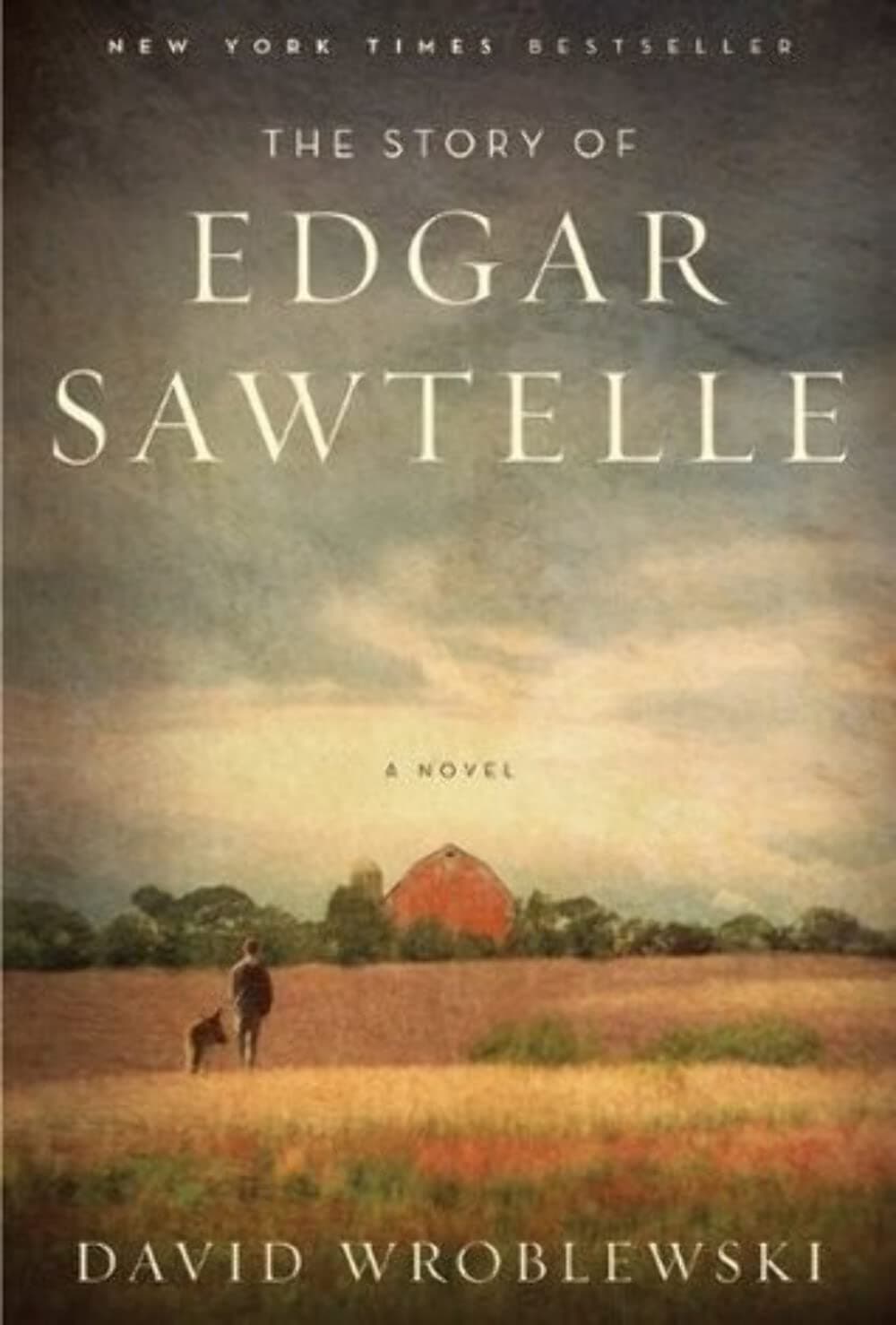
Edgar Sawtelle
Quick Facts
Edgar Sawtelle is the mute protagonist of The Story of Edgar Sawtelle, raised on his family’s remote kennel in northern Wisconsin. His life revolves around training and understanding the Sawtelle dogs and cultivating a private language of gesture and sign.
- Role: Protagonist; a Hamlet figure navigating suspicion, guilt, and duty
- First appearance: As an infant in the crib, imprinting on his first dog
- Home: The Sawtelle kennel and farm in northern Wisconsin
- Closest companion: Almondine
- Family: Father Gar Sawtelle; mother Trudy Sawtelle; uncle Claude Sawtelle
Who They Are
Edgar is a watcher and a maker of meanings, a boy whose silence sharpens his attention and turns him into a fluent reader of bodies, dogs, and rooms. His arc tracks a classic movement from innocence into knowledge and consequence, aligning him with Coming of Age and Loss of Innocence. When his father dies and doubts take root, Edgar is pulled into the moral thicket of Betrayal and Revenge and Truth and Deception. Like Hamlet, he is thoughtful to a fault, haunted by proof he cannot easily voice; his muteness turns soliloquy inward, where suspicion, conscience, and love wage a quiet war.
Personality & Traits
Edgar’s silence is not emptiness but craft: he composes with hands, eyes, and timing. His intelligence expresses itself through systems—naming dogs, training protocols, elaborate “plays”—and his heart is most at ease in the company of animals. Grief complicates his moral compass, but even in turmoil, he clings to fairness and evidence.
- Inward, observant, and language-attuned: Living within Language, Communication, and Silence, Edgar is “ever inward,” mapping spaces and people with meticulous attention. His hands are “always in motion,” making his body his voice.
- Bookish curiosity: He treasures The New Webster Encyclopedic Dictionary, mining it to name puppies—an emblem of how words, for Edgar, become touchstones and tools even without speech.
- Profound empathy with animals: His training blends sign, posture, and intuition—rooted in the Human-Animal Bond—yielding a communication with dogs that is cleaner and more reciprocal than most human dialogue.
- Guilt-ridden and self-punishing: After Gar’s death, Grief and Loss hardens into self-blame (his failure at the telephone; the chest-striking gesture), shaping his quest for evidence into a quest for absolution.
- Determined and resilient: Once he suspects Claude, Edgar’s methodical patience turns relentless. His survival in the Chequamegon and strategic returns to the farm show stamina under moral pressure.
- Physical presence as language: “Sky-eyed,” black-haired, and later “hawk-thin,” Edgar’s changing body reflects his inner trial; grime, sweat tracks, and wiry resilience become a record of exile and resolve.
Character Journey
Edgar begins at the center of a language he helped invent—signs with his parents, a silent grammar with the dogs, an Eden of work and love curated by Gar. Gar’s sudden death tears that world open. Edgar’s private habits (watchfulness, testing, demonstration) become investigative tools: he stages a kennel “play” to draw out Claude, and when the reaction turns violent, he flees into the Chequamegon. Exile strips him bare; living off the land with his dogs, and briefly sheltered by the kindly Henry Lamb, Edgar learns what he can endure—and what he can no longer pretend. He returns to the farm not as a boy but as a claimant: to truth, to his father’s legacy, and to moral responsibility. His final, public attempt to expose Claude marries his gifts (staging, dog-handling, timing) to tragic consequence, completing his passage from innocence into a Shakespearean fatalism where knowledge arrives just as the cost becomes unbearable.
Key Relationships
Almondine: Edgar’s companion-soul and first language. With her, he experiences recognition without translation—a trust that predates words and outlasts most human assurances. Her death is the rupture that leaves him morally clear but emotionally unmoored.
Gar Sawtelle: Father, mentor, and North Star. Gar nurtures Edgar’s capacities, treating his muteness as difference, not lack, and inducts him into the craft and ethics of the Sawtelle dogs. In death, Gar becomes Edgar’s measure: the standard he must honor and the wrong he must set right.
Trudy Sawtelle: Loving mother pulled into a fog of grief and influence. As Trudy gravitates toward Claude, Edgar experiences her distance as a second betrayal—less a choice against him than a failure to perceive what he sees. Their broken communication mirrors the novel’s central question: what can love hear when truth is hard to face?
Claude Sawtelle: Charismatic, opaque, and destabilizing. Edgar’s instincts recoil from Claude, and his pursuit of proof converts suspicion into action. Their final contest is both intimate and public—a struggle over the definition of family, legacy, and the story the kennel will tell about itself.
Henry Lamb: A humane interlude in a brutal education. Henry offers shelter without interrogation, allowing Edgar to practice trust again; the pastoral pause clarifies what kind of peace is no longer available to him.
Defining Moments
Edgar’s life pivots on scenes where silence collides with truth-telling; he answers speechlessness with design—arranging bodies, dogs, and gestures into arguments others must witness.
- Witnessing Gar’s death: Edgar finds Gar collapsed and cannot make his voice work on the telephone. Why it matters: It seeds his core wound—helplessness—turning grief into self-reproach and making “finding out” a moral necessity rather than a desire.
- The “play” with the puppies (“The Mousetrap” echo): Edgar stages a reenactment of the suspected method of murder; Claude’s violent reaction confirms Edgar’s fears and detonates the illusion of safety. Why it matters: It transforms intuition into conviction and forces Edgar into exile, shifting him from observer to actor.
- The vision in the rain: A ghostly visitation in a storm appears to validate Claude’s guilt and offers a cryptic clue. Why it matters: It binds Edgar to a duty beyond proof—an ethical command that blends memory, love, and fate.
- Return and public exposure: Edgar orchestrates a final demonstration before visitors, hoping to unmask Claude. The cascade ends in a barn fire and the deaths of Doctor Papineau, Claude, and Edgar. Why it matters: It consummates the Hamlet parallel—justice glimpsed at the instant it destroys the avenger and the world he meant to save.
Essential Quotes
This will be his earliest memory.
Red light, morning light. High ceiling canted overhead. Lazy click of toenails on wood. Between the honey-colored slats of the crib a whiskery muzzle slides forward until its cheeks pull back and a row of dainty front teeth bare themselves in a ridiculous grin.
This origin scene fuses belonging, dog, and home; Edgar’s first “language” is recognition across species. The memory sanctifies the kennel as a cradle of meaning and frames Almondine as his first translator.
He was five days in the hospital before they finally brought him home.
A plain sentence heavy with implication: separation precedes reunion, and “home” is felt rather than said. The line sketches Edgar’s lifelong pattern—periods of isolation followed by precarious returns.
He was already trying to make the words. He moved his lips. A sigh came out of him, thin and dry.
“This is the operator. How may I help you?”
His heart surged in his chest. He tried to force sound from his mouth, but there was only the gasp of exhaled breath. He swung his hand wide, then struck his chest with all the force he could muster, mouthing the words.
The telephone scene crystallizes Edgar’s core conflict: urgent knowledge trapped behind a body that will not comply. His self-strike becomes a ritual of shame and a somatic memory that propels his hunger for evidence and control.
He smiled.
“I love you,” said Edgar Sawtelle.
A paradox resolves: speech arrives only in the book’s language, not Edgar’s body. The narrated “said” lets the novel itself voice what Edgar can’t, affirming that love—his truest utterance—has always been present, even when unspeakable.