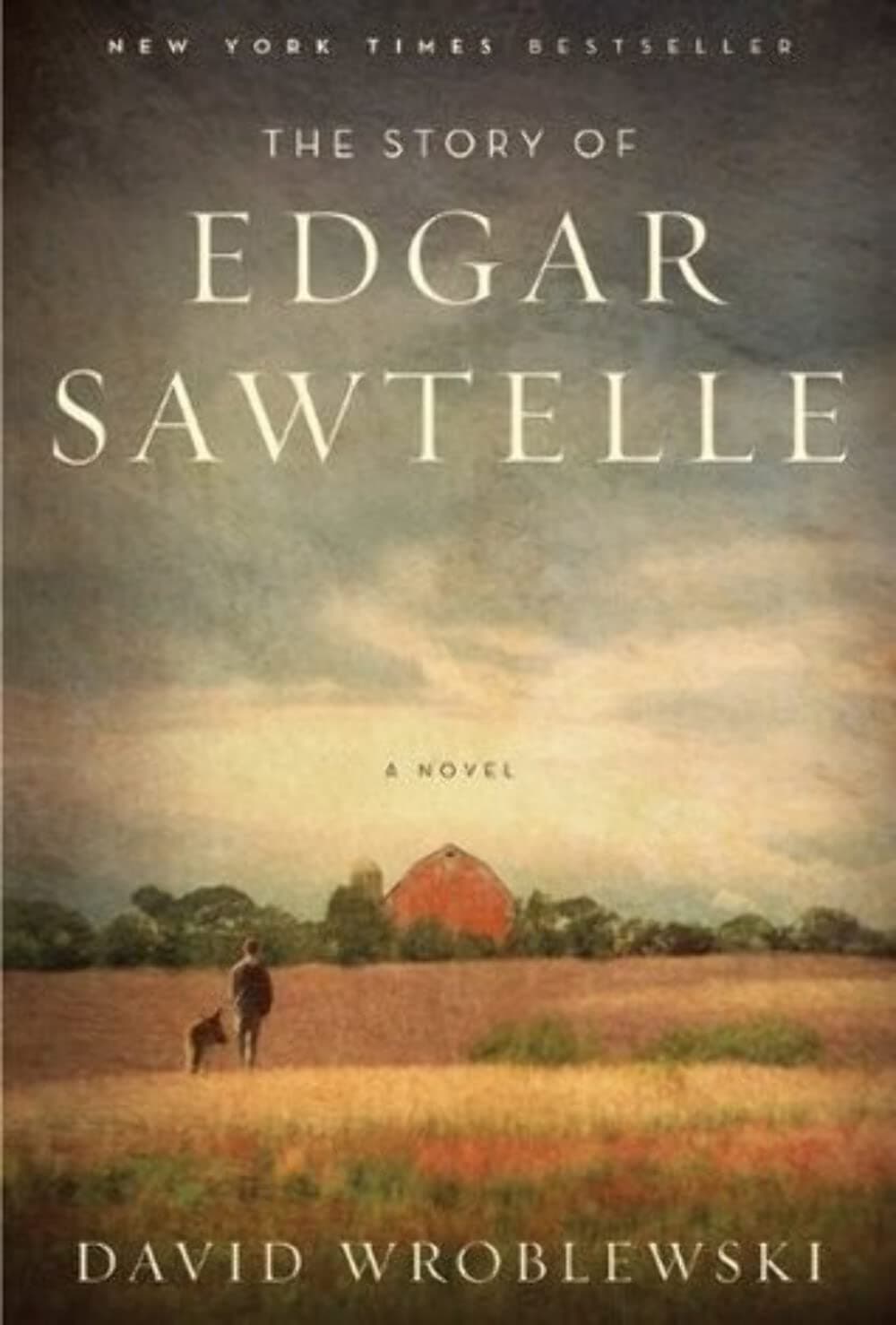
This collection of quotes from The Story of Edgar Sawtelle traces the novel’s central preoccupations—communication, family legacy, betrayal, and the profound bond between humans and animals.
Most Important Quotes
The Transaction of Fate
"It will work. I do not believe so much in chance. I think here we trade one life for one life."
Speaker: The Herbalist | Context: In the Prologue, an herbalist in Pusan exchanges a deadly poison for penicillin to save a child, setting a dark bargain into motion.
Analysis: The line establishes the novel’s moral calculus: choices exact a price, and debts in one generation are paid in another. By casting the exchange as a balance—“one life for one life”—it foreshadows how poison will ripple through the Sawtelle family’s history and reframe tragedy as the working-out of a long-standing pact. The quiet fatalism here gives the book its mythic undertone, in which private acts have communal and hereditary consequences. It also inaugurates the theme of Family and Legacy, suggesting that inheritance is as much ethical as it is material.
The Silent Cry
"He swung his hand wide, then struck his chest with all the force he could muster, mouthing the words. 'Is this an emergency?' the operator said. He struck his chest again. Again. Each blow drove a single note from his body. 'A-n-a-a-a.'"
Speaker: Narrator | Context: In the chapter “A Thin Sigh,” Edgar discovers his father collapsed and tries to call for help, but his muteness prevents the operator from understanding him.
Analysis: The scene crystallizes the novel’s meditation on Language, Communication, and Silence, turning Edgar’s body into both instrument and prison. The operator’s cool inquiry underscores a cruel irony: the systems designed to rescue cannot accommodate a voice that cannot form words. The repeated blows and the strangled syllable render desperation as sound-image, a visceral prosody of helplessness. For Edgar, the moment seeds lasting guilt and fuels his turn toward a language of demonstration—truth that must be shown when it cannot be said.
The Play’s the Thing
"Did you see his face? The look on his face?"
Speaker: Edgar Sawtelle (signing) | Context: In “A Way to Know for Sure,” Edgar stages a reenactment of poisoning with his dogs, provoking Claude and signing this urgent question to his mother immediately afterward.
Analysis: Explicitly echoing Hamlet’s “Mousetrap,” Edgar wields performance as proof, substituting a choreographed act for a confession he cannot force or articulate. Addressing Trudy, he seeks corroboration—an external witness to make inner certainty undeniable—thereby exposing how truth in this world depends on perception. Claude’s reaction becomes the evidence, conflating guilt with gaze and collapsing theater into revelation. The moment fuses Claude with the novel’s twin currents of Truth and Deception and Betrayal and Revenge, marking a point beyond which tragedy is assured.
The Final Word
"'I love you,' said Edgar Sawtelle."
Speaker: Edgar Sawtelle | Context: In Part V (“Edgar”), poisoned and dying in the burning barn, Edgar hallucinates the presence of his father and Almondine and believes he speaks aloud for the first and only time.
Analysis: The novel’s most devastating irony is that Edgar’s hard-won voice arrives when the living cannot hear it. The line condenses his whole arc into one unguarded utterance, making love the language that finally bridges his lifelong silence. Death and speech converge in a moment at once redemptive and cruel, collapsing desire, memory, and farewell into a single breath. Its stark simplicity is the point: the smallest sentence contains the deepest truth, and the cost of it is everything.
Thematic Quotes
Language, Communication, and Silence
The Oracle’s Prophecy
"'He can use his hands.'"
Speaker: Ida Paine | Context: In “Signs,” the prescient grocer examines infant Edgar and offers this enigmatic verdict to Trudy about her son’s future.
Analysis: Ida’s gnomic declaration functions as foreshadowing and riddle, misread at first as a sentence to manual labor. Its meaning clarifies when sign language enters the family, transforming a perceived lack into a different form of fluency. The hands become instruments of will and witness—training dogs, shaping meaning, and staging truth—redefining voice as something that need not pass through the throat. The line reframes disability as alternative capacity, the book’s central reorientation of what it means to speak.
Almondine’s Understanding
"That was what the concern had been about, she realized. The baby had no voice. It couldn’t make a sound... she finally understood: the thing that was going to happen was that her time for training was over, and now, at last, she had a job to do."
Speaker: Narrator (from Almondine’s perspective) | Context: In “Almondine,” the dog perceives Edgar’s silent crying and intuits her new role within the family.
Analysis: The perspective shift grants Almondine interiority, embodying the novel’s faith in nonverbal attunement and The Human-Animal Bond. She apprehends Edgar’s condition not diagnostically but empathetically, translating silence into purpose. The diction of “job” and “training” reverses the usual hierarchy: the learner becomes the guardian, the animal the interpreter of the human. It’s a quiet consecration of their partnership and a thesis for the book’s cross-species communication.
Family and Legacy
The Sawtelle Breed
"He converted the giant barn into a kennel, and there Edgar’s grandfather honed his gift for breeding dogs, dogs so unlike the shepherds and hounds and retrievers and sled dogs he used as foundation stock they became known simply as Sawtelle dogs."
Speaker: Narrator | Context: In “A Handful of Leaves,” the narrative recounts how John Sawtelle transformed the farm and originated the line of Sawtelle dogs.
Analysis: The barn’s conversion into a kennel literalizes vocation becoming architecture; the family’s identity is built, quite literally, into the rafters. Naming creates legacy: “Sawtelle dogs” announces a breed defined by vision and method rather than pedigree alone. The sentence’s long, rolling syntax mirrors selective breeding’s patient accretion of traits. It anchors the novel’s conflicts in inheritance—of land, craft, and philosophy—against which later betrayals register as acts against an entire lineage.
A Void in the Heart
"In her mind, where the baby had already lived and breathed... was a place that would not vanish simply because the baby had died... And so it remained, a tiny darkness, a black seed, a void into which a person might forever plunge."
Speaker: Narrator | Context: In “A Handful of Leaves,” after her third miscarriage, Trudy’s inner world is described through images of persistent emptiness.
Analysis: The metaphors of “black seed” and “void” map grief as topography, a permanent feature rather than a passing storm. The language suggests a gravitational pull—loss as a place one can fall into—explaining Trudy’s later compromises and her hunger to keep what remains. This psychic scar readies the reader for how she will respond to Gar’s death and to the possibility of new attachment. The passage renders sorrow generative in a dark way: it plants what will later bloom as need and mistake.
Betrayal and Revenge
A Brother’s Taunt
"'You’ve done it before, Gar. You’ve done it before with a stray.'"
Speaker: Claude Sawtelle | Context: In “The Stray,” Claude goads Gar during an argument about what to do with the feral dog Forte, insinuating a history of poisoning.
Analysis: The accusation opens a seam in the brothers’ past, weaponizing memory to erode Gar’s moral standing. Claude’s line is surgical—short, repetitive, cutting—designed to provoke and to reframe gentleness as hypocrisy. It hints that the family’s noble project has shadows, complicating the saintly image of Gar and seeding doubt that Claude will later exploit. Introducing betrayal first as words primes the eventual betrayal in deed.
Character-Defining Quotes
Edgar Sawtelle
"This will be his earliest memory. Red light, morning light. High ceiling canted overhead. Lazy click of toenails on wood. Between the honey-colored slats of the crib a whiskery muzzle slides forward until its cheeks pull back and a row of dainty front teeth bare themselves in a ridiculous grin."
Speaker: Narrator | Context: In “Edgar,” a mosaic of sensory fragments frames Edgar’s earliest recollection of Almondine visiting his crib.
Analysis: The memory privileges sight, rhythm, and presence over speech, outlining Edgar’s world as textured and observant rather than verbal. Almondine’s “ridiculous grin” is a first language—affection and attention expressed in form and motion. The sentence cadence mimics perception itself, short clauses accruing into meaning the way sensory data does. In miniature, the passage defines Edgar as a watcher and a partner to dogs, a child raised inside a grammar of nonverbal love.
Claude Sawtelle
"'You can get anything you want in this world if you’re willing to go slow enough. Remember that. Words of wisdom.'"
Speaker: Claude Sawtelle | Context: In “Essence,” during a late-night canasta game, Claude offers Edgar his philosophy of patience.
Analysis: Cloaked in folksy humor, the line is a manifesto of predation: patience as strategy, delay as domination. Its rhythm—promise, admonition, tag—turns advice into aphorism, making manipulation sound like common sense. Read against his return to the farm and seduction of Trudy, the maxim becomes self-indicting foreshadowing. Claude doesn’t lunge; he accrues—until the moment arrives to take.
Gar Sawtelle
"'We’ll know we’ve got it right when they choose for themselves,' he used to say."
Speaker: Gar Sawtelle (as recalled by Edgar) | Context: In “The Stray,” Gar explains to Edgar why Forte must decide to trust rather than be coerced.
Analysis: Gar’s credo grants the dogs agency, recasting breeding and training as collaboration rather than control. It marks a philosophical divide between respectful stewardship and the will to possess—a divide the novel dramatizes in human relationships as well. The line supplies the ethical backbone of the Sawtelle project and a quiet standard by which others are judged. In the end, it is this ethos that survives Gar, carried forward in the choices the dogs themselves make.
Trudy Sawtelle
"'Edgar, there’s a difference between missing him and wanting nothing to change,' she said. 'They aren’t the same things at all. And we can’t do anything about either one. Things always change.'"
Speaker: Trudy Sawtelle | Context: In “Courtship,” Trudy defends her growing relationship with Claude to a grieving Edgar.
Analysis: Trudy draws a sharp line between grief and stasis, articulating a survivor’s logic: adaptation is not betrayal but necessity. The repetition and plain diction give the speech steadiness, as if she’s persuading herself as much as her son. It reveals her pragmatism and the emotional gulf opening between mother and child, a space Claude is eager to inhabit. The words are compassionate but firm, embodying the tension between honoring the past and enduring the present.
Almondine
"She drew her tongue along his mother’s face, just once, very deliberately, then stepped back. His mother startled awake."
Speaker: Narrator | Context: In “Almondine,” sensing Edgar’s silent distress while Trudy sleeps, Almondine wakes her with a single, intentional lick.
Analysis: The adverbs—“just once,” “very deliberately”—frame the act as choice rather than reflex, awarding Almondine a moral intelligence. In a household of trainers, the trained initiates action, inverting roles to protect the vulnerable. The image is soft but decisive, proof of a bond that operates beneath words and before thought. It’s a signature of the book’s ethos: attention is love, and attention saves.
Memorable Lines
The Wounded Barn
"But what astonishes them, what makes them stand with jaws agape, is this: near the peak, a dozen roofing boards have detached from the rafters and curled back in long, crazy-looking hoops that stop just short of making a circle."
Speaker: Narrator | Context: In “Storm,” the family surveys uncanny damage to the barn after a violent squall.
Analysis: The image turns destruction into sculpture, transfiguring storm wreckage into looping, almost-complete circles. That “just short” of closure is emblematic: the family is about to enter a cycle that cannot close without breaking. The barn—heart of the Sawtelle enterprise—bears a wound that is at once beautiful and ominous, a kind of pathetic fallacy presaging human upheaval. Nature doesn’t merely batter here; it foreshadows and frames.
The Final Choice
"When she was sure all of them were together now and no others would appear, she turned and made her choice and began to cross."
Speaker: Narrator | Context: In “The Sawtelle Dogs,” Essay leads the surviving pack away from the burning farm, choosing their direction at a field’s edge.
Analysis: The sentence enacts Gar’s credo: the dogs choose, and in choosing, they carry the legacy forward. The careful inventory—“sure all of them were together”—places duty before departure, rendering leadership as care. Essay’s decision is both elegy and genesis, ending a human lineage and beginning a feral chapter. The future of the Sawtelle spirit passes into animal agency, where it arguably always belonged.
Opening and Closing Lines
Opening Line of the Prologue
"After dark the rain began to fall again, but he had already made up his mind to go and anyway it had been raining for weeks."
Speaker: Narrator | Context: The book opens on a man resolute in seeking the poison that will seed the family’s tragedy.
Analysis: The relentless rain creates a sodden mood of inevitability, while the clause “he had already made up his mind” locates the drama in decision rather than chance. The sentence’s unspooling cadence mimics the weeks-long downpour, a steady pressure toward action. It frames the poison’s acquisition not as impulse but as the fulfillment of a grim intention, establishing the novel’s noir fatalism from the first line.
Closing Line of the Novel
"When she was sure all of them were together now and no others would appear, she turned and made her choice and began to cross."
Speaker: Narrator | Context: Essay gathers the remaining Sawtelle dogs and chooses a path after the kennel’s destruction.
Analysis: As a final chord, the line resolves the book’s concerns by relocating legacy in choice and in the nonhuman. The cadence is ceremonial—gather, decide, depart—granting ritual dignity to survival. What began as a human project ends as an animal odyssey, yet the ethos remains intact: intelligence, agency, and care shape the future. The story closes by opening outward, letting the lineage walk beyond the page.