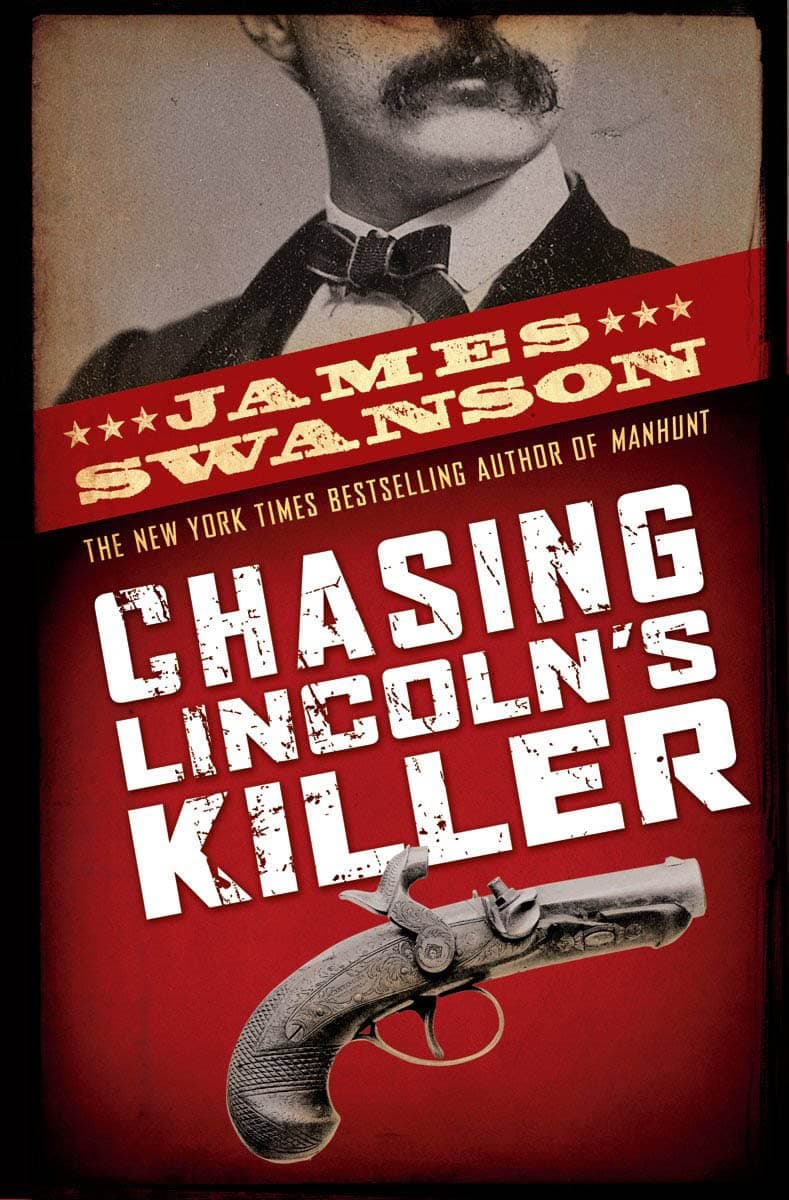
John Wilkes Booth
Quick Facts
- Role: Central antagonist; acclaimed stage actor turned presidential assassin
- First appearance: As a charismatic celebrity and fervent Confederate sympathizer in Washington’s theater world, leading up to Ford’s Theatre on April 14, 1865
- Key relationships: Abraham Lincoln (target), David Herold (accomplice), Lewis Powell, George Atzerodt, Mary Surratt, Dr. Samuel A. Mudd, Thomas Jones; primary focus of the twelve-day Manhunt and Pursuit
Who They Are
A born performer who believes the world is his audience, John Wilkes Booth turns politics into theater and theater into politics. He casts himself as a Southern Brutus, certain that killing Lincoln will crown him with immortal honor. Instead, the book tracks his transformation—from celebrated idol to hunted criminal—showing how vanity and ideological zeal curdle into self-destruction during the relentless Manhunt and Pursuit.
Personality & Traits
Booth’s personality fuses grandiose self-regard with fanatical conviction. His actor’s poise gives him persuasive power, but his thrill-seeking impulsiveness undercuts his planning. The result is a man who stages his crime like a climactic scene yet cannot control the fallout when the curtain refuses to drop.
- Vain and narcissistic: Swanson describes him as “impossibly vain,” “handsome and appealing,” with eyes “like living jewels.” He choreographs the assassination to land on a laugh line, then leaps to center stage to shout a motto, prioritizing spectacle over escape.
- Charismatic and theatrical: A master of performance, he recruits followers and slides past obstacles—most notably talking his way over the Navy Yard Bridge with Sergeant Cobb—by capitalizing on his charm and confidence.
- Fanatical and racist: Lincoln’s speech proposing Black suffrage triggers Booth’s decision to kill, revealing his devotion to slavery and Southern “honor,” convictions rooted in the mythology of The 'Lost Cause' and Southern Honor.
- Impulsive and reckless: He arms himself with a single-shot Deringer, boasts to John Lloyd minutes after the crime, and repeatedly chooses risk for the thrill of it—choices that hasten his capture.
- Determined and ruthless: He threatens George Atzerodt for wavering, executes his own task with precision, and vows never to be taken alive—an oath he keeps.
- Stage-idol looks as identity: His “physical beauty astonished all who saw him,” and on the night of the assassination he dresses in black felt hat, wool coat, fitted pants, and knee-high riding boots with spurs—costuming himself, even for murder.
Character Journey
Booth begins as a wealthy celebrity scheming to kidnap Lincoln—a plan built on fantasy and bravado. When Confederate defeat crushes his hopes, he escalates to assassination, convinced that one bold stroke will redeem the South and immortalize him. His onstage flourish at Ford’s Theatre, followed by a broken leg, marks the pivot: the actor becomes the quarry. Dependent on David Herold, patched up by Dr. Mudd, hidden by Thomas Jones, he spends days in a pine thicket reading newspapers that brand him not savior but coward. A misdirected river crossing briefly feeds his illusions—“I’m safe in glorious old Virginia”—before the net tightens. At Garrett’s barn, he again seeks to script a finale, demanding a duel as flames rise, but Boston Corbett’s bullet silences the performance. Paralyzed, staring at his hands, he dies not as a hero of the South, but as the emblem of his own miscalculation.
Key Relationships
- Abraham Lincoln: Booth fixates on Lincoln as a “tyrant” responsible for the South’s ruin. Killing the president is meant to be a mythic strike that restores Southern honor; instead it exposes Booth’s moral bankruptcy and accelerates national mourning and resolve.
- David Herold: Herold becomes Booth’s crutch—navigator, messenger, and emotional prop. Booth’s late insult (“damned coward”) can’t obscure his dependence; without Herold’s guidance through swamp and river, Booth’s escape collapses.
- Lewis Powell: Powell’s brutal attack on Secretary Seward reflects Booth’s ability to inspire violent loyalty. Powell’s fearless obedience contrasts with Booth’s theatricality, highlighting the difference between staged bravado and raw brutality.
- The conspirators: As leader of his “little band,” Booth manipulates and threatens George Atzerodt and enlists Mary Surratt’s tavern as a logistical hub—relationships that embody the book’s theme of Conspiracy and Betrayal, where loyalty is coerced and collapses under pressure.
- Southern sympathizers (Dr. Mudd, Capt. Cox, Thomas Jones): Their aid—medical care, concealment, and a river crossing—shows how deep Confederate loyalties complicate justice. Yet every favor also diminishes Booth, making the “hero” a supplicant.
Defining Moments
Booth tries to direct history as if it were a play. Each set piece reveals both his cunning and his delusions.
- The assassination at Ford’s Theatre (April 14, 1865): He times the shot to a laugh line in Our American Cousin, leaps, breaks his leg, and shouts “Sic semper tyrannis!” Why it matters: It’s the apex of his theatrical self-image—and the instant his myth collapses into a botched escape.
- Hiding in the pine thicket (April 16–20): Dependent on Thomas Jones for food and news, Booth reads papers that denounce him and writes in his diary to salvage his legacy. Why it matters: He confronts a country that refuses his script; the audience he courted hisses.
- Crossing the Potomac (April 20 & 22): After rowing the wrong way, he finally reaches Virginia and exults, “I’m safe in glorious old Virginia, thank God!” Why it matters: A fleeting “triumph” that underscores how he mistakes geography for vindication and underestimates the pursuit.
- The standoff at Garrett’s farm (April 26): Cornered in a tobacco barn, he demands a duel and refuses surrender until fire and a single shot end the scene. Why it matters: His final attempt to control the narrative ends in paralysis and the recognition of failure.
Themes & Symbolism
Booth personifies the book’s meditation on Heroism vs. Villainy. He sees himself as Brutus—purging tyranny—yet history frames him as a cowardly assassin who substitutes vanity for virtue. His descent shows how ideological fanaticism, fused with the hunger for fame, breeds catastrophic violence. The twelve-day chase becomes an emblem of national justice: a country moving from shock to pursuit, from grief to accountability.
Essential Quotes
“Now, by God, I’ll put him through.” Booth’s immediate response to Lincoln’s speech on Black suffrage exposes the racist core of his motivation. The line collapses any pretense of constitutional principle into rage at Black political rights, aligning his violence with white supremacist panic rather than noble rebellion.
“Sic semper tyrannis! . . . The South is avenged!” By quoting a republican motto while fleeing a murder, Booth tries to cloak assassination in classical virtue. The irony is stark: his cry aims for Roman gravitas, but his broken leg and chaotic escape reveal mere theatrics, not statesmanship.
“I am pretty certain that we have assassinated the president and Secretary Seward.” Bragging to John Lloyd minutes after the crime, Booth can’t resist seeking applause. The boast reveals his compulsive need for recognition and helps incriminate the conspiracy—his vanity overruling prudence.
“Well, my brave boys, prepare a stretcher for me!” At Garrett’s barn, Booth turns a military standoff into a macabre curtain call. The bravado masks desperation, and the “stretcher” he summons becomes a symbol of how his quest for glory ends in helplessness.
“Useless, useless.” Staring at his paralyzed hands, Booth confronts the collapse of his self-conception: the actor’s tools and assassin’s instruments alike have failed him. The repetition registers a final, tragic self-awareness—his life’s performance has produced only infamy.