What This Theme Explores
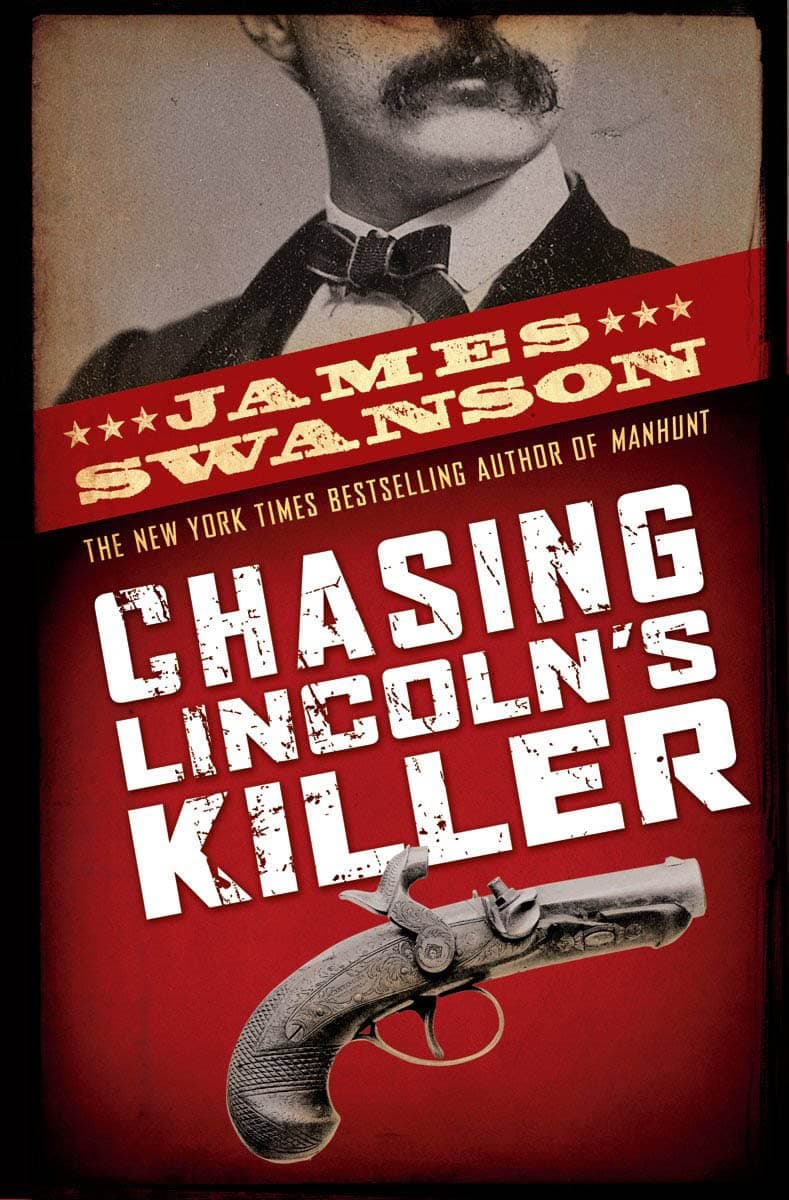
Manhunt and Pursuit asks what happens when a single violent act upends a nation and triggers its institutions, citizens, and technologies into motion. It tracks the unstable balance between a fugitive’s improvisation and the state’s expanding capacity to find him, showing how fear, chance, and ingenuity shape outcomes. At its core, the theme interrogates whether speed, organization, and information can overcome luck, secrecy, and local loyalties—and what costs both sides incur in that struggle. In Chasing Lincoln’s Killer, the chase for John Wilkes Booth becomes the crucible through which the nation seeks justice and reasserts order.
How It Develops
The pursuit begins in chaos. As Washington reels, David Herold guides Booth out of the city in the darkness, slipping across the Navy Yard Bridge while rumors, fear, and confusion stall an organized response. Within hours, however, Edwin M. Stanton converts shock into command. From the Petersen House, he centralizes authority, mobilizes troops, and turns scattered suspicion into a single, coordinated hunt.
The manhunt gains force and reach as information catches up to the fugitives’ head start. Telegraph lines stitch distant outposts into a moving net; cavalry detachments fan out through Maryland’s byways. The fugitives survive not by speed but by silence and sympathy: they seek shelter with Dr. Samuel A. Mudd and vanish for days under the care of Thomas Jones, whose discretion holds the entire Union apparatus at bay. Meanwhile, the net tightens elsewhere: Lewis Powell and George Atzerodt are tracked down, proof that the government’s widening search is beginning to bear fruit.
In the final phase, chance tips into inevitability. Booth and Herold slip across the Potomac and then the Rappahannock, but a chance encounter with Willie Jett supplies the cavalry the thread they need to follow. The pursuit, now a straight line rather than a search grid, drives to the Garrett farm. There, the state’s patience and firepower corner the fugitives; the barn is set alight, Herold gives himself up, and a single shot ends Booth’s flight. What began as a chaotic scatter resolves into a relentless point of contact.
Key Examples
-
Stanton’s Immediate Response: Within hours of the assassination, Stanton transforms the Petersen House into a field headquarters, turning panic into policy and motion.
Stanton took charge, making the back parlor of the Petersen house his field office... Stanton ordered troops to turn out into the streets, the guards to be doubled, military forts to be alert, guns manned... Stanton turned to his second mission, launching the investigation into the crimes... He was determined to catch the criminals. This scene in the Full Book Summary defines the hunt’s tone—centralized, swift, and exhaustive—showing how bureaucratic will can become kinetic force.
-
The Near Miss at Mudd’s Farm: As cavalry occupy Bryantown, they unknowingly press within miles of Booth convalescing at Mudd’s home.
Lieutenant Dana had led his troops into Bryantown... and occupied the town. Dana intended to establish a command center there... They were just a few miles from Mudd’s farm. This was the closest the pursuers had gotten to Booth since the assassination. As detailed in the Chapter 6-10 Summary, the episode spotlights the manhunt’s dependence on timing and incomplete information: proximity without intelligence remains impotence.
-
The Reward Poster: Stanton’s $100,000 offer nationalizes the search by converting private citizens into eyes and ears. Described in the Chapter 11-14 Summary, the poster embodies the state’s power to rewire social incentives, making trust scarce for fugitives and rumor suddenly valuable.
-
The Standoff at Garrett’s Farm: The decision to burn the tobacco barn forces a stalemate into a conclusion. The dialogue, the flames, and Boston Corbett’s shot reveal a final escalation in which the machinery of the manhunt—patience, pressure, and force—compresses into one irreversible moment.
Character Connections
Booth, the quarry, dramatizes pursuit from the inside out: his broken leg slows him physically as newspapers and broadsides assault him psychologically. He clings to vanity and a fading Confederate dream even as his world shrinks to thickets and barns. Herold, indispensable as a guide, embodies the limits of endurance; his surrender at Garrett’s farm marks the breaking point where survival overrides loyalty.
On the other side of the chase, Stanton personifies the state’s will: he coordinates military units, detectives, and communications not simply to punish a killer but to stabilize a wounded republic. Field operatives like Lafayette Baker, Everton Conger, and Edward Doherty translate that will into motion—gathering leads, riding hard, and, ultimately, standing face-to-face with the fugitives. Their work shows how a manhunt relies on both centralized command and decentralized initiative.
Between these poles stand the enablers whose choices complicate the pursuit. Mudd’s treatment of Booth’s injury and Jones’s meticulous concealment in the pine thicket expose the hunt’s hidden battlefield: loyalty networks and local knowledge. Jones, especially, functions as a counter-hunter; his silence and strategy stall a nation’s momentum, proving that a single determined individual can jam vast gears—if only temporarily.
Symbolic Elements
-
The Telegraph: Speed itself becomes a weapon. While Booth moves at the pace of horses and hiding places, wire-born orders and alerts collapse distances for his pursuers, shrinking the map until there is almost nowhere to go.
-
The Rivers (Potomac and Rappahannock): These crossings mark thresholds—hope and hazard at once. For Booth, they promise safety in Confederate country; for the cavalry, they are chokepoints that convert a broad search into a directed pursuit.
-
Booth’s Broken Leg: The injury literalizes hubris curdling into limitation. What began as theatrical bravado becomes a signature the manhunt can follow, forcing dependence on helpers and leaving traces the state can read.
Contemporary Relevance
The architecture of this pursuit prefigures modern manhunts: a blend of rapid communication, public mobilization, and tactical deployment chasing suspects who leverage local knowledge and opacity. Where the telegraph once accelerated command, today GPS, surveillance networks, and digital media crowdsource attention and compress time. The same pressures endure—the demand for swift justice after national trauma, the uneasy trade-offs between security and civil liberties, and the way rumor, reward, and fear shape behavior—making this nineteenth-century chase feel startlingly current.
Essential Quote
Stanton took charge, making the back parlor of the Petersen house his field office... Stanton ordered troops to turn out into the streets, the guards to be doubled, military forts to be alert, guns manned... Stanton turned to his second mission, launching the investigation into the crimes... He was determined to catch the criminals.
This passage crystallizes Manhunt and Pursuit as institutional resolve made visible. It shows how, in moments of crisis, the state converts grief into action, deploying organization and technology to reclaim control. The entire narrative—its urgency, scope, and ultimate closure—unfolds from this first decisive turn from chaos to pursuit.