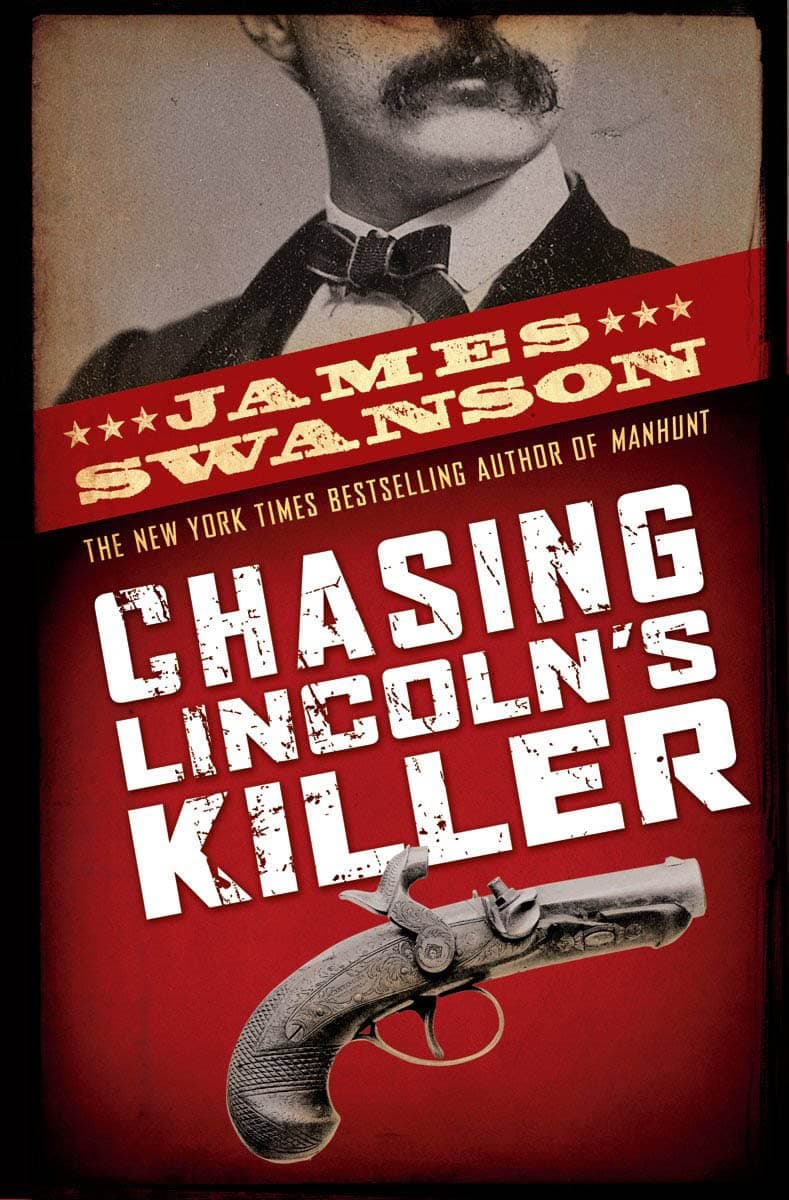
Chasing Lincoln’s Killer: A Guide
At a Glance
- Genre: Narrative nonfiction (YA adaptation of Manhunt: The 12-Day Chase for Lincoln’s Killer)
- Setting: Washington, D.C., Maryland, and Virginia, April 1865
- Perspective: Fast-paced third-person narrative built from primary sources and official records
Opening Hook
The Civil War is over—or so the nation believes—when a celebrated actor slips through a theater corridor and rewrites American history. In a single gunshot, triumph collapses into mourning and chaos. What follows is a feverish 12-day pursuit across swamps, farms, and river crossings, where every rumor, road, and shadow matters. James L. Swanson’s Chasing Lincoln’s Killer turns a national tragedy into a relentless chase story, one that makes the past thrum with urgency.
Plot Overview
Act I: The Assassination Washington revels in Union victory as John Wilkes Booth, a famous actor enraged by defeat and by Abraham Lincoln’s evolving vision for Black citizenship, abandons a failed kidnapping scheme for a deadlier plan. As laid out in the Prologue, Booth organizes a coordinated strike on the nation’s leaders: Lewis Powell will attack Secretary Seward; Lewis Powell carries out a savage assault in Seward’s home; George Atzerodt, assigned to kill Vice President Johnson, loses his nerve. Booth himself slips into Ford’s Theatre on April 14, 1865, fires one shot into Lincoln’s skull during Our American Cousin, breaks his leg leaping to the stage, and vanishes into the night shouting “Sic semper tyrannis.” The shock, confusion, and first waves of grief and fury sweep the capital, as covered in the Chapter 1-5 Summary.
Act II: The Manhunt With the president mortally wounded, Secretary of War Edwin M. Stanton seizes command, turning Washington into a nerve center and launching the largest manhunt in American history. Booth flees into the Maryland countryside with David Herold, leaning on a clandestine network of Southern sympathizers. They arm themselves at Surratt’s Tavern, run by Mary Surratt; seek medical aid from Dr. Samuel A. Mudd, who sets Booth’s broken leg; and vanish for days in a pine thicket while Thomas Jones, a seasoned Confederate operative, smuggles them food, newsprint, and hope. Newspapers brand Booth a villain, not a hero—an affront that stings his actor’s vanity. Jones eventually pilots them across the Potomac into Virginia, where pursuit tightens, as chronicled in the Chapter 6-10 Summary.
Act III: The Final Confrontation Believing Virginia friendly ground, Booth and Herold rely on ex-Confederates who instead help direct Union cavalry to their trail. The Chapter 11-14 Summary follows the 16th New York Cavalry to Richard Garrett’s farm, where the fugitives take refuge in a tobacco barn. When soldiers surround it before dawn on April 26, Herold surrenders; Booth refuses, vowing never to be taken alive. The barn is torched, and through its fiery slats a trooper’s bullet shatters Booth’s spine. Dragged to the porch, paralyzed and fading with the sunrise, he dies without the applause he craved. In the Epilogue, a military tribunal hangs Powell, Herold, Atzerodt, and Mary Surratt; others, including Dr. Mudd, receive prison sentences. The chase ends, the wound to the nation does not.
Central Characters
Chasing Lincoln’s Killer thrives on larger-than-life figures whose choices steer history. For more, see the full Character Overview.
The Hunters
- Edwin M. Stanton: The government’s iron will. Stanton directs the search with cold precision and tireless discipline, transforming public rage into coordinated action.
- Lafayette Baker, Everton Conger, and Luther Byron Baker: Detectives and cavalrymen who grind through false leads and long miles, driven by duty—and a substantial reward—to close the net.
The Hunted
- John Wilkes Booth: Charismatic and celebrated, yet narcissistic and fanatical; he scripts himself as a Southern avenger but wakes to the reality of infamy. His hunger for recognition becomes the mirror that damns him.
- David Herold: Younger, impressionable, and useful in the wild; he aids Booth’s escape but capitulates under pressure, eager to save himself.
- Lewis Powell: A brutal ex-soldier, steadfast to orders and terrifying in action; his attack on the Seward household is the book’s most harrowing domestic battlefield.
- Dr. Samuel A. Mudd: The physician who sets Booth’s leg. Whether dupe or conspirator remains contested, and Swanson lets the ambiguity work on the reader.
Major Themes
A broader discussion appears in the Theme Overview.
-
Manhunt and Pursuit Swanson structures the book like a thriller, cutting between fugitive and pursuer to compress time and heighten stakes. The chase becomes a national spectacle, revealing how logistics, luck, and human error decide outcomes.
-
Justice vs. Vengeance The immediate cry is for payback, but Stanton steers the nation toward legal process and a military tribunal. The narrative probes whether methodical justice can calm a public grief-stricken and enraged.
-
Conspiracy and Betrayal Booth’s plot depends on secrecy and loyalty, yet cracks open under pressure: loose talk, sudden panic, and self-preservation. Betrayals—formal confessions and casual revelations—prove more decisive than gunfire.
-
The 'Lost Cause' and Southern Honor Booth imagines himself a knight of a defeated South, acting for honor against tyranny. The book contrasts that fantasy with the republic’s verdict on his deed, dismantling the mythology that tried to sanctify violence.
-
Heroism vs. Villainy Lincoln stands as martyr; Booth, as murderer. Yet figures like Thomas Jones and Dr. Mudd complicate the moral map, showing how loyalty, fear, and region can blur the line between courage and complicity.
Literary Significance
Swanson demonstrates how history can move like a thriller without sacrificing rigor. For young readers especially, the book unlocks a complex event through character, pace, and scene—telegrams snapping, horses pounding, headlines screaming—while anchoring every flourish in documented fact. Its use of direct Quotes and official records gives the narrative a courtroom’s credibility with a novel’s momentum, making it a staple in classrooms and a gateway to serious historical inquiry.