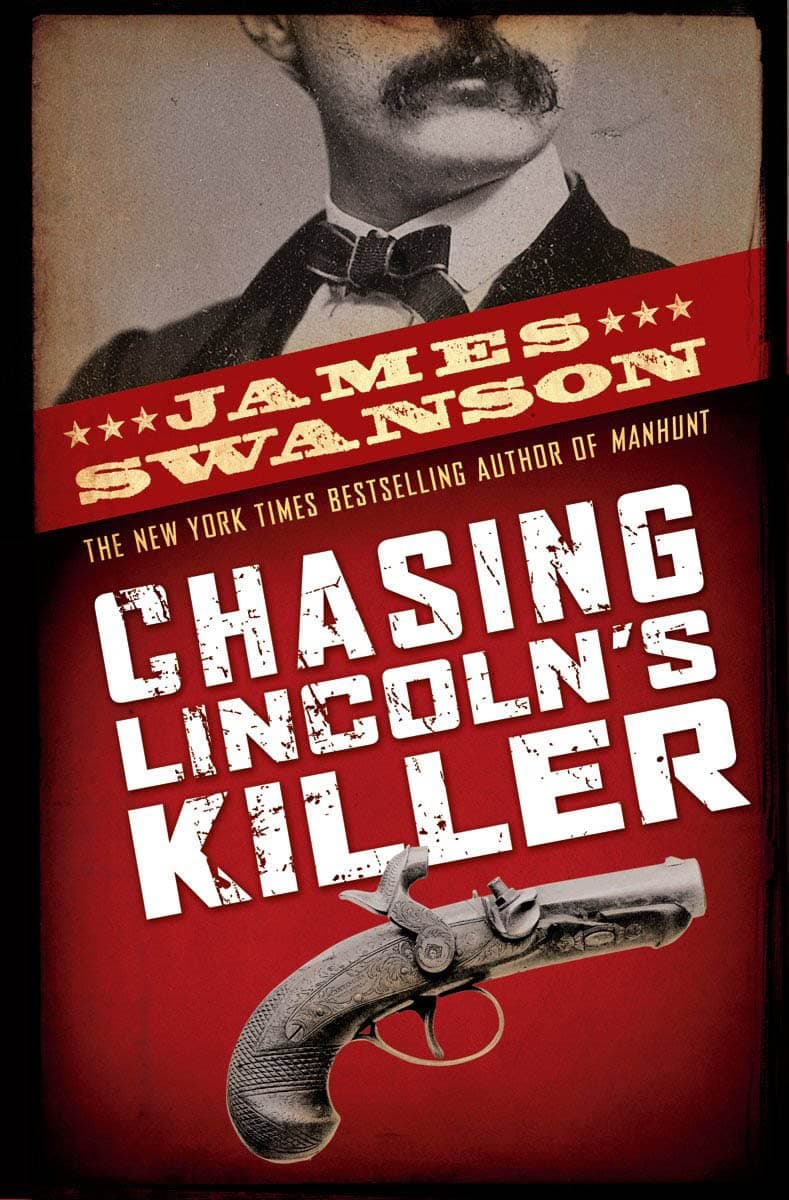
This guide maps the real people who drive the action in James L. Swanson’s nonfiction thriller, Chasing Lincoln’s Killer. Across a traumatized nation in April 1865, leaders, conspirators, and ordinary citizens are pulled into a night of violence and a nationwide pursuit. At the center stand a fallen president, his assassin, and the relentless official who marshals the hunt.
Main Characters
Abraham Lincoln
Abraham Lincoln, the 16th president, is the assassination’s target and the moral center whose death throws a recovering nation back into grief. In his final days he is portrayed as optimistic and unburdened, a loving husband and father anticipating peace after victory in the Civil War. His relationships—with Mary Todd Lincoln and their sons, and with close advisers like Edwin M. Stanton and William H. Seward—underscore his human warmth as well as his symbolic role as the Union’s guardian. His quiet night at Ford’s Theatre becomes a national catastrophe, and the Prologue shows how his murder transforms him from wartime leader to martyr whose legacy binds the country’s wounds.
John Wilkes Booth
John Wilkes Booth, a celebrated actor and ardent Confederate sympathizer, is the plot’s mastermind and the catalyst for the 12-day manhunt. Vain, charismatic, and theatrical, he casts himself as the South’s avenger, directing Lewis Powell, David Herold, and George Atzerodt while leaning on allies like Dr. Samuel A. Mudd, Mary Surratt, and Thomas Jones to flee. His escape—tracked across chapters 6-10 and 11-14—begins with bravado but devolves into injury, isolation, and paranoid self-justification. Cornered at the Garrett farm, he dies not as the hero he imagined, but as the nation’s most reviled villain.
Edwin M. Stanton
Edwin M. Stanton, the hard-driving Secretary of War, becomes the nation’s stabilizing force and the manhunt’s de facto commander. In the chaos after Lincoln is shot, he seizes control from a room in the Petersen house, using the telegraph, military command, and detective networks to impose order. Brilliant, organized, and unyielding, he directs officers, agents, and cavalry—including controversial detectives and field commanders—to close the net on Booth and his accomplices. Stanton embodies the book’s tension between due process and payback, sharpening the theme of Justice vs. Vengeance as he strives to restore national authority without surrendering to mob fury.
Supporting Characters
Lewis Powell
Lewis Powell is the brutal enforcer tasked with murdering Secretary of State Seward, hacking his way through the household with terrifying force. A battle-hardened Confederate loyal to Booth, he nearly succeeds and vanishes into the city, only to blunder back to Mary Surratt’s door and be captured. Tried as a principal conspirator, he is hanged.
David Herold
David Herold is the youthful outdoorsman who guides Powell to Seward’s house and then becomes Booth’s constant companion on the run. Skilled in the countryside yet easily cowed, he abandons Powell, shepherds the injured Booth through Maryland, and ultimately surrenders at the Garrett farm. His hope to talk his way free fails; he is convicted and executed.
George Atzerodt
George Atzerodt, a nervous conspirator assigned to kill Vice President Andrew Johnson, loses his nerve, drinks, and abandons the job. His loose talk and incriminating evidence swiftly expose him to authorities, and his confession implicates others in Booth’s circle. He is tried and hanged.
Mary Surratt
Mary Surratt owns the boardinghouse that functions as the conspirators’ hub, quietly ferrying messages and preparing supplies. A devout Catholic and Confederate sympathizer, she delivers a package and orders “shooting irons” readied on the day of the attack. Her denial of knowing Powell collapses under questioning; she is convicted and becomes the first woman executed by the U.S. federal government.
Dr. Samuel A. Mudd
Dr. Samuel A. Mudd sets Booth’s broken leg and shelters the fugitives, then lies to investigators—actions shaped by his Confederate sympathies and prior acquaintance with Booth. As news of the assassination spreads, his evasions unravel and reveal his role in aiding the escape. He is sentenced to life in prison.
Thomas Jones
Thomas Jones, a seasoned Confederate agent, rescues the fugitives at their most perilous moment. With patience and cunning, he hides Booth and Herold for days in a pine thicket and then orchestrates their clandestine Potomac crossing into Virginia. His mastery of local terrain outwits thousands of searchers.
Colonel Lafayette Baker
Colonel Lafayette Baker is the ambitious, controversial detective who helps coordinate the urban end of the search from Washington. Partly driven by reward money, he channels tips and telegraphs that push the cavalry toward Booth’s final refuge. His showmanship coexists with real effectiveness.
Lieutenant Edward P. Doherty
Lieutenant Edward P. Doherty commands the Sixteenth New York Cavalry detachment that traps Booth and Herold at the Garrett farm. Calm under pressure, he manages the standoff and captures Herold while attempting to take Booth alive.
Boston Corbett
Boston Corbett, an eccentric and fervently religious sergeant under Doherty, fires the fatal shot that kills Booth in the barn. Convinced Providence guided his hand, he embodies the era’s volatile blend of faith, zeal, and frontier justice.
William H. Seward
William H. Seward, Secretary of State and Lincoln’s ally, survives Powell’s savage knife attack while bedridden after a carriage accident. His scarred face becomes a living testament to the conspiracy’s reach.
Major Henry Rathbone
Major Henry Rathbone, seated with the Lincolns at Ford’s Theatre, grapples with Booth in the box and is gravely wounded. The trauma haunts him, marking him as both a witness and secondary victim of the plot.
Clara Harris
Clara Harris, Rathbone’s fiancée, shares the presidential box and endures the night’s horrors, stained with blood and indelible memory. Her poised presence contrasts with the chaos around her.
Dr. Charles Leale
Dr. Charles Leale, a young army surgeon in the audience, reaches Lincoln first and stabilizes him enough to be moved. His decisive, calm care extends the president’s life for nine hours, affording the nation a vigil.
Laura Keene
Laura Keene, star of Our American Cousin, cradles Lincoln’s head as the playhouse becomes a crime scene. Her compassionate impulse turns a theatrical evening into a tableau of national mourning.
Minor Characters
- John Lloyd: Keeper of Surratt’s tavern who stores the conspirators’ hidden “shooting irons,” later providing pivotal testimony that links Mary Surratt to the plot.
- Captain Samuel Cox: Southern sympathizer who shelters Booth briefly and connects him to Thomas Jones, enabling the river escape plan.
- Everton Conger: Detective who rides with Doherty’s cavalry and relays crucial intelligence that tightens the dragnet.
- Mary Todd Lincoln: The First Lady whose evening of lighthearted respite ends in unfathomable loss, a personal tragedy mirroring national grief.
- Robert Lincoln: The Lincolns’ eldest son, a dutiful presence at his father’s side in the aftermath, representing the family’s public face of mourning.
- Tad Lincoln: The youngest Lincoln son, shielded from details but emblematic of the innocence shattered by the assassination.
- John Harrison Surratt: Mary Surratt’s son and Confederate courier, a shadowy offstage participant whose absence complicates the case against his mother.
- Andrew Johnson: Vice President and Atzerodt’s intended target, spared by Atzerodt’s cowardice and thrust into the presidency amid crisis.
- The Garrett family: Virginia farmers who shelter the fugitives, then lock Booth in their tobacco barn as troops close in—a final, fatal betrayal.
- Dr. Richard Stuart: A Virginia physician who refuses Booth aid, reflecting Southerners eager to distance themselves from the crime.
- Fanny Seward: The Secretary of State’s daughter, a terrified witness whose presence underscores the attack’s assault on a family home.
Character Relationships & Dynamics
At the center stands a stark triangle: Lincoln’s unifying calm is shattered by Booth’s fanatical violence, which in turn summons Stanton’s iron resolve. Lincoln’s circle—his family, Seward, and key cabinet members—embodies a fragile hope for reconciliation, while Stanton converts that hope into action, creating a nerve center of command that steadies the republic. Their differing roles align around a single purpose: to preserve national order in the face of chaos.
Opposing them is Booth’s conspiracy, a tight but unstable network bound by ideology and fear. Booth inspires obedience in Powell and Herold and coerces participation from the weaker Atzerodt, while depending on sympathizers like Mary Surratt, Dr. Mudd, and Thomas Jones for safe houses, treatment, and passage. Yet the same network frays under pressure: Atzerodt’s failure, Powell’s capture at Surratt’s door, Mudd’s lies, and the Garretts’ final refusal all expose the plot’s brittleness.
The pursuit itself forms a counter-network. Stanton orchestrates a cascade of orders through detectives such as Lafayette Baker and field leaders like Doherty, with men like Everton Conger translating rumor into route, and Boston Corbett embodying the manhunt’s perilous edge when lethal force eclipses the aim of taking Booth alive. In this clash of webs—conspirators versus manhunters—civilians become decisive: John Lloyd’s testimony, Thomas Jones’s woodland cunning, and the Garrett family’s locked barn door tip the balance.
These interlocking relationships reveal clear groupings—Booth’s inner circle of attackers, his logistical accomplices, and Stanton’s layered command—while also highlighting how loyalties bend under fear, principle, and opportunity. Across twelve days, alliances harden or break, and personal choices—whether compassionate, craven, or calculating—reshape the national story in the wake of Lincoln’s death.