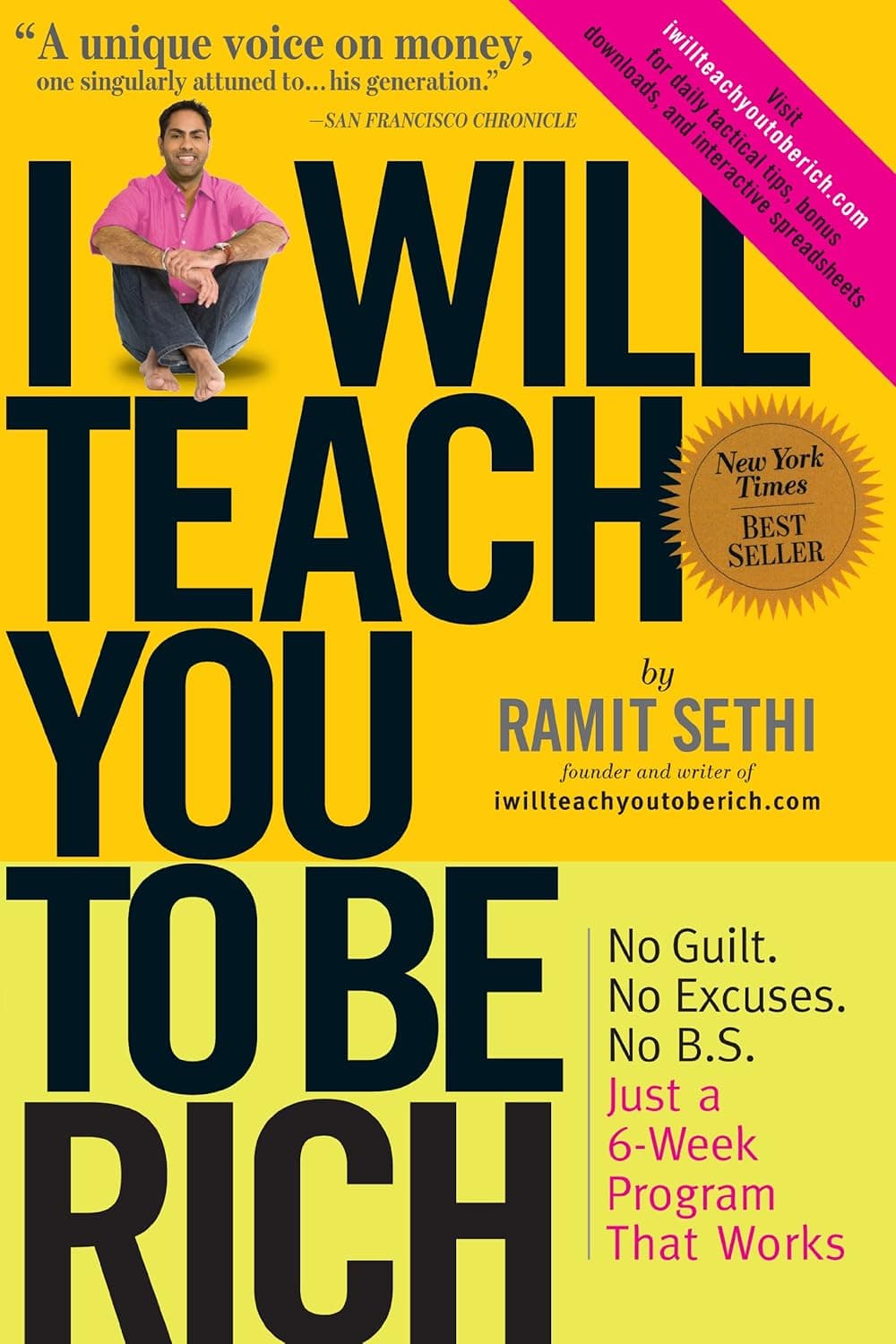
John
Quick Facts
- Role: Case study of Conscious Spending in I Will Teach You to Be Rich
- First appearance: Page 98, in the section “How My Friend Spends $21,000 Per Year Going Out—Guilt-Free”
- Occupation: High-earning professional with a “healthy six-figure” salary
- Key relationships: Friend of Ramit Sethi; contrasted with coworkers who spend differently
- Notable: No physical description—John exists to illustrate a financial principle, not to serve as a fully rounded narrative character
Who He Is
Boldly unapologetic and meticulously planned, John embodies the book’s promise: you can spend extravagantly on what you love if you prioritize saving and investing first. He goes out four nights a week and spends over $21,000 a year on dinners and bars—choices that would look reckless without context. With context, they become the logical end point of a system designed around self-knowledge: he automates his investments because he knows he won’t do it manually, and he ruthlessly cuts spending on everything he doesn’t care about.
Personality & Traits
John’s personality is defined by high energy in his social life and high discipline in his systems. He’s not frugal in the traditional sense; he’s precise. By choosing not to spend on low-value categories, he makes room to spend heavily on his highest priority: connection and nightlife.
- Social and extroverted: Goes out four times a week, allocating roughly 21,000 annually—because socializing is what he values most.
- Hardworking: Earns a “healthy six-figure salary” and “almost never takes vacations,” signaling intense professional commitment that underwrites his spending plan.
- Self-aware: Admits he’ll never remember to transfer money regularly, so he designs around that limitation rather than denying it.
- System-oriented: Automates investment withdrawals so he “pays himself first,” ensuring long-term goals are met before discretionary spending begins.
- Decisive prioritization: Skips expenses he doesn’t care about—vacations, apartment decor, even basic kitchen tools like a spatula—to funnel resources into what he loves.
Character Journey
John is a static example rather than a developing character. He appears fully formed on page 98 as a “conscious spender,” already living a plan that others are invited to adopt. His arc is conceptual: the shock of his headline spending gives way to the reveal of a disciplined structure—automated saving and investing, clear priorities, and guilt-free enjoyment. Across pages 98–102, the text uses him to flip a common script: being “good with money” is not about deprivation; it’s about designing a life where your systems handle the boring parts so your spending can reflect your values.
Key Relationships
-
Ramit Sethi: As John’s friend and narrator, Ramit frames him as a litmus test for the reader’s assumptions about money. Ramit doesn’t demand agreement with John’s choices; he highlights the thinking and planning behind them, arguing that intention and execution matter more than conventional frugality.
-
Coworkers: John’s coworkers embody a different set of priorities—like impromptu weekend trips to Europe—that he declines. Their presence clarifies John’s agency: he isn’t keeping up with peers; he’s actively choosing against status spending that doesn’t match his values.
Defining Moments
John’s moments aren’t dramatic scenes but revealing choices that make his system visible. Each shows how intentional neglect of low-value categories frees him to spend lavishly—without guilt—on what matters most.
-
Introduction: “How My Friend Spends $21,000 Per Year Going Out—Guilt-Free” (p. 98)
- Why it matters: The eye-popping number challenges the reflexive belief that big spending equals irresponsibility, setting up the deeper lesson about planning and automation.
-
Passing on the Europe weekend (p. 101)
- Why it matters: A concrete example of saying “no” to glamorous, peer-approved spending, proving that prioritization requires real trade-offs.
-
“Almost never takes vacations” (p. 101)
- Why it matters: Shows that even high earners have finite resources—time and money—and that John protects his top priority (social life) by cutting elsewhere.
-
Automating investments (p. 102)
- Why it matters: The linchpin of his approach. By removing willpower from the equation, he ensures long-term goals are met before any discretionary dollar is spent.
Themes & Symbolism
John symbolizes the book’s vision of Defining a "Rich Life": a life structured so your money aligns with your values. His character rejects the “cheap equals responsible” mindset; instead, he models empowerment through clarity and systems. By mercilessly cutting non-essentials (to him) and spending freely on what he loves, he demonstrates that financial responsibility is less about restriction and more about design.
Essential Quotes
“My friend ‘John’ spends more than 21,000 a year going out. ‘OMG, THAT’S SO MUCH *#%#%#% MONEY!’ you might say. Well, let’s break it down. Say he goes out four times a week—to dinners and bars—and spend an average of 100/night.” (Page 98)
This quote reframes shock as math. By itemizing the habit, Ramit shows that “outrageous” spending can be the predictable result of consistent choices—neither accidental nor inherently irresponsible.
“Now, John also makes a healthy six-figure salary, so he’s been able to make a Conscious Spending Plan without much difficulty. But even he has to decide what he doesn’t want to spend on. For example, when his coworkers took a weekend trip to Europe (I am not kidding), he politely passed. In fact, because he works so hard, he almost never takes vacations.” (Page 101)
Here, income alone doesn’t justify indulgence; prioritization does. John’s “no” to Europe and vacations grounds his “yes” to nightlife, illustrating that a rich life requires active trade-offs.
“The key here is that John knows himself and has set up systems to support his weaknesses.” (Page 102)
Self-knowledge becomes a financial tool. Rather than aspiring to impossible discipline, John automates behavior—turning a personal limitation into consistent, wealth-positive action.
“The point here is that whether or not I agree with his choices, he’s thought about it. He sat down, considered what he wanted to spend on, and is executing that plan. He’s doing more than 99 percent of the young people I’ve talked to.” (Page 102)
Ramit’s endorsement isn’t about the categories John funds; it’s about intentionality and follow-through. The benchmark of success is a plan aligned with values and consistently executed—an attainable model for readers who don’t share John’s preferences but can adopt his process.