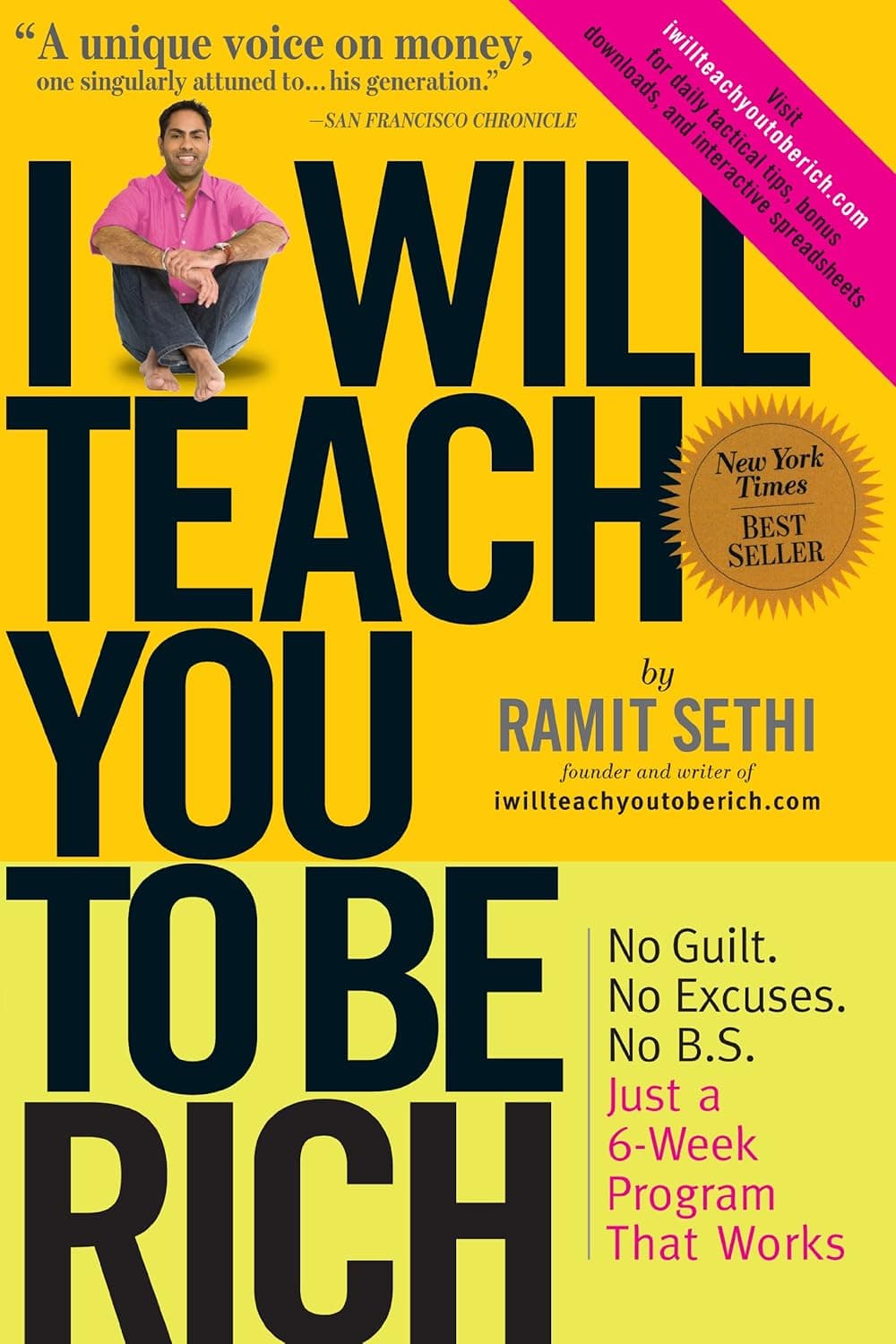
In I Will Teach You to Be Rich, the “cast” blends a sharp-tongued teacher, an ambitious student, a handful of mentors and models, and a faceless system to outsmart. Set in the everyday world of bank accounts, credit cards, and index funds, these figures animate a six-week journey from confusion to clarity. The true protagonist is the reader, coached by Ramit Sethi to define and live a personal version of a rich life.
Main Characters
Ramit Sethi
As author and narrator, Ramit Sethi plays the guiding mentor who translates intimidating money decisions into simple, high-impact actions. His voice is direct, funny, and relentlessly practical, pushing behavioral change over endless research through the 85% Solution. Having lost half his first scholarship in the market, he committed to mastering personal finance, taught friends at Stanford, then built a system others could replicate. His mission is to arm you to beat the fee-hungry system and design your own Rich Life, drawing on lessons from his parents and validation from fellow experts while keeping the focus on your actions and results.
The Reader (You)
As the student and hero, The Reader begins overwhelmed by options, paralyzed by guilt or fear, and susceptible to myths about money. Over six weeks, you move from chaos to control: fixing credit cards and bank accounts, creating a Conscious Spending Plan, opening investment accounts, and building an automated financial system. Your journey is driven by small, consistent steps executed automatically, not by chasing hot tips. Along the way, you learn to use the same tools that once exploited you to your advantage, guided by Ramit’s tough love and supported by real-world examples that make “rich” a personal, values-driven target.
Supporting Characters
Prab and Neelam Sethi
As Ramit’s parents, Prab and Neelam Sethi supply the bedrock values of negotiation, discipline, and spending with intention. Their frugal, value-first mindset (think: walking away from a car deal over floor mats) underpins Ramit’s emphasis on never accepting the first offer and defining wealth as more than money. They model the practical wisdom behind a Rich Life—freedom, generosity, and family.
The Financial Establishment (The Antagonists)
As a composite adversary, The Financial Establishment represents the banks, credit card companies, pricey mutual funds, and noisy pundits that profit from confusion. Their fees, teaser rates, and shiny upsells are the friction you learn to sidestep, out-negotiate, or turn to your benefit. In this story, they’re Goliath—formidable yet beatable with a simple system and steady behavior.
John Bogle
Founder of Vanguard, John “Jack” Bogle champions Long-Term, Passive Investing as the most reliable path for everyday investors. His low-cost index funds and data-driven realism demolish the myth that expensive stock-picking beats the market. He stands as the reader’s quiet ally: keep costs low, automate, and let compounding work.
David Swensen
Yale’s legendary endowment chief, David Swensen exemplifies disciplined diversification and sober risk management. His model allocation clarifies how to spread bets simply through broad index funds, while his humility reminds individuals to avoid complex strategies they can’t maintain. He reinforces the book’s mantra: the simplest plan you’ll stick to is the right one.
J.D. Roth
As a trusted peer and guest writer, J.D. Roth validates the book’s philosophy with calm, practical counsel. His stories about staying the course through downturns illustrate dollar-cost averaging and emotional steadiness. He provides a friendly echo of Ramit’s message: consistency beats panic and perfectionism.
Minor Characters
Smart Sally & Dumb Dan
The book’s clearest parable: Smart Sally invests early and briefly yet finishes far ahead of Dumb Dan, who waits and must invest longer and more money—proof that time in the market dominates effort later.
John and Other Friends
Ramit’s anonymized case studies show conscious spending in action: John parties guilt-free because he automates saving and cuts ruthlessly elsewhere; Lisa splurges on designer shoes while keeping housing cheap; Julie, on a modest nonprofit salary, saves thousands with planning.
Reader Testimonials
Voices like Joey Schoblaska, Eric Henry, and Michele Miller offer proof that the system works, sharing wins (fee negotiations, debt payoffs) and cautionary tales that make the journey feel communal and achievable.
Guest Experts
Flexo (getting out of debt), Jim Wang (saving for goals), Gina Trapani (automation), and Trent Hamm (handling raises) provide targeted, step-by-step playbooks that reinforce the book’s core principles.
Character Relationships & Dynamics
The central relationship is the teacher-student bond: Ramit equips, provokes, and simplifies; the reader commits, executes, and owns the results. This partnership is framed as a hero’s journey where the reader learns to turn the system’s weapons—credit cards, bank terms, and mutual funds—into tools for autonomy rather than traps.
Allies form a supportive circle that keeps the hero steady. Prab and Neelam transmit the values that shape Ramit’s tactics; John Bogle and David Swensen supply the intellectual backbone for low-cost, diversified investing; J.D. Roth and guest experts lend peer credibility and tactical depth; testimonials and friend case studies model how a plan flexes to different incomes and priorities. Together, they counter the Financial Establishment’s confusion with clarity, the pundits’ noise with evidence, and perfectionism with action.
Factions emerge cleanly: on one side, the reader, Ramit, mentors, and a community of doers; on the other, a profit-driven establishment incentivized to keep you reactive. The primary conflicts—fees vs. frugality, hype vs. patience, impulse vs. automation—resolve in alliances built around simple systems, negotiated wins, and spending on what you love while cutting mercilessly on what you don’t.