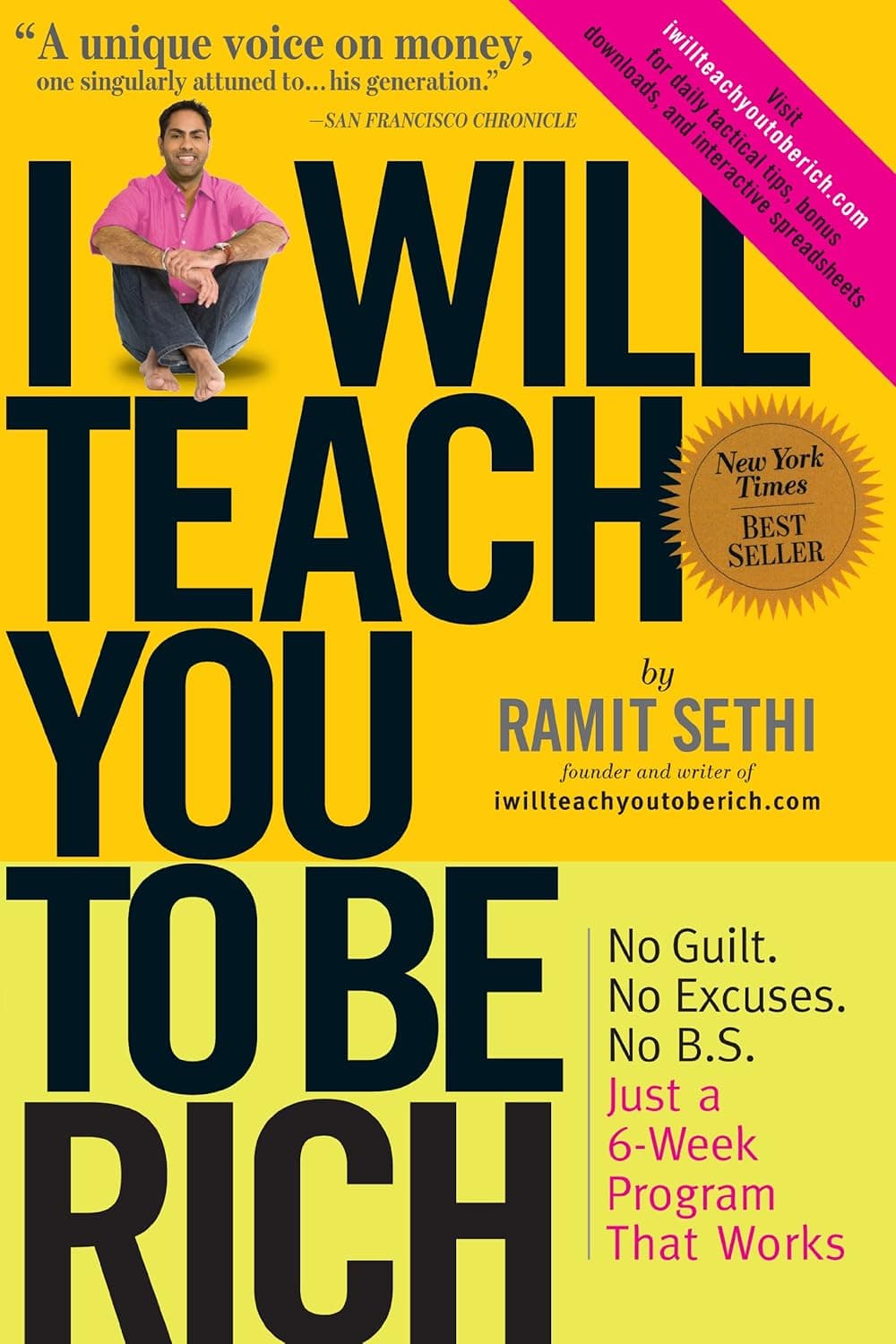
In I Will Teach You to Be Rich, Ramit Sethi reframes personal finance as a set of simple, repeatable behaviors rooted in psychology rather than deprivation. The book’s themes build a progression: start despite imperfection, direct money toward what you value, automate execution, and invest passively—so your system funds the “Rich Life” you actually want. Together, they argue that consistency beats complexity, and that freedom comes from a few decisive choices made once and run forever.
Major Themes
Action Over Perfection (The 85% Solution)
The book opens by dismantling paralysis-by-analysis: it’s better to act and be mostly right than to chase the mythical “perfect plan.” By rejecting “debating minutiae,” Sethi converts initiative into the core financial skill—small, timely moves today compound into disproportionate results. This mindset kickstarts every other part of the system, transforming knowledge into money-in-motion.
Conscious Spending
Sethi replaces restrictive budgeting with values-first allocation: spend extravagantly on what you love and ruthlessly cut what you don’t. By defining priorities up front, you remove guilt from “fun” spending and channel more dollars into meaningful goals. The philosophy privileges “Big Wins” over penny-pinching, making a few high-leverage decisions worth far more than hundreds of tiny sacrifices.
Automation and Financial Systems
Automation converts good intentions into default outcomes: bills pay themselves, savings fill, and investments grow without willpower. Sethi leverages inertia—the most reliable human trait—to make the right choice the easy one. The result is a low-maintenance “money flow” that runs in hours per month and protects you from forgetfulness, stress, and market noise.
Long-Term, Passive Investing
Instead of stock-picking and timing, the book endorses low-cost, diversified funds held for decades. This “boring beats sexy” stance rests on relentless data: fees and guesswork are wealth killers, while compounding rewards patience and consistency. The payoff of the whole system is not thrill, but results—quiet growth that outperforms most active alternatives.
Defining a "Rich Life"
Money is a tool, not the point. Sethi asks readers to name what a Rich Life means—freedom, generosity, travel, family—so every tactic serves a purpose. By starting with the why, the book turns financial mechanics into life design, ensuring your system funds choices, not just accounts.
Supporting Themes
The Power of Defaults and Inertia
Human laziness can be an ally: when you set smart defaults, doing nothing still moves you forward. This insight underpins Automation and reinforces Action Over Perfection—set it up once, let inertia work for you.
Big Wins > Tiny Cuts
Skipping lattes won’t change your life; optimizing a few major areas will. This supports Conscious Spending (prioritize value) and Automation (route dollars to the biggest levers), creating outsized gains with minimal day-to-day effort.
Early Start and Compounding
Time is your greatest asset: even modest, early contributions snowball into meaningful wealth. This theme deepens Long-Term, Passive Investing and rewards Action Over Perfection—start now, tweak later.
Simplicity over “Expertise”
The book deflates guru culture and complexity theater, showing how high fees and forecasts often underperform simple, diversified strategies. That skepticism reinforces Passive Investing and encourages systems that are easy to execute.
Personal Responsibility and Systems Thinking
Stop blaming institutions and start gaming the rules with structure. This ethos connects every major theme: define your Rich Life, make decisive choices, and let your system do the heavy lifting.
Guilt-Free Spending through Values Alignment
When spending is intentional, enjoyment increases and shame decreases. This bridges Defining a “Rich Life” with Conscious Spending—clarity of values creates clarity of transactions.
Theme Interactions
The book’s architecture works like a flywheel: Defining a “Rich Life” supplies motive → Action Over Perfection supplies momentum → Conscious Spending supplies intentional allocation → Automation supplies consistency → Long-Term, Passive Investing supplies growth → and the returns loop back to expand your Rich Life.
- Complementarity: Conscious Spending designs the plan; Automation executes it. Action Over Perfection ignites the first moves; Passive Investing sustains the compounding.
- Productive constraints: Simplicity and defaults limit decision fatigue so you can stick with the plan during noise and volatility.
- Tensions resolved: Perfectionism vs. progress (choose progress), consumer culture vs. values (choose alignment), “expert” noise vs. evidence (choose low-cost, diversified patience).
Character Embodiment
Ramit Sethi personifies Action Over Perfection and systems thinking. He models small, weekly moves that build infrastructure—then uses that system to finance his own Rich Life, from career choices to family support.
John (anxious about IRA types and “wrong” funds) embodies paralysis-by-analysis. His hesitation illustrates why perfectionism costs more than imperfect action—and why defaults and automation matter.
Dumb Dan represents the price of delay. By waiting to invest, he dramatizes how lost time overwhelms later effort, sharpening the book’s argument for early, steady contributions.
Smart Sally is the counterpoint: she starts early, invests simply, and lets compounding do the work—an avatar of Long-Term, Passive Investing in action.
John Bogle stands for low-cost indexing and democratized investing. His presence anchors the book’s evidence-based critique of active management and fee drag.
David Swensen reinforces the paradox that even elite investors recommend passive, diversified portfolios for individuals—authority validating simplicity.
Prab and Neelam Sethi embody the heart of the Rich Life theme: wealth as freedom, generosity, and meaning beyond money. Their influence grounds the book’s tactics in purpose.
Lisa (the shoe lover) and John-the-partier exemplify Conscious Spending. Their “extravagance” isn’t mindless—it’s pre-decided, automated, and value-aligned, proving that guilt-free joy belongs in a disciplined plan.