At a Glance
- Genre: Personal finance, self-help
- Setting: Post-2008 U.S. financial landscape; everyday money decisions in modern life
- Perspective: First-person coaching with second-person instruction; pragmatic, psychology-driven tone
Opening Hook
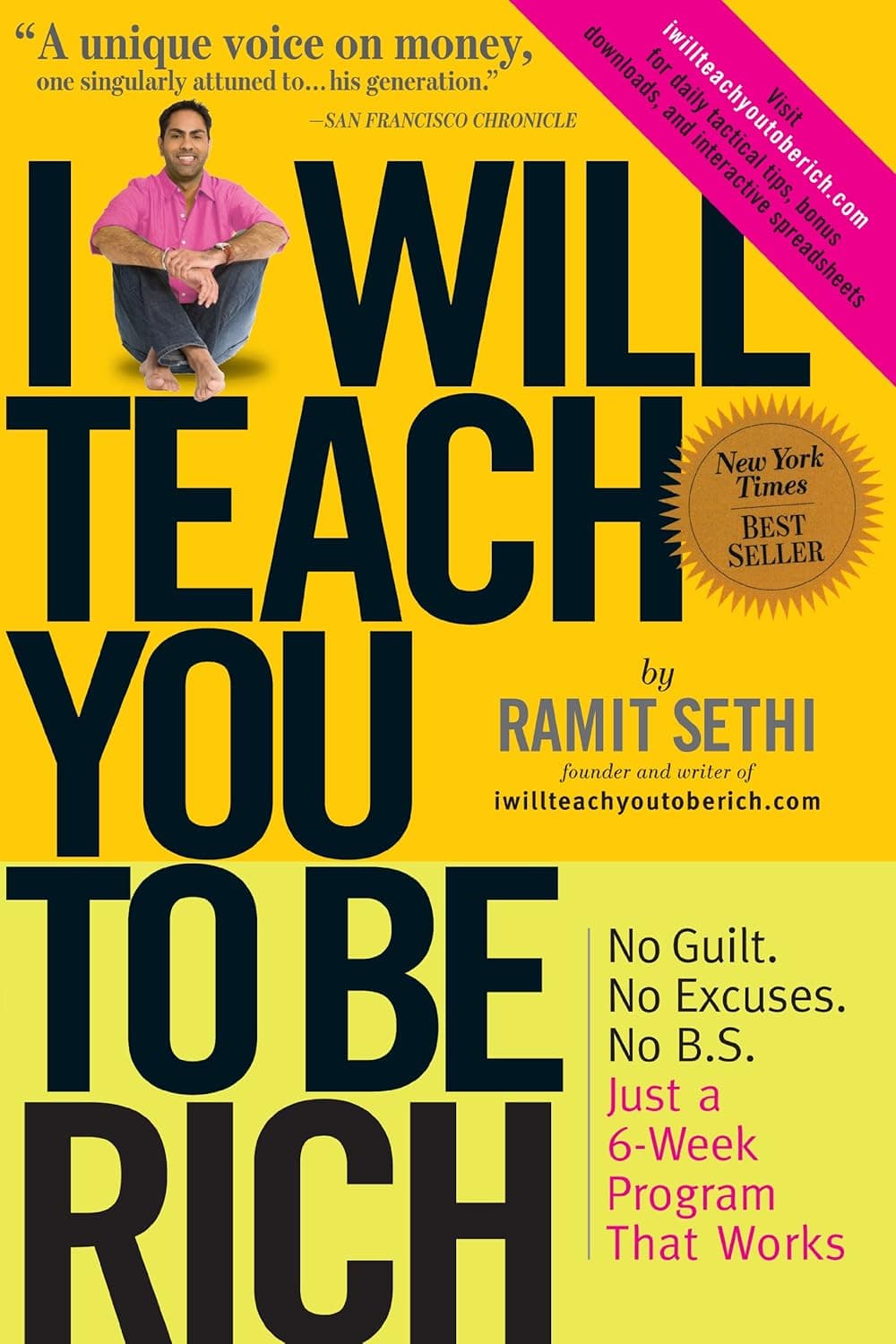
This isn’t a latte-shaming manifesto. It’s a blueprint for building a money system that runs in the background while you live the life you actually want. Ramit Sethi strips away guilt and complexity, shows you where the big wins are, and then automates them so you barely have to think about it. The promise is bold but simple: spend lavishly on what you love by ruthlessly cutting everything else—and let your systems quietly make you rich over time.
Plot Overview
Sethi opens by dismantling the myths that keep people stuck, from perfectionism to decision paralysis. He reframes personal finance as a game of “big wins,” not daily deprivation, and offers the 85% Solution: start now, accept imperfection, and iterate. With the stage set, the book moves through a six-week plan that builds a complete, automated money system.
Weeks 1–2: Fix the foundation. In the first sprint, Sethi targets credit and banking—the pipes through which all your money flows. As outlined in the Chapter 1-2 Summary, you learn to strengthen your credit score, negotiate fees and APRs using simple scripts, and use card perks intelligently. Then you “beat the banks” by opening a no-fee checking account linked to a high-yield online savings account, negotiating away junk fees, and setting the stage for a system that earns instead of drains.
Weeks 3–4: Build the plan. In the Chapter 3-4 Summary, Sethi walks you through opening a 401(k) and Roth IRA, prioritizing steps via his Ladder of Personal Finance: capture employer matches, pay off high-interest debt, then max tax-advantaged accounts—even if you start with $50. The heart of the philosophy arrives in Week 4 with a Conscious Spending Plan: assign every dollar to four buckets—Fixed Costs, Investments, Savings, and guilt-free fun—so you can spend extravagantly on what matters and mercilessly cut what doesn’t.
Weeks 5–6: Make it automatic and invest the right way. The Chapter 5-6 Summary consolidates prior weeks into an automated money flow: paychecks land, bills get paid, investments and savings fund themselves, and you monitor it all in a few hours per month. Finally, the Chapter 7-8 Summary rejects stock-picking and timing the market in favor of Long-Term, Passive Investing with low-cost index or lifecycle funds. Using simple models—including one popularized by David Swensen—you set a diversified allocation and rebalance periodically with minimal effort.
Coda: Money as a tool for a Rich Life. In the Chapter 9-10 Summary, Sethi applies the system to real-life inflection points: negotiating salary, aligning money with a partner, buying a car, and purchasing a home. The destination isn’t a number—it’s a “Rich Life” tailored to your values, where money funds freedom, generosity, and choice.
Central Characters
Though nonfiction, the book reads like a guided journey with a coach and a cast of instructive examples. For a full roster, see the Character Overview.
Ramit Sethi. Ramit Sethi writes as a sharp, funny peer—part data geek, part tough-love coach—using scripts, systems, and behavioral insights to knock down excuses. His background as the son of Indian immigrants, including Prab and Neelam Sethi, shapes his stance on negotiation, value, and practicality. He’s candid about his own missteps and uses them to model action over perfection.
- John Bogle: The Vanguard founder and index-fund evangelist; Bogle embodies low-cost, evidence-based investing—the quiet hero behind most ordinary investors’ success.
- Smart Sally: An archetype proving the power of starting early; by investing less but sooner, she beats late-starting, higher-contributing peers through compounding.
- John: Sethi’s friend who spends $21,000 a year going out—guilt-free—because his investments are automated and his non-essentials are cut ruthlessly.
- J.D. Roth: The Get Rich Slowly founder; his slow-and-steady ethos reinforces Sethi’s discipline-first approach.
Major Themes
Automation and Financial Systems Sethi’s central move is building a money pipeline that runs without willpower: paychecks split, bills pay, savings and investments fund themselves. Automation reduces friction and error, turning good intentions into predictable outcomes month after month.
Conscious Spending Instead of blanket frugality, Sethi asks you to identify what you love—and spend more there—while ruthlessly slashing the rest. This values-first budgeting reframes money from deprivation to design, making discipline sustainable because it’s purposeful.
Long-Term, Passive Investing The book rejects hot stock tips and market timing in favor of broad, low-fee index funds and lifecycle funds. It’s a humility play: most pros can’t beat the market, so ordinary investors win by owning the market and staying the course.
Action Over Perfection (The 85% Solution) Sethi counters analysis paralysis with a bias for movement: set up the accounts, start with small contributions, and improve over time. Getting it mostly right today compounds into results that perfectionists never see.
Defining a "Rich Life" Money is a means, not the end. Sethi pushes readers to articulate their version of freedom—travel, generosity, family time—and then engineer finances to make that vision real.
Literary Significance
Published in 2009, I Will Teach You to Be Rich reset the tone of personal finance for millennials and beyond. It swapped shame and penny-pinching for psychology, systems, and evidence-based investing. By popularizing financial automation and replacing restrictive budgets with conscious spending, Sethi gave readers a practical way to feel in control, even amid complexity. The book’s enduring influence shows up across blogs, podcasts, and courses that center behavior, simplicity, and low-cost investing as the surest path to wealth.
Historical Context
Arriving in the shadow of the 2008 financial crisis, the book met a generation disillusioned by Wall Street and burdened by student debt and a brutal job market. Sethi’s critique of high fees, conflicted advice, and short-term noise resonated in a moment of institutional mistrust. His counsel to keep investing through downturns—viewing crashes as long-term buying opportunities—offered a steady, empowering counter narrative to panic and paralysis.
Critical Reception
A swift New York Times bestseller, the book drew praise for being fresh, funny, and brutally practical. Reviewers highlighted its scripts, checklists, and behavioral focus as rare and useful in a dry genre. While some bristled at Sethi’s brashness, most readers embraced it as an antidote to condescension and guilt. The book’s staying power—expanded editions, a podcast, and a Netflix series—reflects how many readers credit its six-week plan with changing their financial trajectory. For Sethi’s voice in his own words, explore standout Quotes.