Opening
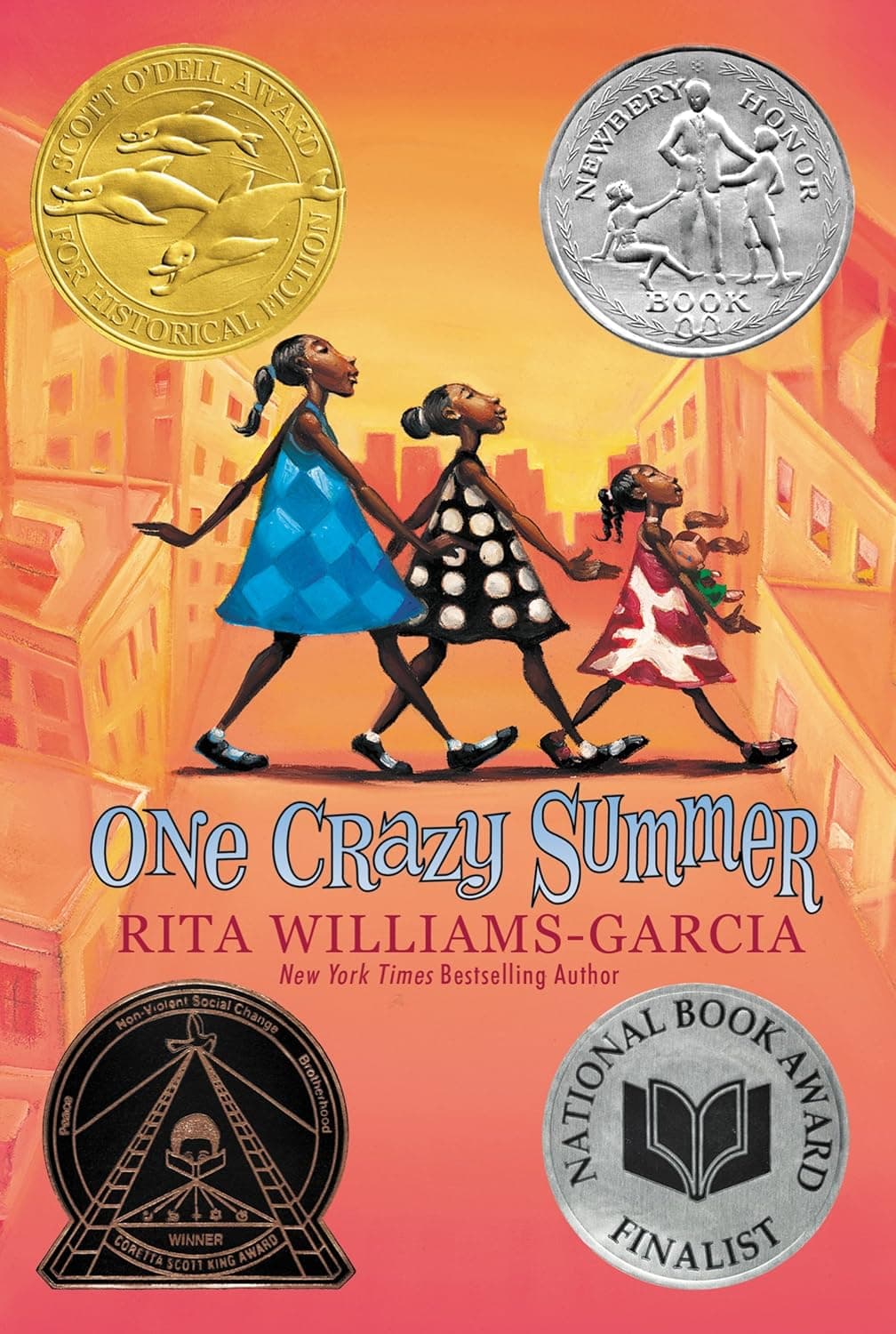
Police sirens shatter a summer evening in Oakland as Delphine Gaither, Vonetta Gaither, and Fern Gaither watch Cecile Johnson (Nzila) hauled away. Their quick, dangerous lie keeps them safe—and propels them into a week of cleaning wreckage, building community, discovering voice, and taking the stage. By the rally’s end, a crowd roars, a traitor is unmasked, and a poet is born.
What Happens
Chapter 26: The Clark Sisters
Carrying Chinese takeout, the girls turn the corner to see police lights splashing across Cecile’s porch. Officers lead Cecile and two Black Panthers to a patrol car. Vonetta and Fern start to protest, but Delphine pulls them back, recognizing the threat. When an officer questions Cecile, she raises her chin and says she has no children—they belong to “the Clarks down the street.”
Delphine catches the cue. She shepherds her sisters past the scene, insisting to the officer that they’re the Clark sisters and don’t know the woman being arrested. Only when the squad car pulls away do they breathe. Inside, they find destruction: the kitchen ransacked, the printing press toppled, metal type scattered, red and black ink smeared like wounds. Delphine lays out plates on the living room floor and decides they will clean the kitchen—not because they made the mess, but “just because.”
Chapter 27: I Birthed a Nation
Morning brings hard work. Delphine and her sisters right the heavy press, sort paper into flyers and poems, and gather thousands of metal letters. Fern discovers the ornate type that spells Nzila. As they clean, the forbidden room becomes a map of their mother’s life; the girls handle her tools and try to read her.
Vonetta finds a poem titled “I Birthed a Nation.” They read it aloud and recognize themselves, interpreting it as a mother losing her children—an origin story that recasts their Family, Motherhood, and Abandonment. Delphine doesn’t correct their gentler version of Cecile’s leaving. They practice the poem together until a knock interrupts them: Hirohito Woods and his mother arrive with hot food. For the first time, Delphine calls Cecile “my mother.” Mrs. Woods nods: “We know the same things. We have to stick together.” They share a meal on the floor, a quiet act of solidarity.
Chapter 28: Stores of the No Sayers
At the People’s Center, Sister Mukumbu tells the girls Cecile was arrested for printing flyers—“Information is power”—and offers them a place to stay. Delphine declines; they’ll be with the Woodses until their mother returns. Crazy Kelvin flashes a fist and a “power to the people,” and Fern points at him, asks, “What’s wrong with this picture?” and barks like a dog, leaving her sisters puzzled.
The day’s assignment is community work: distribute Cecile’s last flyers for the rally, a small but real step into Social Justice and Activism. Some places welcome them—Saint Augustine’s, the Shabazz Bakery. Others refuse. At Safeway, the manager cites “store policy.” Delphine keeps a private list of the “stores of the no sayers” and vows they won’t get the Gaithers’ money anymore.
Chapter 29: Glorious Hill
For days, the girls stay with the Woods family. Mrs. Woods shoos Delphine outside—no chores, go play. While Vonetta and Fern run with Hirohito, Delphine sits reading on the porch, keeping watch. Then Hirohito rolls out his go-kart and dares her to try it. She resists, clinging to her careful, grown-up reputation, until pride tips her forward.
They haul the cart up a steep hill. Hirohito shows her the ropes, the brake, the sturdy build—his father’s handiwork. With one push, she rockets down the slope. Terror becomes exhilaration. Delphine screams, laughs, and, for a moment, lets go. The ride marks a bright leap in her Coming of Age—trusting others, inhabiting her own joy. At the bottom, her sisters and Hirohito lift their arms and cheer.
Chapter 30: The Third Thing
Rally day fills the park with a thousand voices. Delphine swells with pride; the campers’ flyers helped make this happen. After Janice Ankton’s theatrical Harriet Tubman, the Gaither sisters take the stage. Delphine worries about Vonetta’s nerves, but a whisper—“Hirohito’s watching”—steady her. Vonetta seizes the mic and introduces “‘I Birthed a Black Nation,’ by our mother, Nzila,” adding “black” with intention. The crowd roars.
They recite as one, voices braiding into a call-and-response with their absent mother. When they finish, Fern stays put. She grips the microphone: she has her own poem for Crazy Kelvin, “A Pat on the Back for a Good Puppy.” In spare, cutting lines, she recounts a cop patting Kelvin and calling him a “good puppy,” and Kelvin answering, “Arf. Arf.” The implication lands. Panthers surround Kelvin as police whisk him away for his safety. Three things happen at once: the crowd erupts, a traitor is exposed, and Fern claims a new Identity and Self-Discovery as a poet.
Character Development
The sisters’ summer tilts from survival to authorship—of their story, their politics, and their voices—while the adults around them sharpen into clarity.
- Delphine: Protects her sisters during the arrest with a strategic lie; restores Cecile’s wrecked workspace “just because”; discovers unguarded joy on the go-kart; steps from caretaker to participant and performer.
- Vonetta: Channels her love of the spotlight into purpose; reframes the poem by adding “black,” signaling political fluency; speaks clearly under pressure.
- Fern: Observes what others miss; crafts and performs an original poem that exposes Kelvin; reveals herself as a truth-teller and poet with moral courage.
- Cecile (Nzila): Though offstage, emerges as artist-activist-mother; her poem offers the girls a new lens on their history; her denial at the arrest reads as protection, not rejection.
- Crazy Kelvin: Revolutionary pose collapses; Fern’s poem reveals him as a police informant; becomes a cautionary tale about performance without principle.
Themes & Symbols
The girls’ family story and the city’s political struggle fuse. Family, Motherhood, and Abandonment shifts from a wound to a complex inheritance: denying and being denied on the sidewalk becomes an act of mutual protection. Cleaning the press and reciting Cecile’s poem let the sisters remake their bond on their own terms, transforming absence into authorship.
Social Justice and Activism moves from classroom rhetoric to lived risk and contribution. Cecile’s arrest for information-sharing shows the cost of speech; the children’s flyer work and performance show how youth labor and art fuel a movement. Identity and Self-Discovery and Coming of Age unfold not in isolation but through community—on a porch, a hill, and a stage—where the girls test courage, rewrite language, and claim voice.
Symbols
- The Ransacked Kitchen: The state’s intrusion into a private creative sanctuary; spilled ink and scattered type as silenced voice. Cleaning becomes an act of repair and understanding.
- The Go-Kart: Risk and release; trust in others; the exhilaration of childhood reclaiming space from responsibility.
- Fern’s Poem: Art as evidence; a child’s clear-eyed truth cutting through performance to deliver justice.
Key Quotes
“I don’t have no kids… They belong to the Clarks down the street.”
- Cecile’s denial shields her daughters from the system. The lie reframes abandonment as protection and teaches Delphine how survival sometimes sounds.
“We’ll clean it… just because.”
- Delphine’s decision to restore the wrecked kitchen is love without transaction. It signals empathy for Cecile’s work and a shift from resentment to care.
“Information is power.”
- Sister Mukumbu names the stakes of printing and distributing flyers. Words become action; the press becomes a battleground.
“We know the same things. We have to stick together.”
- Mrs. Woods articulates quiet solidarity. Community fills the gap left by family and sustains the girls through crisis.
“‘I Birthed a Black Nation,’ by our mother, Nzila.”
- Vonetta’s added “black” explicitly centers racial pride and political context, while “our mother” publicly claims Cecile and their lineage.
“A Pat on the Back for a Good Puppy.” … “Arf. Arf.”
- Fern’s spare language exposes hypocrisy with devastating clarity. The poem weaponizes observation to protect the community and crowns Fern a poet.
Why This Matters and Section Significance
These chapters deliver the novel’s emotional and political climax: the sisters learn that love can look like a lie, community can be a home, and art can be both bridge and blade. The rally unites their private healing with public action; performing Cecile’s poem binds them to her legacy, and Fern’s revelation purges betrayal from the movement. Delphine’s downhill flight and the sisters’ onstage voices mark the turn from being carried by events to carrying themselves—and others—forward.