What This Theme Explores
Identity and Self-Discovery in One Crazy Summer asks how children inherit labels—about family roles, race, and respectability—and then learn to question and redefine them. It investigates whether a person can name themselves into a new life, and what is lost or gained when they do. It explores how voice—spoken, written, or performed—becomes the bridge between inner self and public identity. Most of all, it shows that becoming oneself is not a single revelation but a braided process of history, choice, and courage.
How It Develops
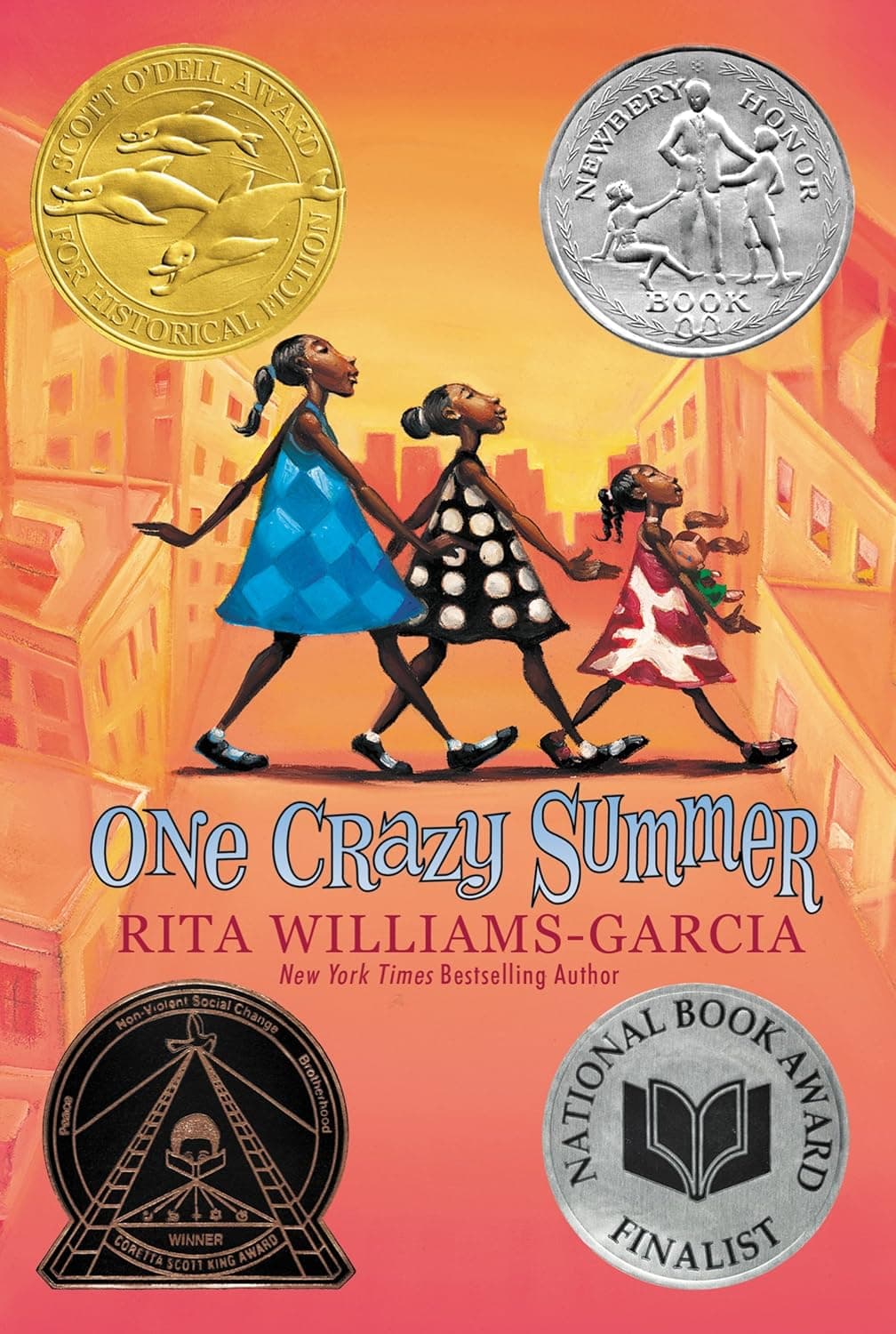
At the start, the Gaither sisters—Delphine, Vonetta, and Fern—arrive in Oakland with a tidy sense of who they are: roles assigned in Brooklyn under Pa and Big Ma. Delphine is the reliable caretaker, Vonetta the show-stopper, Fern the babied youngest. Their racial identity is “Negro” or “colored,” and their mother, Cecile, exists to them less as a person than as a wound.
Oakland unsettles all of that. In the People’s Center, Sister Mukumbu gives them a language of pride and history; Crazy Kelvin polices their words and symbols, forcing them to confront the politics inside everyday choices. Cecile’s insistence on her chosen name, Nzila, models self-definition through art and struggle, but her distance as a mother complicates the girls’ ideas about family and worth. Each sister begins to test the labels she’s been given—Delphine pushes back against being everyone’s mother, Vonetta seeks a stage with purpose, and Fern learns to speak for herself.
By the end, the sisters carry both what they’ve inherited and what they’ve claimed. Delphine accepts the right to be a child; Vonetta directs her flair into an act with meaning; Fern claims authorship and names herself out loud. They leave Oakland with a deeper, more complex sense of who they are—as daughters of Cecile/Nzila, as sisters to one another, and as Black girls stepping into history with their own voices.
Key Examples
The novel roots identity in concrete, often contested moments—names chosen and refused, words argued over, and performances that become acts of truth-telling.
-
The Meaning of a Name Names in the novel are acts of possession and rebellion. Delphine’s disappointment over the meaning of her own name contrasts with Cecile’s transformation into Nzila, which reframes naming as a creative and political choice. The revelation that Fern’s birth name, Afua, was erased by a parental decision exposes how family power can silence or safeguard identity.
“My name is Nzila. Nzila is a poet’s name. My poems blow the dust off surfaces to make clear and true paths. Nzila.” ... “It’s my name. My self. I can name my self. And if I’m not the one I was but am now a new self, why would I call my self by an old name?” (Chapter 11-15 Summary)
-
“Colored” vs. “Black” The girls’ insistence on “colored” reflects loyalty, habit, and the safety of familiar terms, while the Panthers’ push for “Black” insists on a politicized, self-affirming identity. The exchange is playful on the surface but reveals a deeper shift: language can either preserve old hierarchies or create room for pride and power.
He didn’t like the sound of “colored girl.” He said, “Black girl.” Fern said, “Colored.” “Black girl.” Vonetta and I threw our “colored” on top of Fern’s like we were ringtossing at Coney Island. This was bigger than Say it loud, I’m Black and I’m proud. If one of us said “colored,” we all said “colored.” (Chapter 6-10 Summary)
-
Finding a Voice At the rally, performance becomes identity made public. Vonetta’s recitation of Cecile’s poem turns showmanship into solidarity, while Fern’s poem turns observation into exposure—and courage. By naming herself at the microphone, Fern refuses the diminishment of “Little Girl” and claims authorship, power, and moral clarity.
“My mother calls me Little Girl, but this is a poem by Fern Gaither, not Little Girl. This is a poem for Crazy Kelvin. It’s called ‘A Pat on the Back for a Good Puppy.’” (Chapter 31-33 Summary)
-
Delphine’s Confrontation When Cecile scolds her, Delphine finally says what her premature mothering has cost her. Speaking the words is an act of self-recognition that begins to unburden her of an adult identity she never chose.
“I’m only eleven years old, and I do everything. I have to because you’re not there to do it. I’m only eleven years old, but I do the best I can. I don’t just up and leave.”
Character Connections
Delphine Gaither Delphine embodies the costs and clarity of imposed identity: she mistakes caretaking for character. Her breakthrough—screaming with joy on Hirohito’s go-kart—shows that play is not irresponsibility but a reclaimed part of the self. Cecile’s final counsel to “be eleven” authorizes Delphine to balance love for her sisters with love for her own childhood.
Cecile Johnson (Nzila) Cecile represents radical self-making. By choosing art and movement work over conventional motherhood, she refuses a singular identity and accepts the consequences. As the girls uncover her history and purpose, they learn that identity can be a path—Nzila—drawn by conviction, even when it complicates family bonds.
Vonetta Gaither Vonetta’s craving for an audience becomes, by summer’s end, a hunger to say something worth hearing. Coloring Miss Patty Cake is messy and impulsive, but it marks her first attempt to align performance with belonging. Reciting Cecile’s poem with force reorients her desire to be seen into a commitment to make the right things visible.
Fern Gaither Fern’s arc moves from being named by others to naming herself. She watches, gathers truths, and then speaks them in a poem that exposes hypocrisy and claims dignity. In becoming a poet, Fern inherits not just her mother’s craft but her own authority.
Symbolic Elements
Names Self-naming—Cecile to Nzila, Fern to Fern/Afua—signals that identity is not merely bestowed but chosen, sometimes against resistance. The friction around names reveals who holds power to define—and who fights to reclaim it.
Miss Patty Cake The white doll embodies an inherited, unexamined self-image. When Vonetta colors it black, the act is awkward and imperfect, but it dramatizes the girls’ struggle to replace compliance with conscious affiliation.
The Printing Press Cecile’s press makes identity tangible: poem into ink, belief into broadsides. The guarded kitchen-turned-workshop shows how space, labor, and art fuse into the self she insists upon.
Hair Pressed hair versus afros materializes competing ideals of respectability and liberation. Cecile’s insistence that their hair is “doing what God meant it to do” reframes beauty as acceptance of one’s natural self—an intimate revolution.
Contemporary Relevance
The sisters’ journey mirrors ongoing debates about how language, aesthetics, and protest shape identity in communities of color. Children and teens today still inherit labels—about race, gender, and family—and must decide which to keep, which to refuse, and which to reinvent. The book honors nontraditional families and the hard choices of caregiving, while reminding readers that finding a voice is both a personal milestone and a civic responsibility. Its coming-of-age truth remains universal: growing up means learning which names, stories, and solidarities you will claim as your own.
Essential Quote
“Be eleven, Delphine. Be eleven while you can.”
This line distills the theme’s heart: self-discovery requires time and permission to be fully oneself, not a role assigned by need or expectation. Cecile’s charge reframes identity as a humane balance—honoring love and duty while protecting the innocence, play, and curiosity that make a self possible.