Opening
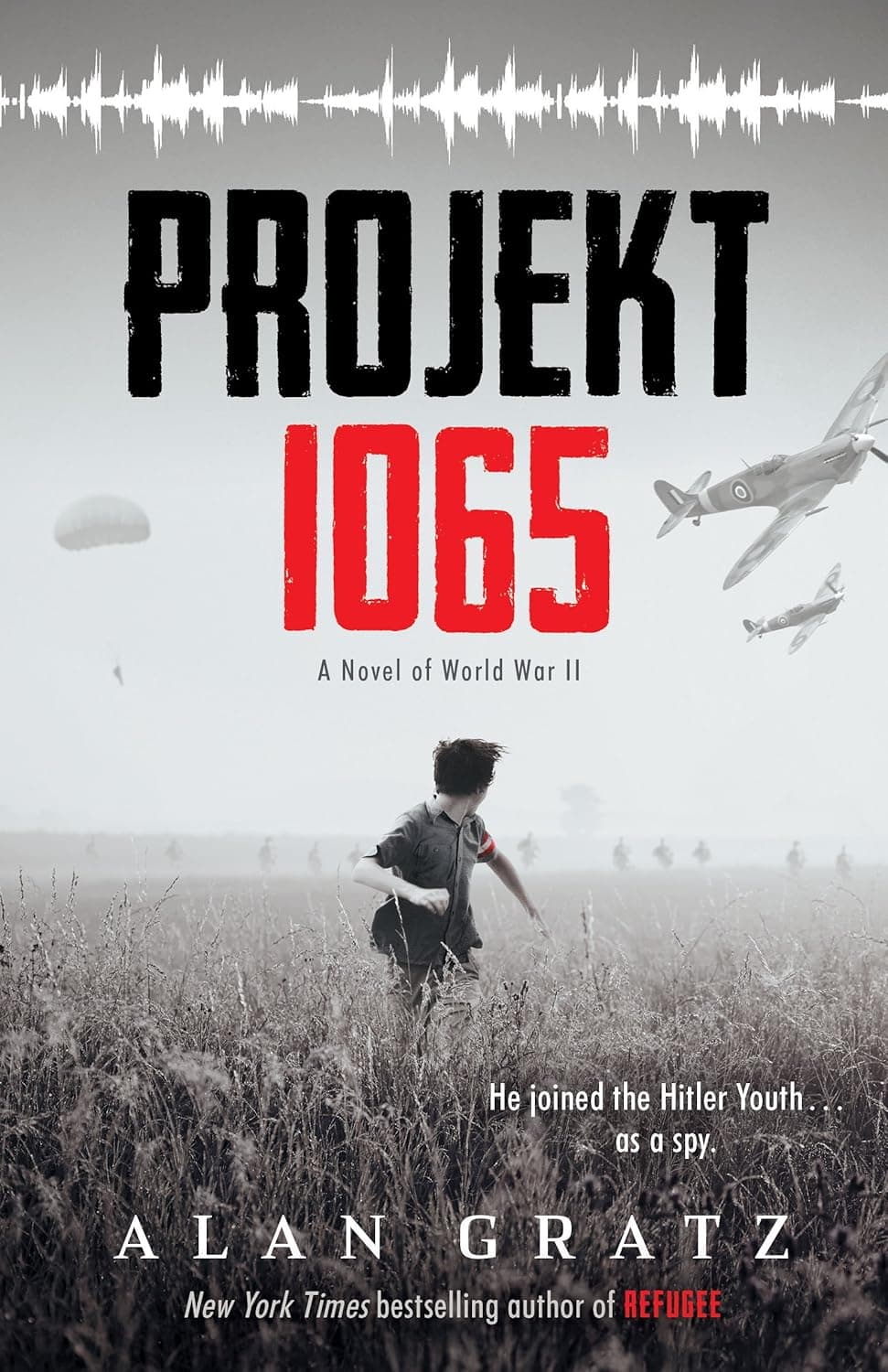
In 1943 Berlin, thirteen-year-old Michael O'Shaunessey moves through Nazi high society in a Hitler Youth uniform while secretly spying for the Allies. These chapters braid a tense present—an espionage mission at a dinner party—with a searing flashback to Kristallnacht, forging the stakes of Deception and Espionage and the personal cost that drives Michael forward.
What Happens
Chapter 1: Dinner with Nazis
At a glittering Berlin dinner in 1943, Michael sits among high-ranking Nazi officials, performing loyalty while swallowing disgust. His parents—Davin (Da), the Irish ambassador, and Megan (Ma)—play their parts with easy charm, praising Michael’s German and “exceptional memory” in a way that sounds like small talk but signals tradecraft.
The mood darkens when SS-Obersturmführer Trumbauer boasts about a boy who denounced his own parents for hiding a Jew; the parents go to a camp, and the Jewish man is “shot while trying to escape.” The story, a chilling portrait of The Corrupting Influence of Ideology, rattles Michael so badly he knocks over his glass. The starburst of reflections in the shards jolts him back to a memory he cannot shake.
Chapter 2: The Night of Broken Glass
The narrative flashes to November 1938. Eight-year-old Michael witnesses Kristallnacht: smashed shopfronts, a synagogue in flames, and a Jewish man beaten in the street while onlookers cheer. He surges forward to help, but his parents restrain him. Their refusal wounds him, even as he feels the first hard edge of Coming of Age and Loss of Innocence.
Then a boy Michael’s age points out a Jewish man fleeing. The Gestapo shoot him dead. The streets glitter with broken glass, and the image fuses to Michael’s mind. On that devastated street, his parents finally tell him the truth: they are not just neutral Irish diplomats—they are Allied spies, and the only way to help is to keep their cover intact.
Chapter 3: The Mission
Back in 1943, Michael’s grape-juice spill is a calculated diversion. Under the pretext of cleaning his uniform, he slips upstairs into the study of their host, a Daimler-Benz industrialist. With little time, he rifles the desk, then checks a copy of Mein Kampf. A jack of spades marks a page. It’s no ordinary bookmark.
Michael discovers a hidden seam in the card and peels it open. Inside: rows of numbers—clearly a code. He memorizes them in seconds, his heart pounding. As he finishes, a floorboard creaks. The doorknob turns. Someone is coming in.
Chapter 4: Hiding in the Dark
Michael tucks the card back, kills the light, and slips behind the curtains. The butler enters, switching on a small lamp and pouring himself a secret drink. A searchlight sweeps the window and the courtyard far below yawns into view. Michael’s acrophobia hits like a wave—dizziness, spinning, the instinct to grab for balance. The window latch rattles.
“Who’s there?” the butler calls, stepping toward the curtains. Michael freezes, trapped, every muscle coiled. His fear of heights—his deepest vulnerability—sharply frames the pressure of Courage, Fear, and Confronting Weakness.
Chapter 5: A Clean Escape
At the last instant, the butler crumples. Ma stands behind him with a chloroform-soaked handkerchief. In minutes, she stages the room: liquor splashed, bottle placed, a plausible drunk. They slip back to the party, composed. Da reads the room and smoothly invents a reason to leave—Allied raids make a perfect excuse.
In the car, Da’s parental fear breaks the surface. He hates the danger Michael faces but cannot deny the war’s demands, laying bare Moral Compromise and the Cost of War. Michael recites the numbers perfectly. His parents decode their meaning: coordinates for a new German engine factory. Da will pouch them to Dublin; Irish Intelligence will pass them to the British. Within weeks, Allied bombers will erase the target. The family’s mission stands in stark relief: Allied spies posing as neutral Irish.
Character Development
These chapters establish a family fluent in performance and risk, and a boy whose courage is inseparable from terror, memory, and purpose.
- Michael O’Shaunessey: Brilliant mimic and memorizer who loathes what he must pretend to be. Kristallnacht brands his conscience; his acrophobia exposes a flaw he must master to survive. He chooses action despite fear.
- Megan (Ma): Calm, decisive operator. She anticipates obstacles (chloroform at the ready), improvises clean covers, and prioritizes mission clarity, even when it endangers her son.
- Davin (Da): Diplomat-spy who weaponizes charm and protocol. He champions the mission but voices the cost, embodying the tension between parental duty and wartime necessity.
- SS-Obersturmführer Trumbauer: Smiling cruelty. His story crystallizes how ideology rewards betrayal and normalizes atrocity, sharpening Michael’s resolve.
Themes & Symbols
Deception and duty shape every scene. The family’s cover life proves that espionage runs on performance: uniforms, dinner talk, staged accidents, even a planted “drunk” butler. Such deception corrodes and protects at once; to fight monsters, they must look like them. That moral bind—lying, stealing, drugging a servant—underscores how war twists right action into shadowed territory.
The Kristallnacht flashback is the novel’s moral ignition. It marks Michael’s loss of innocence and sets the emotional logic of his choices: he cannot save the man in 1938, but he can memorize numbers in 1943 that help destroy a factory. Broken glass becomes the central symbol—wineglass shards at the dinner, shop windows in 1938—reflecting the shattering of lives, the fracture of Michael’s identity, and the sharp, dangerous clarity of what he must do.
Key Quotes
“Shot while trying to escape.”
Trumbauer’s casual phrase sanitizes murder and exposes how bureaucratic language hides atrocity. Michael’s horror turns revulsion into purpose, anchoring his undercover resolve.
“Who’s there?”
The butler’s question transforms a spy trick into a life-or-death moment. It spotlights Michael’s acrophobia and the razor-thin margins of his work—one startled breath from exposure.
“Exceptional memory.”
Ma and Da’s praise reads as polite bragging to their guests but as code to the reader. It doubles as a mission asset and a burden: Michael remembers everything—including trauma.
The “Night of Broken Glass.”
Naming Kristallnacht in English emphasizes its mythic, ritualized violence. For Michael, it is not history but a wound; the glittering debris becomes the lens through which he sees every risk he takes.
Why This Matters and Section Significance
These chapters build the book’s engine: a family of spies leveraging social theater in the heart of the Reich, a child’s trauma distilled into purpose, and a mission that draws blood without firing a gun. The flashback explains the “why,” the study heist demonstrates the “how,” and Michael’s vertigo plants the “what next”—a personal flaw that promises future peril.
By the end of Chapter 5, the O’Shaunesseys prove they can gather intelligence that changes the course of the war, but at a price: lies that entangle civilians, risks that involve a child, and a victory measured in bombs. Every success deepens the moral ledger—and sets the stage for higher stakes, tighter covers, and harder choices to come.