What This Theme Explores
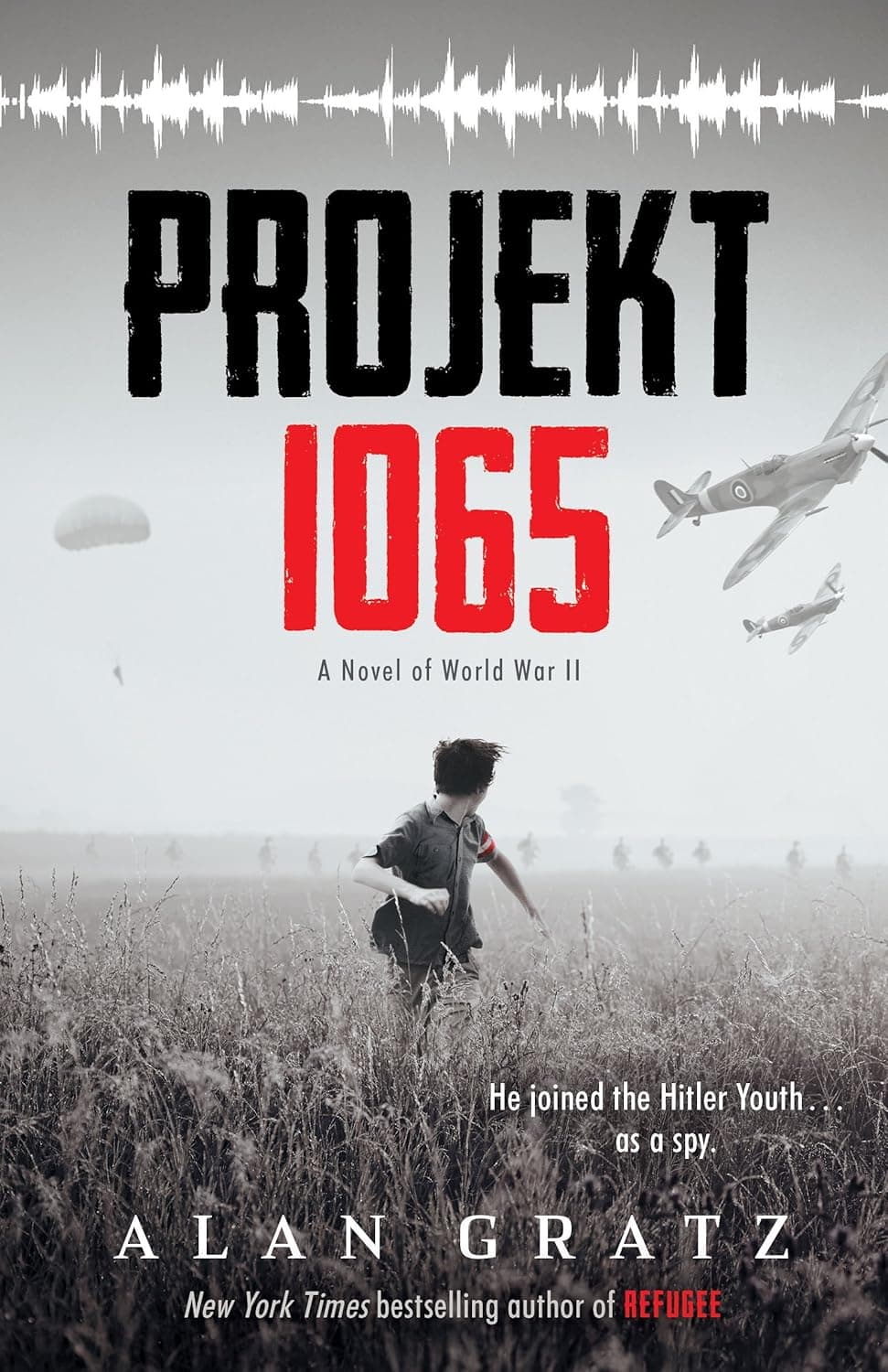
Coming of age in Projekt 1065 is not a gentle awakening but an emergency conversion, where childhood is stripped off to make room for survival skills. For thirteen-year-old Michael O'Shaunessey, the central questions are how to tell right from wrong when both choices harm someone—and how much of himself he can lock away without losing it forever. The book probes whether heroism is still heroic when it requires lies, complicity, and silence, and whether innocence can survive contact with organized cruelty. It ultimately asks what adulthood means when it arrives as a mandate to perform monstrosity in order to defeat it.
How It Develops
Michael begins with a shattered sense of safety after witnessing Kristallnacht, but he still frames espionage as a daring “game” that pits a clever boy against obvious villains. Early missions gratify this fantasy: his photographic memory and knack for deception promise a clean, almost boyish victory where the right side wins if he plays well enough.
The middle of the novel corrodes this clarity. Pressed to perform loyalty rituals and violence, Michael discovers that “playing along” extracts a toll. His brutal boxing match with Fritz Brendler reveals how easily self-defense slides into cruelty; the fear he inspires in others mirrors the fear regime he opposes. Meeting Lieutenant Simon Cohen shifts him from child to operative: Simon treats him like a colleague, forcing Michael to calculate risks, weigh lives, and accept that sometimes the moral choice still leaves blood on one’s hands.
By the end, Michael’s “boy-man” self is forged through decisions that silence his conscience in the moment to serve a larger aim. Allowing Herr Melcher to be taken, participating in a plan that costs Simon his life, and fighting Fritz on the cable car confirm that war has no clean victories. He learns that true success in espionage often remains invisible—and that the price of winning can be the loss of the person who began the fight.
Key Examples
-
The Memory of Kristallnacht: Seeing state-sanctioned terror as a child shatters Michael’s belief that adults guarantee safety and order. That night becomes his moral origin story—he fights Nazis not from abstract principle but from lived trauma, and that trauma primes him to accept dangerous work at an age when innocence should still be intact.
-
The Boxing Match: Forced to fight during his Hitler Youth initiation, Michael crosses the line from survival to savagery. In realizing he has frightened others the way Nazis frighten their victims (Chapter 26-30 Summary), he confronts the unsettling truth that violence reshapes the self, not just the opponent.
-
Sacrificing Herr Melcher: Michael’s choice to remain silent as the SRD targets Melcher is not an impulsive lapse—it’s a deliberate moral calculation. Protecting the mission over a kindred spirit shows he now prioritizes outcomes over immediate compassion, a distinctly adult and devastating shift.
-
The “Betrayal” of Simon: Agreeing to turn Simon in for the sake of the plan, and then witnessing the consequences, collapses any remaining illusion that this work is a game. Lives become the currency of strategy, and Michael understands that even righteous causes require choices that will haunt him (Chapter 81-85 Summary).
Character Connections
Michael’s arc is a study in accelerated adulthood. At first he mimics adulthood—memorizing plans, telling lies—without absorbing their cost. As the mission escalates, he internalizes those lies and accepts decisions that isolate him from his former self. His growth is not a broadening but a narrowing: he learns to compartmentalize, to subordinate empathy to strategy, and to live with the knowledge that his heroism must remain secret.
Fritz embodies a corrupted parallel. Once a bullied, uncertain boy, he embraces the regime’s definition of manhood—obedience, hardness, and spectacle—until cruelty feels like strength. His transformation shows how fascist systems weaponize adolescent insecurities, offering status in exchange for conscience, and how “maturity” can be a mask for fanaticism.
Simon functions as both mentor and mirror, treating Michael as a partner rather than a child. By sharing his own losses and imposing adult disciplines, he accelerates Michael’s moral education—but he also becomes the test case for Michael’s hardest choice. Simon’s sacrifice teaches that purpose without humanity is empty, yet humanity without purpose can be fatal; Michael must hold both and live with the wound.
Symbolic Elements
The Hitler Youth Uniform: What begins as a disguise becomes a second skin. Each promotion deepens Michael’s entanglement, turning the uniform into a visual emblem of his compromised identity and the chilling reality that you can become what you pretend to be.
Kristallnacht’s Broken Glass: The splintered panes reflect a child’s image in fragments—an outward version of Michael’s inner state. The world, once whole, is now a mosaic of sharp edges, and growing up means learning to move through it without bleeding out.
The “Wee Iron Coffin”: Michael’s phrase for locking away his feelings captures the paradox of survival. “Wee” preserves the trace of childhood, while “iron coffin” signals that protecting oneself can feel like burying oneself; endurance requires self-imposed numbness that resembles death.
Contemporary Relevance
The novel’s portrait of stolen childhood resonates in a world where young people are radicalized online, enlisted as child soldiers, or forced to navigate adult crises during wars and displacement. It warns how institutions can recode cruelty as courage and how secrecy and shame can isolate those doing morally complicated good. It also invites readers to question easy narratives of heroism, reminding us that victories achieved through manipulation and violence leave invisible scars—and that healing requires communities willing to witness the costs.
Essential Quote
“I locked my heart away in a wee iron coffin and swallowed the key.”
This line distills Michael’s transition from feeling to function: he chooses effectiveness over empathy, knowing the choice entombs part of himself. The childlike “wee” collides with the finality of “iron coffin,” underscoring that his maturity is not growth but self-burial—a necessary act in war that threatens to become permanent if he cannot reclaim what he has sealed away.