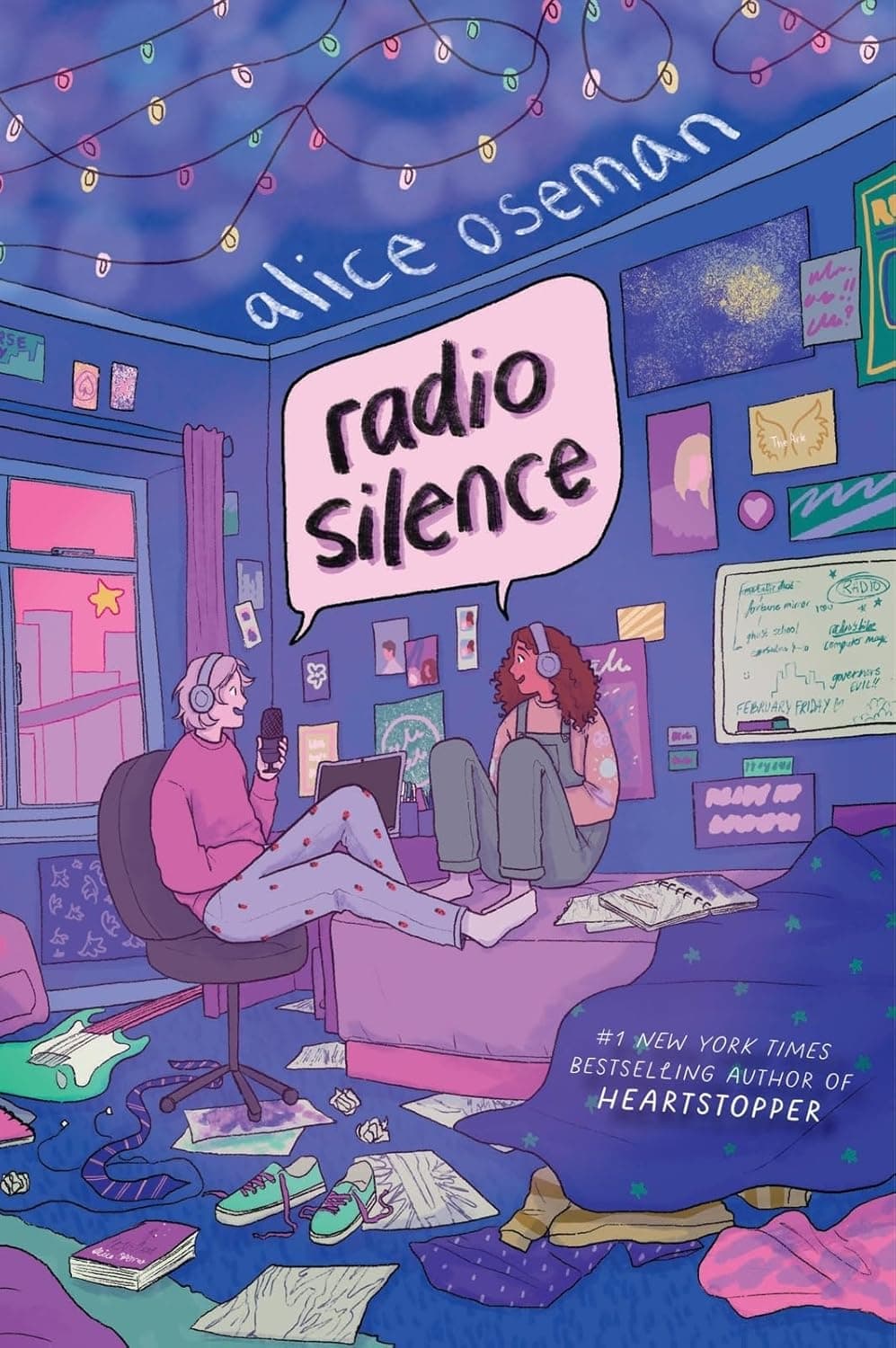
What This Theme Explores
The Power and Dangers of Fandom and Internet Culture probes how online spaces can both liberate and imperil young creators and fans. It asks what happens when anonymity enables honest self-expression but also licenses intrusion, and when community support shades into entitlement. The theme weighs the thrill of audience connection against the loss of privacy and creative autonomy that often accompanies visibility. Ultimately, it investigates how creators can set boundaries and reclaim ownership without abandoning the communities that made their work possible.
How It Develops
At first, the internet functions as sanctuary and amplifier. For Frances Janvier, posting art as Toulouse separates the suffocating expectations of “School Frances” from the private, creative self that loves Universe City. Her hidden world becomes real when the podcast’s secret creator—her neighbor, Aled Last—reaches out, and their friendship blooms through shared creation. This is the internet at its best: a corridor where like-minded outsiders find each other and build something intimate, sustaining, and joyful.
As their project gains traction, the safe corridor widens into a public stage, and with it comes surveillance. A viral “ghost school” episode, boosted by a famous YouTuber, draws a floodlight onto Aled’s audio world and Toulouse’s art. The fandom’s curiosity transforms into sleuthing, collapsing the boundary between art and life as online breadcrumbs are reorganized into a dossier that outs Frances’s identity, triggering tangible real-life penalties—her head girl position is revoked, and the online thrill suddenly costs her offline stability (Chapter 26-30 Summary).
Finally, visibility curdles into toxicity. When Aled is unmasked and, in a desperate bid for control, ends the podcast with an episode of white noise, the audience’s affection mutates into rage and threats. The refuge turns hostile, exacerbating Aled’s anxiety and pushing him toward collapse (Chapter 56-60 Summary). Yet the arc bends toward a measured hope: Aled’s choice to perform a live show at a convention reframes fandom as a space he can enter on his own terms, signaling a healthier balance between creator, community, and self.
Key Examples
The theme’s duality comes into focus through pivotal moments where support and scrutiny trade places. Each instance shows how the same mechanisms—visibility, virality, and community—can nurture or harm depending on boundaries and consent.
The Power of Connection and Creativity
-
Initial Contact:
hi toulouse! this might sound really weird but i’ve seen some of the Universe City fan art you’ve posted and i love them so much
i wondered whether you’d be interested in working with the show to create visuals for the Universe City episodes? — Chapter 1-5 Summary
This message validates Frances’s hidden passion and turns a private fandom into a collaborative artistic partnership. The internet’s promise—being seen for who you are, not who you’re expected to be—becomes the story’s catalyst. -
Finding Community: Frances feels most “herself” as Toulouse, while Aled’s creative and social lifeline is Universe City. Their friendship—born online and sustained through making—illustrates how fandom can be a crucible for authentic identity and belonging.
-
Viral Success: A YouTuber’s promotion propels the podcast overnight, confirming the internet’s capacity to elevate niche art to global audiences. Early on, this fame reads as pure validation: the world finds them because their work deserves to be found.
The Dangers of Exposure and Entitlement
-
The Unmasking:
The convincing piece of evidence comes from last month:
On the night of the now infamous ‘ghost school’ episode, Frances’s Twitter account, @touloser, posted a blurry picture of a pair of lime green shoes, captioned ‘Radio revealed’ [link]. Aled Last can be seen to be wearing these shoes in various photos on his personal Facebook. — Chapter 31-35 Summary
The fandom’s detective work reassembles personal traces into an exposure campaign, revealing how audience “engagement” can become invasive. The thrill of participation morphs into a claim of ownership over creators’ identities. -
Real-World Consequences: Dr. Afolayan removes Frances from her head girl role, calling the “ghost school” episode propaganda that reflects badly on the school. The scene underlines how online actions don’t stay online—institutions can weaponize digital traces to police behavior and identity.
-
Toxic Fandom:
FUCK YOU ALED LAST!!! YOU HAVE RUINED THE HAPPINESS OF SO MANY PEOPLE ACROSS THE WORLD. HOPE YOU ARE HAPPY
The hate mail sent to Aled’s university collapses the distance between anonymous anger and the creator’s doorstep. Parasocial affection flips into punitive rage, revealing how entitlement—when frustrated—seeks to control or punish the artist.
Character Connections
Aled Last embodies both the power and peril of online creation. He builds Universe City as a lifeline—a “special magical ball of happiness”—that lets him speak without being seen. But because his audience becomes the conduit for his self-worth, their unmasking and demands strip him of the anonymity that kept him safe, catalyzing his mental health crisis. His later decision to reengage on stage signals growth: he won’t reject fandom, but he will renegotiate the terms.
Frances Janvier moves from fan to collaborator, experiencing the gradient from validation to vulnerability. As Toulouse, she discovers an identity that school never permitted; as an exposed creator, she confronts the costs of visibility—disciplinary action, judgment, and loss of control. Her arc argues for boundaries and consent as the conditions that make creative community sustainable.
The fandom—“Universe Citizens”—functions like a chorus that amplifies both love and harm. Early on, its enthusiasm expands the pod’s world; once emboldened, the same collective curiosity becomes a crowd that polices and pierces privacy. The group’s arc illustrates how “community” can entitle itself to creators’ lives, not just their art.
Raine Sengupta offers a critical counterweight, calling out entitlement and the romanticization of attention. Raine recognizes that visibility is not neutral and that online fame can inflict damage; her perspective reframes the plot’s crises as issues of power—who controls the narrative, who sets limits, and who gets to remain a person behind the screen.
Symbolic Elements
Universe City symbolizes a handmade refuge—an alternative “university” where learning is self-directed and identity is self-authored. Its growth from niche podcast to phenomenon mirrors how intimate art can be claimed by a crowd, testing the fortitude of its original purpose.
“Radio Silence,” both Aled’s pseudonym and the show’s opening gesture, captures the paradox of online creation: broadcasting into a void while yearning for an answer. The anonymity that shields the voice also isolates the speaker, dramatizing the cost of being heard without being known.
The “ghost school” episode stands for the volatility of authenticity online. A messy, personal moment—once public—becomes permanent and interpretable by anyone, proof that vulnerability can be misread, misused, and monetized by attention economies.
Contemporary Relevance
This theme resonates in an era of parasocial relationships, doxxing, and creator burnout. The novel anticipates how fans’ intimacy with a creator’s work can inflate into expectations of access, and how institutions and platforms collapse public and private selves. It argues for a cultural ethic of consent—respecting boundaries, discouraging sleuthing, and remembering that behind every handle is a human being—and models how creators can reclaim agency without abandoning the communities that sustain them.
Essential Quote
Hello. I hope somebody is listening.
This line distills the internet’s central contradiction: the need to speak into the dark, and the fear of what happens when the dark speaks back. It frames creation as a leap of faith—seeking connection while risking exposure—and thus encapsulates why fandom can feel like both salvation and threat.